Corruption Nexus: Huawei’s Shadow Over Uganda’s Ballooning Public Surveillance Budget
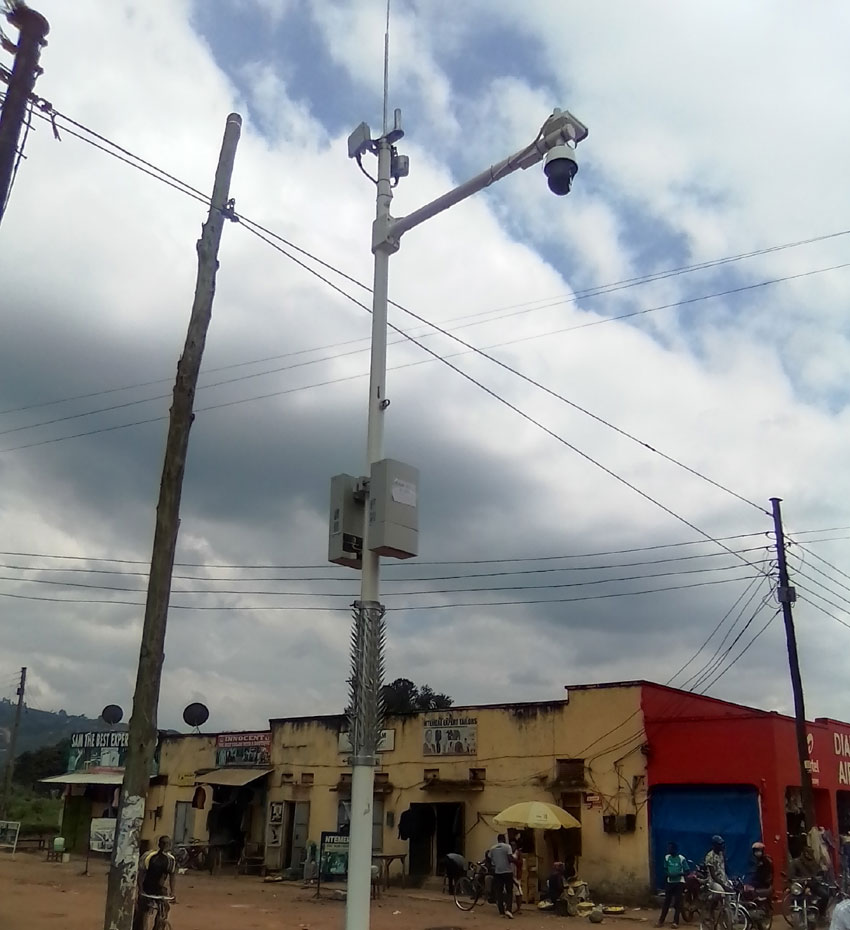
In the heart of Kampala’s bustling markets, where hawkers dodge traffic and matatus honk endlessly, a web of unblinking eyes watches every move. These are Huawei’s “Safe City” sentinels, part of a surveillance empire that has swallowed over $126 million of Ugandan taxpayer money since 2019, with costs spiraling unchecked into 2025. As the Auditor General’s latest reports expose procurement black holes and unaccounted billions, one question looms large: Is Huawei’s iron grip on Uganda’s security infrastructure fueling a corruption nexus that prioritizes regime control over genuine public safety?
The story began after the 2017 assassination of Assistant Inspector General Andrew Felix Kaweesi. President Museveni turned to China, tasking then-Police Chief Kale Kayihura with acquiring digital armor. Huawei, already Uganda’s telecom giant, donated 20 cameras in 2014 as a sweetener. By 2019, a full-blown deal emerged: more than 10,000 AI-powered CCTV units, facial-recognition hubs, and 83 monitoring centers across Kampala, Jinja, and Gulu. The price tag of $126 million exceeded the entire 2020 ICT ministry budget and was funded through opaque Chinese loans tied to the Belt and Road Initiative.
Procurement was shrouded in secrecy. No public tender, no competitive bidding—just a direct handshake between the Uganda Police Force and Huawei. The Auditor General’s 2023/2024 report, tabled in January 2025, flagged billions in unverified payments for “upgrades,” including $10 million to Huawei Marine for drone integration, with zero evidence of value-for-money audits. Opposition MP Ibrahim Semujju Nganda told Parliament: “This is procurement by fiat—government failed due diligence, leaving Ugandans exposed to financial hemorrhage.”
Huawei’s involvement goes beyond hardware. Whistleblowers from Naguru’s command center describe Chinese technicians training police on “predictive targeting,” linking cameras to NIRA and URA databases for biometric trawling without consent. By November 2025, the Intelligent Transport Monitoring System layered mandatory vehicle trackers onto the network, driving costs even higher.
The budget explosion fits the Belt and Road pattern of bundling loans with elite capture. Supplementary budgets in 2024/2025 approved an extra Shs4 trillion, including surveillance “enhancements,” while violent crime persists and police still demand bribes for basic services. Youth unemployment stands at 20%, yet funds keep flowing to Huawei despite the company’s own 2014 internal probe that uncovered employee graft in African contracts.
As the January 2026 elections approach and Bobi Wine’s youth rallies swell, the surveillance web tightens. Recent whistleblower videos and activist posts have gone viral, accusing Huawei cameras of illegally tracking opposition figures and turning Kampala into a giant panopticon.
Transparency International Uganda demands a full audit of every shilling spent, strict enforcement of procurement laws, and an immediate halt to Belt and Road strings that come with surveillance attached. Until that happens, Huawei’s ballooning budget is not about public safety—it is a corrupt chain strangling Uganda’s democracy and freedoms.
The post Corruption Nexus: Huawei’s Shadow Over Uganda’s Ballooning Public Surveillance Budget appeared first on Watchdog Uganda.