
Trump wants out of NATO. Good. Let him go.


This article challenges what has long been treated as axiomatic: that the transatlantic partnership is the primary anchor of geopolitical stability, democratic values, and economic prosperity between Europe and North America. For decades, that was true. It is no longer.
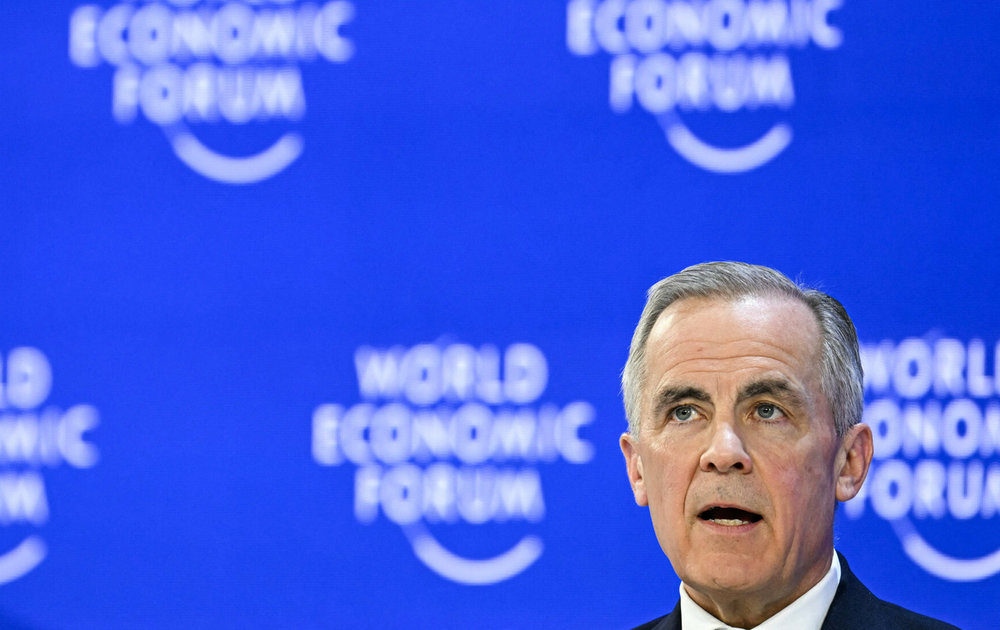
As Canadian Prime Minister Mark Carney put it: "You cannot live within the lie of mutual benefit through integration when integration becomes the source of your subordination."
When existing and aspiring great powers—the US, Russia, and China—use military power, economic integration as weapons, tariffs as leverage, financial infrastructure as coercion, and supply chains as vulnerabilities to be exploited, Europe must form new alliances with like-minded countries to protect the international security architecture and the values it shares.
The strategic reality
A YouGov survey published on 13 February 2026 found that 34–61% of Europeans now see the United States as a major or moderate threat. Around 20% of respondents in the UK, Germany, France, Italy, Spain, and Poland rated Washington a "major threat"—a higher share than those who said the same about China or North Korea.
Only Russia, the very country the US is seeking to reset relations with, is seen as a bigger danger. Europeans now favor autonomy over preserving the US-Europe alliance.
Europe's unease is not unique. A survey conducted in January 2025 across 15 countries in the Middle East—many of them US allies or partners—found that 77% believe US policies threaten regional security and stability. Some 84% said the same of Israeli policies. By comparison, Iran, Russia, and China were seen as threats by 53%, 48%, and 25% of respondents, respectively.
Both surveys were conducted before the United States and Israel launched military operations against Iran on 28 February 2026.
Newton's third law applies to geopolitics too: for every action, there is an equal and opposite reaction. America First has a logical endpoint: America alone.
Threatening withdrawal
Angered by what he sees as a lack of European support for his war on Iran, Trump told The Telegraph he is "strongly considering" withdrawing the US from NATO, calling the alliance a "paper tiger." "I would say [it's] beyond reconsideration," he said in an interview published Wednesday. His remarks came a day after he dared European nations to "build up some delayed courage" and start "learning how to fight for yourself."
The New York Times noted that in the past, Trump had stepped back from similar threats. But it put the question plainly: "What if this time, he's serious?"
I hope he is. I really do.
Not because I want to see the America we once knew leave the alliance. That ally is already long gone. I want Trump's USA—TUSA—to leave.
Why?
Because Trump's administration has turned itself into a strategic adversary of Europe. It is actively dismantling the rules-based international order, turning its back on international institutions and treaties, starting wars in violation of the UN Charter, and supporting genocide in the Middle East.
And it directs that same contempt toward its supposed allies. TUSA threatens to annex Canada, speaks of occupying Greenland by force, and ignores Spain's sovereignty. It disrespects European military contributions, then demands European support for operations of its own choosing—legal justification optional. It negotiates European security over Europe's head while seeking to reset relations with the power that poses an existential threat to the continent. It calls European countries "decaying" and their leaders "weak." And it has launched a trade war against its former allies while pursuing business opportunities with its former strategic opponent.
Europe and TUSA do not share values. According to V-Dem Institute's Democracy Report 2026, "under Trump's presidency, the level of democracy in the USA has fallen back to the same level as in 1965." The report describes executive overreach undermining the rule of law, along with "far-reaching suppression and intimidation of media and dissenting voices." The scale and speed of autocratization, it concludes, "are unprecedented in modern times."
"The USA loses its long-term status as a liberal democracy—for the first time in over 50 years."
The US now ranks behind Costa Rica, Uruguay, South Korea, Taiwan, and Ghana on the V-Dem index—and the reason it is not ranked lower still is that electoral aspects of democracy are reassessed only in election years. The report does, however, flag threats to the integrity of the 2026 midterm elections.
On 4 December, the White House formalized what European security analysts had feared for months: the US now views Russia as a potential partner and Europe as a problem to be managed. The new National Security Strategy doesn't merely shift America's foreign policy priorities—it aligns them with Moscow's on seven separate issues while explicitly calling for Washington to "cultivate resistance to Europe's current trajectory" by backing nationalist parties against sitting EU-aligned governments.
For Europe, this means facing two strategic adversaries simultaneously: a Russia preparing for potential conflict with NATO by 2029, and a United States actively working to divide and weaken the European Union.

A US withdrawal from NATO would help save Europe, not destroy it. It would kill the illusion of the alliance as a guarantor of European security—and that illusion is long overdue for a reckoning. Present-day NATO is a liability because it prevents European politicians from seeing the world as it actually is.
The alliance ceased to function as a credible security guarantor when Europe stopped investing in defense and America became TUSA. Russia has not been deterred by NATO since 2008. European intelligence services assess that Moscow is preparing for conflict with NATO member states by 2029.
Could the US revert to its old self?
Many argue that Europe should not act precipitously because Trump's presidency ends in January 2029 and Democrats may reclaim Congress after the November 2026 midterms.
Maybe. But the Trump administration is doing everything in its power to ensure the latter does not happen—executive orders expanding federal control over elections, restrictions on mail-in voting, the SAVE Act, a national voter database, constraints on voter registration systems, and legal pressure on enforcement mechanisms. If they succeed, America's slide toward autocracy will continue.
In July 2025, Stacey Abrams argued that the United States had reached step 9 of Princeton Professor Kim Lane Scheppele's "10 Steps to Autocracy" framework. This year, it may reach step 10.
The institutions designed to protect American democracy are being systematically dismantled. American society is experiencing divisions that many citizens describe as the deepest since the Civil War. The effects will likely be lasting.
Facing a potential conflict with Russia by 2029, Europe cannot afford to wait for the outcome of America's internal reckoning. Hope is not a strategy. Acting on the world as it is—not as we wish it were—is the only way forward.

The way forward
The moment NATO's demise can no longer be denied, Europe can finally begin building a credible alternative. A Coalition of Like-Minded European countries (CALM), built on the economic weight and naval and air capabilities of Western and Northern Europe, Ukraine's battle-hardened army and unmanned systems expertise, and a shared Defense Industrial Base, would create an alliance that Russia would fear and TUSA would be forced to respect.
If not, Europe would close all American bases on the continent, reducing Washington's global reach.
CALM would also enable Europe to act as a genuine partner to the United States when that relationship serves European interests—including future NATO operations worth supporting.
Would the transatlantic rupture be painful? Absolutely. But it has already happened. The longer Europe remains inside an alliance that TUSA dominates and uses to humiliate it, the longer the fiction of partnership substitutes for the reality of subordination.
Basing European security on an empty illusion is worse than facing the facts. Mr President, please leave NATO. It will enable Europe to build strategic autonomy, re-establish credible deterrence, and lay the foundation for a future transatlantic relationship built on mutual respect.

Editor's note. The opinions expressed in our Opinion section belong to their authors. Euromaidan Press' editorial team may or may not share them.
Submit an opinion to Euromaidan Press