“You run, they knock you down, and beat you with rebar”: Ukrainian POW’s 3-year hell in Russian captivity
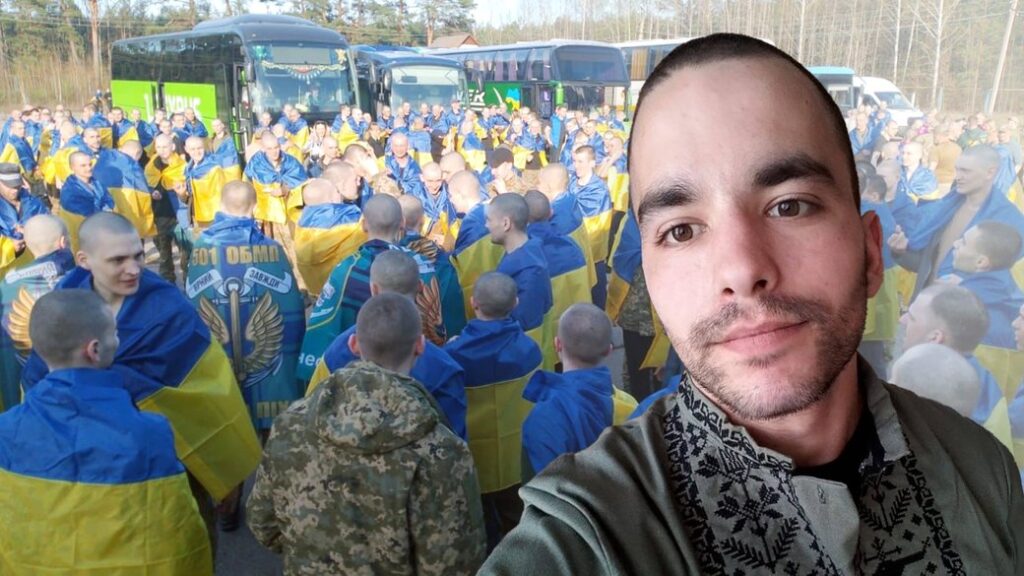

Beaten with rebar, bricks, and fists. Forced to crawl through a crowd of Russian guards. Watching fellow prisoners die. For 22-year-old Ukrainian soldier Valentyn Marynych, this was daily life during 36 months in Russian captivity, “Unbroken” veteran center reports.
Born in Kirovohrad Oblast, Valentyn had moved to Nizhyn after school, studied at an agricultural college, and signed a contract with Ukraine’s Armed Forces to fulfill his dream of becoming a soldier. When Russia launched its full-scale invasion, he helped defend Mariupol, only to be captured on 12 April 2022.
His captivity began in Sartana’s hangars in Donetsk Oblast and continued in Olenivka, where Russian guards immediately began torturing new arrivals.
“You run through a corridor of Russian soldiers — they beat you with rebar, bricks, knuckledusters, belts, fists, boots. You can’t see anything. You just hear the screams of others and Russian swearing,” recalls Valentyn.
Conditions were inhumane — overcrowding, no space to sleep, constant abuse. For 21 months, he was held in a barracks in Luhansk, eventually forced into labor just to stay sane.
News of his release came only days before it happened.
“Those last three days were the hardest. I kept thinking they might cancel it,” he says.
But the exchange went through, and he was released with 276 fellow defenders.
He vividly recalls seeing the Ukrainian flag, hearing his language again, and calling his sister for the first time in three years, only to learn that their father had died.
Now undergoing rehabilitation and psychological support, Valentyn has no home, job, or surviving family besides his sister.