
Why young men would rather give up sex than smartphones
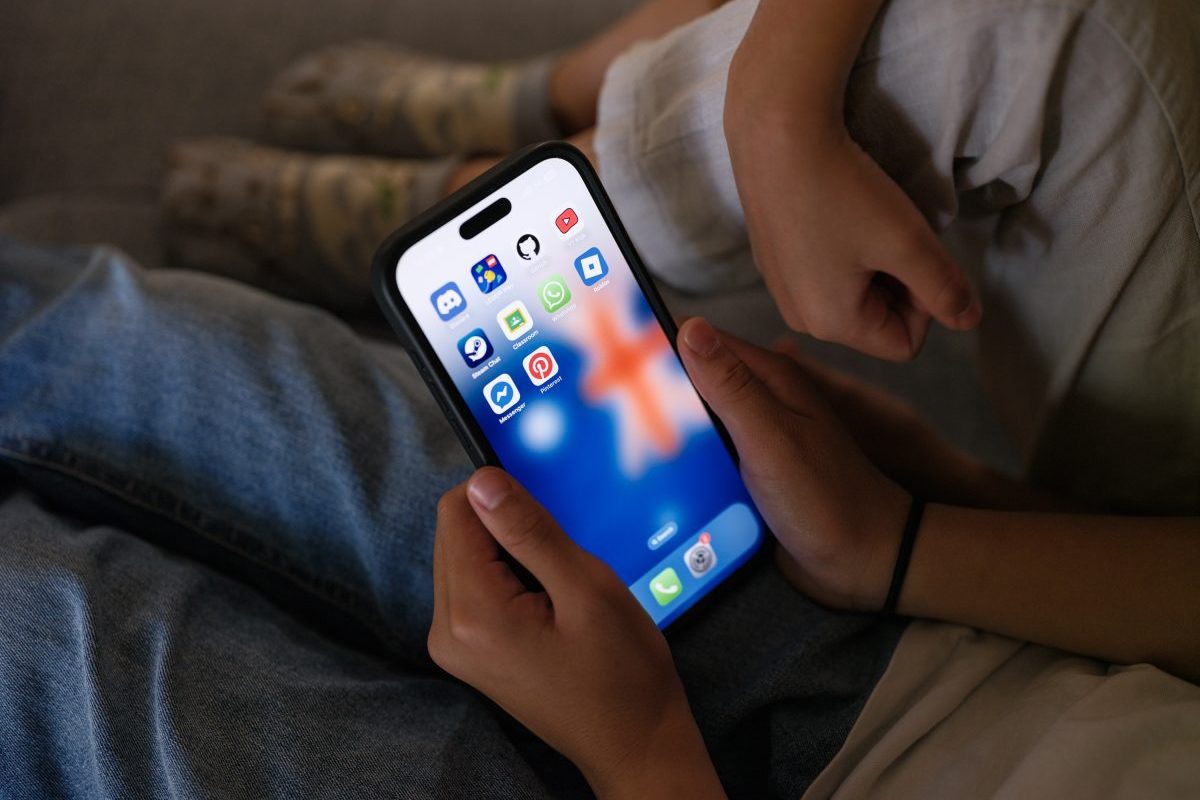
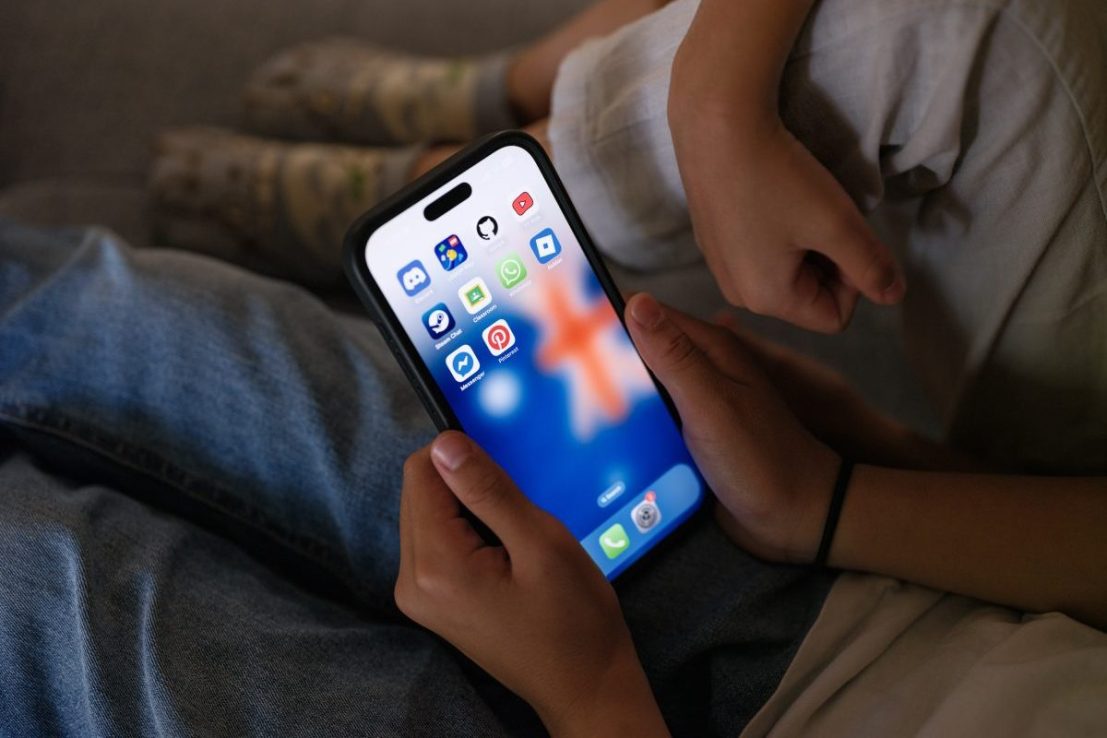
A generation of young men biologically primed for connection and choosing screens instead is a sharp deviation from both our nature and the basic imperative to continue our species. For a society with more food, shelter and safety than our ancestors could have dreamed of to simply stop wanting to reproduce, something has gone deeply wrong, says Lewis Liu
A few months ago, at a founders’ retreat somewhere in the Arizona desert, I found myself around a campfire with five other founders, all men, aged 22 to 25 (with me being the only Millennial dad). Somehow we landed on a hypothetical, which I phrased carefully to remove any competitive implication: “Would you rather live in a world where no one has smartphones, or a world where you never have sex again?”
All five chose no sex. And when I pushed them, they weren’t joking. They meant it.
The surface-level humour is pretty self-evident as several friends I’ve told since have asked whether these guys have ever actually had sex. But the more I reflected on it, the darker it seemed. Here were five young men, sitting at the absolute biological peak of the male sex drive, telling me that optimisation, techno-acceleration, and digital convenience mattered more to them than one of the most deeply wired imperatives in our mammalian brains. Something is wrong.
What’s striking is that this campfire anecdote has, in the last few weeks, acquired serious academic backing. A new National Bureau of Economic Research working paper by Middlebury economists Caitlin Myers and Ezekiel Hooper, provocatively titled “Is the iPhone Birth Control?”, argues for a genuinely causal link between smartphones and America’s collapsing fertility rate. The US general fertility rate has fallen 22 per cent since 2007. That decline has long resisted explanation: the 2008 recession was blamed, but births never rebounded when the economy did; contraception, housing costs and childcare have all been posited, but none fits cleanly.
Is screen time killing sex life?
The reason a causal claim is normally so hard to make is that the last 20 years changed everything at once; you can’t isolate the smart phone. What Myers and Hooper did was clever. Until February 2011, the iPhone was sold exclusively through AT&T. So they used AT&T mobile broadband coverage as a proxy for early iPhone access and compared birth rates across US counties. The result: in counties where over 90 per cent of residents had early smartphone access, fertility fell dramatically more than in counties with under 10 per cent coverage across all age ranges. They estimate the early iPhone explains between a third and a half of the entire fertility decline in that period, and they found the same pattern in England and Wales, ruling out anything uniquely American.
The proposed mechanisms range from the obvious (pornography as a substitute) to the structural: once enough teenagers are on the phone, the phone becomes where the peer network lives, in-person time collapses, and with it the unstructured contact in which most relationships (and unintended pregnancies) begin.
I should be fair: plenty of economists are sceptical. Fertility has been drifting down for decades, and teen birth rates have fallen since the 1950s, long before any iPhone. But it is the most compelling empirical evidence yet that the device in your pocket is reshaping the most intimate parts of human life.
There’s a related and equally troubling thread: social media has manufactured almost entirely separate realities for young men and young women. A growing body of research shows the two sexes drifting apart in their values, faster every year. Add to that the evidence that constant micro-dopamine hits suppress libido, a thousand small digital rewards standing in for one real connection, and the picture compounds.
I’m not arguing we stop adopting technology, nor do I think slowing it down is even possible given the game theory we’re all trapped in. But we have to be honest: a generation of young men biologically primed for connection and choosing screens instead is a sharp deviation from both our nature and the basic imperative to continue our species. For a society with more food, shelter and safety than our ancestors could have dreamed of to simply stop wanting to reproduce, something has gone deeply wrong.
So how should we think about this in a world where the technology will only accelerate?
Why AI could make this problem worse
First, we must limit screens, phones, social media and AI for children. I’ve written before that children need to develop before these tools enter their lives. Banning phones in schools and social media for minors is a start. But AI is now creeping into classrooms under the banner of helping kids “think”; I recently heard of a teacher introducing a chatbot to help children generate story ideas. Children are the most creative beings on earth; outsourcing their imagination to a model that averages the internet doesn’t develop their minds, it stifles them. AI in the classroom below a certain age needs to be off-limits. Across Asia, Europe and Oceania, I can see this happening. In the US, sadly, our government is too beholden to the Big Tech lobby. That has to change.
Second, as adults we can be far more deliberate with our own time and our children’s. Cars replaced walking, so now we schedule “exercise”; smartphones, social media and AI have displaced organic human interaction, so we now have to consciously schedule connection. The more aware we are, the more we can change behaviour at a societal level.
Third, urban planning matters more than we admit. Across much of Europe and Asia, cities are walkable, with natural spaces for people to gather and bump into one another. America’s car-centric planning bulldozed those communities decades ago, and mobile and AI technology has made the isolation worse. But planners and policymakers can still evolve our towns to be more human-centric. In the age of AI, that may matter more than ever.
Look, I don’t pretend to have the magic bullet for fertility. I’m writing this from a hotel in Seoul, where tomorrow I’m speaking at an AI governance conference with the Bank of Korea. Korea, fittingly, has the lowest fertility rate on earth; perhaps that’s what put this on my mind. And yet, looking around, you cannot help but marvel at the cleanliness, the beautiful infrastructure, the seamless digital connectedness of Seoul. Like Singapore, like much of Europe, Korea is “civilised” in the very best sense of the word.
But maybe being too connected, too optimised, too convenient is its own kind of trap. I don’t know what it will take to get humans to have more babies. Like human connection itself, kids are messy and tangled with a thousand variables. But we know at least a few things that don’t work: smartphones, social media, and very likely AI. Perhaps we can start there, and try to be a little more human.