Weather modification: Can humans control the skies?

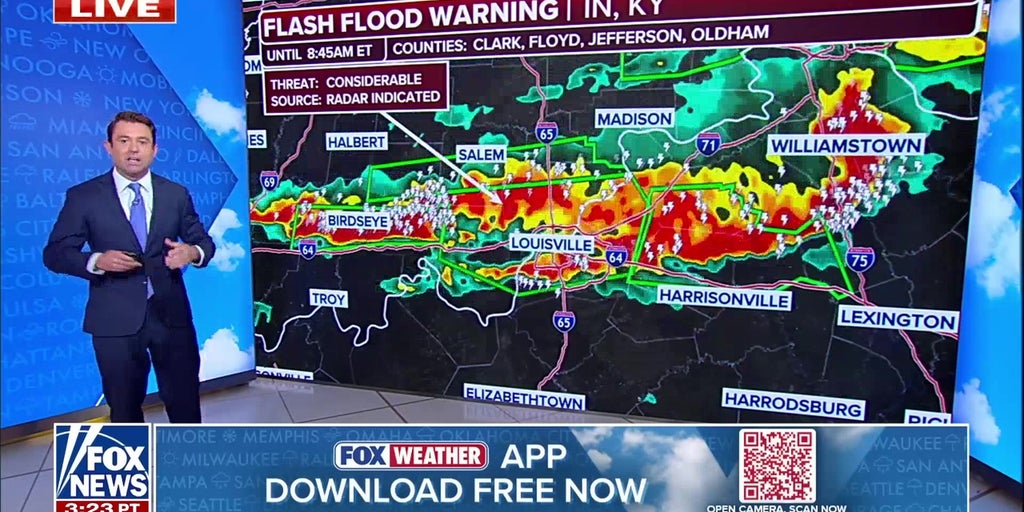
ST. LOUIS - Between the intense downpours and flood warnings and the severe heat threats the Missouri region had a few weeks ago, many St. Louisans are probably wishing they could alter the weather.
But what if they could?
As it turns out, there are many ways to alter weather patterns, and scientists have experimented with ways to modify weather for decades.
Weather modification techniques can suppress hail, dissipate fog or even induce precipitation.
The most popular technique is called cloud seeding.
FOX 2 sat down with Katja Friedrich, professor of Atmospheric and Oceanic Science at the University of Colorado at Boulder, to discuss this topic further.
Friedrich studies weather modification and, specifically, cloud seeding.
“Generally, we consider cloud seeding as a mechanism where we can enhance precipitation... to areas that are really deprived,” Friedrich said.
However, many voices against the practice argue that there are ethical implications to consider, such as fairness, equity and “playing god.”
It has been said that when you seed a cloud, it precipitates prematurely. Areas down the road would have received the rain that would have matured and fallen later on. When we cloud seed, are we stealing the rain?
“Yes,” Friedrich said. “But we don’t know if cloud-seeding clouds also has prevented flooding or other possible issues down the line.”
The research points out that when we seed a cloud, we no longer have a reference point to know what would have happened to the cloud—it has already been changed.
Other critics of the practice raise concerns about environmental risks.
These concerns include the introduction of chemicals, which may lead to ozone depletion, pollution and other unintended consequences of altering weather patterns.
Many researchers use silver iodide since it is a compound with a crystal structure similar to ice. It is believed to form the nucleus for supercooled droplets to freeze onto.
As they grow larger, these mature droplets fall as precipitation.
Still, the scientific community has not reached a consensus on the overall effectiveness of cloud seeding. Some studies show a modest increase in precipitation, while others remain inconclusive.
According to a July 2024 report from the Government Accountability Office (GAO), cloud seeding is being used in nine different states. Ten states, so far, have banned or are considering banning weather modification as a whole.
However, Fried points out that in a broader sense, humans already modify weather without meaning to. Exhaust from cars, emissions from factories and even the vapor trails from planes all alter the atmosphere in ways that affect local conditions.
So while cloud seeding may one day prove useful in easing drought or mitigating storms, for now, it serves as a reminder of just how closely human activity and the atmosphere are already intertwined.