“We do not trust empty pledges anymore” – Ukraine’s foreign minister on Budapest Memorandum
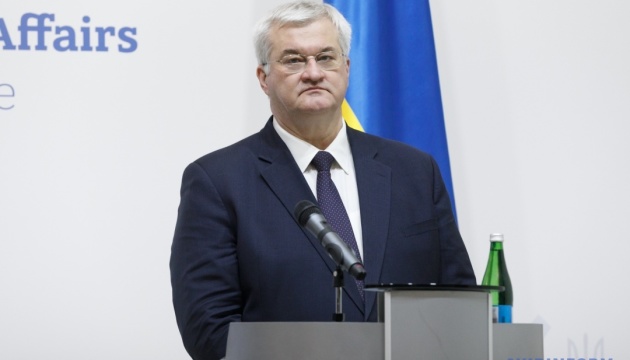
Ukraine's Foreign Minister Andrii Sybiha marked the 31st anniversary of the Budapest Memorandum on Thursday by warning that Kyiv will not accept "empty pledges" in any peace settlement with Russia.
"A piece of paper that has become synonymous with a failed security arrangement," Sybiha wrote on X. "Having had such a bitter experience in the past, Ukraine does not trust empty pledges anymore — we trust the strength of our army and weapons."
His statement comes days after US-Russia talks in Moscow failed to produce a breakthrough, with security guarantees emerging as a central obstacle.
31 years ago on this day, the Budapest memorandum was signed. A piece of paper that has become synonymous with a failed security arrangement.
Having had such a bitter experience in the past, Ukraine does not trust empty pledges anymore—we trust the strength of our army and…— Andrii Sybiha  (@andrii_sybiha) December 5, 2025
What the Budapest Memorandum promised and how it failed
Signed on 5 December 1994, the Budapest Memorandum saw Ukraine surrender the world's third-largest nuclear arsenal - some 1,900 strategic warheads inherited from the Soviet Union - in exchange for security assurances from the United States, United Kingdom, and Russia.
The signatories committed to respect Ukraine's sovereignty and existing borders, refrain from military or economic coercion, and seek UN Security Council action if Ukraine faced aggression involving nuclear weapons.
Russia violated the agreement when it annexed Crimea in 2014 and shattered it entirely with the full-scale invasion in February 2022. The memorandum contained no enforcement mechanism, leaving Ukraine without recourse when its guarantors failed to act.

Security guarantees now dominate peace talks
The failure of the Budapest Memorandum looms over current negotiations. Ukraine has made clear it will not trade territory for vague promises.
Peace talks between US and Russian officials have produced no breakthrough. Trump's special envoy Steve Witkoff and Jared Kushner held five hours of talks with Putin in Moscow on 2 December, but Kremlin aide Yuri Ushakov said afterward that "no compromises have been found yet."
The US peace framework has shifted repeatedly since the initial 28-point proposal emerged in November. That draft would have required Ukraine to cede the remainder of Donbas, cut its armed forces in half, and accept limits on long-range weapons in exchange for unspecified security arrangements.
A revised version softened some terms but left security guarantees vague - the plan refers to guarantees without specifying what they would entail or who would enforce them.
NATO Secretary General Mark Rutte confirmed on 3 December that no consensus exists among the alliance's 32 members for Ukraine's immediate membership, though Kyiv remains on an "irreversible path" declared at the 2024 Washington summit.
France and the UK are separately leading a "Coalition of the Willing" to develop alternative security frameworks - but what those would look like in practice remains undefined.
Putin, speaking to India Today on 4 December, signaled no flexibility on territorial demands: "All this boils down to one thing: Either we take these territories by force, or eventually Ukrainian troops withdraw."
The lesson Kyiv draws
For Ukrainian officials, the Budapest precedent offers a clear warning: security assurances without enforcement mechanisms are worthless against an aggressor willing to use force.
"Today, Ukraine needs robust security guarantees for a real, just, and lasting peace," Sybiha wrote. "As we work to put an end to Russia's war against Ukraine, it is important to remember the bitter lessons of Budapest."
The question now facing negotiators is whether any proposed guarantee can bridge the gap between Ukraine's demand for real protection and Russia's insistence that its neighbor remain outside Western security structures.