
WADADA ROGERS: Ministerial appointments in Uganda and the question of dual citizenship
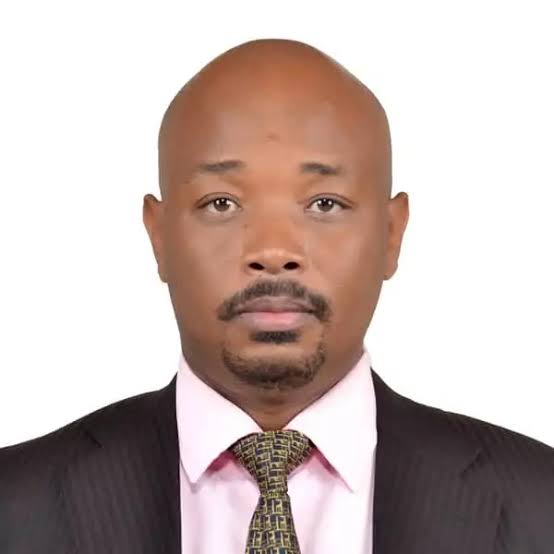
A debate on the subject of dual citizenship questioning how President Yoweri Museveni appointed Ministers and Ministers of State without following the due process of the law has taken centre stage. Indeed, it is true that Ugandan laws explicitly bar people with dual citizens from serving as Ministers and Ministers of State.
The discussion initially centered around the person of Dr. Lawrence Muganga (State Minister of Internal Affairs) but has since widened to include Calvin Echodu (Minister of State for Foreign Affairs in charge of International Affairs), Adonia Ayebare (Minister of Foreign Affairs and Sanjay Tanna (Minister of Trade, Industry and Cooperatives).
Others include a female State Minister whose family lives in America and a daughter of a former politician from Sembabule as well as another appointee from a district neighbouring Kenya are some of the people being mentioned in the corridors of power as having undisclosed citizenships of other countries other than that of Uganda.
With the confusion surrounding the swapping of positions by Justine Lumumba with Ruth Aceng, it is easy to imagine the current cabinet was only transitional. It is said that many other Ministers are also Citizens of Rwanda, D.R of Congo, South Sudan, Rwanda, Kenya, United Kingdom, Germany, America, Canada and Sweden among others.
Did President carry out a background check on these individuals or the question of dual citizenship took him by surprise. It is my considered opinion that dual citizenship is not the act of having two nationalities but having that process regularized by registration in the country where that person seeks to be recognized as having taken on a second citizenship.
While the issue could stand in the way of the vetting process, it is also a real taste for the newly elected Speaker of Parliament to have a proper interpretation of the law on dual citizenship before pronouncing himself on the subject or be blacklisted as a rubber stamp. He could stay the vetting and approval of the appointed Ministers to consult.
Citizenship in Uganda is provided for in Chapter 3 of our 1995 Constitution and the Uganda Citizenship and Immigration Control Act which recognizes Citizenship by Birth, Registration, Naturalization, and Dual Citizenship. One must legally belong to any of these four to qualify as a citizen of Uganda. Recall citizenship by descent was eliminated.
It is apparent on the face of it that the laws of Uganda allow only a maximum of two citizenships at any given time hence the use of the word dual. Dr. Muganga is at the centre stage because he was once arrested for espionage and illegally stay in Uganda. His nomination has so far faced mounting legal scrutiny and public petitions challenging his eligibility.
Please note that the dual citizenship that the laws of Uganda talk about is not the holding of two passports or being a national of two countries. It revolves around the steps that a person with a previous citizenship takes to acquire another one with the full knowledge, consent and approval of the government from which they intend to seek dual citizenship.
It remains my view that this issue of dual citizenship must be handled carefully as it could cause serious embarrassments to the appointing authority and the country. It could turn out to be a tip of an iceberg. Soon, we may learn that many other people holding sensitive government offices are secretly holding on to other citizenships without a formal process.
There is also another group of Ugandans living in the diaspora who have since taken on new citizenship without registration or abandoned the citizenship of Uganda as asylum seekers. Some countries do not allow dual citizenship and demand that whoever applies to be their citizen must first of all renounce their former citizenship.
Before May 21, 2011 when President Yoweri Museveni first secured a national identity card, citizenship of Uganda was only determined by possession of a passport, driving permit or birth certificate. That means that many Ugandans who went to the diaspora much earlier could have obtained official foreign citizenship before legally securing that of Uganda.
Under the 2005 Constitution amendments, Uganda permits its citizens to hold the citizenship of another country alongside their Ugandan citizenship. This allows Ugandans in the diaspora to retain their rights and passports, provided they officially register their dual citizenship status with the National Citizenship and Immigration Board (NCIB).
Section 19 of the Uganda Citizenship and Immigration Control Act establishes the legal framework for dual citizenship in Uganda. It grants Ugandans the right to acquire the citizenship of another country while retaining their Ugandan status, and allows foreigners to acquire Ugandan citizenship while holding their original nationality, subject to specific conditions which are never fulfilled with impunity.
Section 19A and 19B of the Act shows how Ugandans can notify the NCIB of their intent to acquire another citizenship, and outlines the application process for non-citizens. Section 19C sets out conditions for applicants intending to acquire dual citizenship requiring them to pass the vetting requirements as outlined in the law.
One of the conditions is that they must not hold more than two citizenships, must be of sound mind, and must be at least 18 years old. Under Section 19D, individuals with lawful dual citizenship, one of them being Ugandan citizenship are constitutionally and legally barred becoming Minister or Ministers of State. This however gives an opening for those without official dual citizenship to simply deny being citizens of another country.
Now all that the appointing authority needs to do is to establish from NCIB whether the persons whose names have been mentioned hold a dual citizenship. The moment the data base shows no record of dual citizenship, they would have passed the test of the law leaving Parliament with no option but to vet and approve their names.
I die certain that none of the persons making noise can authoritatively provide tenable, original or certified documents as proof that the people whose names have been mentioned have another citizenship that they have not disclosed. The only exception is if some of these people have left or entered Uganda using foreign travel documents; which I doubt if the Directorate of Immigration and Passport Control will disclose to the public.
The question that we have not addressed our minds to is whether or not an individual who has been appointed a Minister or Minister of State but with unofficial citizenship of another country can qualify as having dual citizenship, my answer is no, dual citizenship only arises where the same has been registered by NCIB and entered into Uganda’s data base.
I personally see all the appointed Ministers being vetted and approved unless their names are withdrawn by the President himself. Otherwise, where else will the whistle blower get verifiable evidence to block the implicated Ministers? I know for sure that no country will reveal confidential information regarding their citizens to a whistle blower.
Wadada Rogers is a commentator on political, legal and social issues. wadroger@yahoo.ca
The post WADADA ROGERS: Ministerial appointments in Uganda and the question of dual citizenship appeared first on Watchdog Uganda.