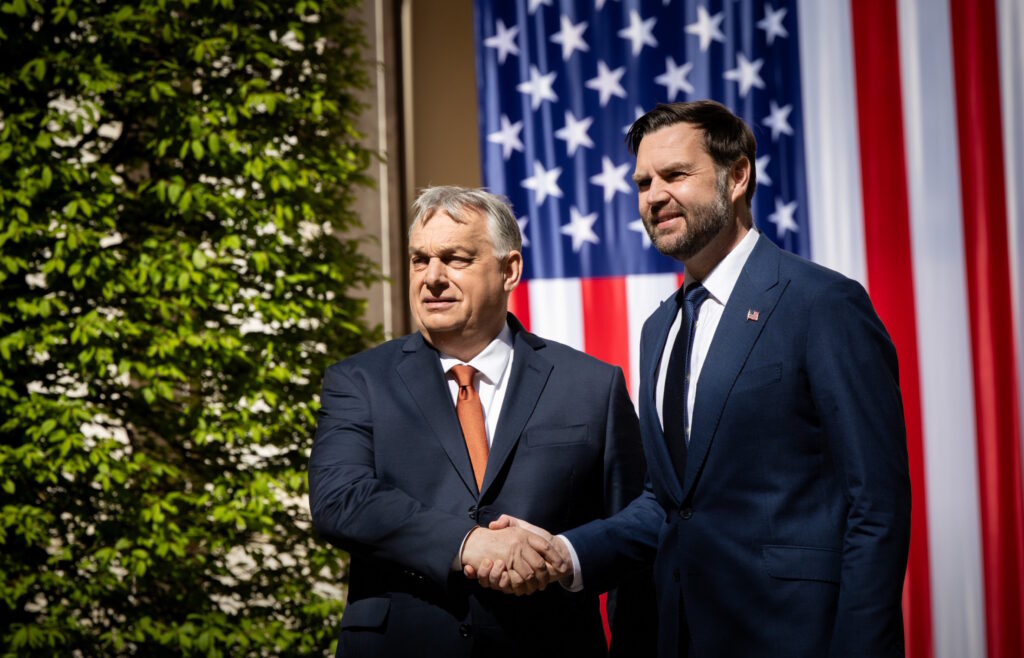
US Vice President J.D. Vance accused Ukraine of interfering in US and Hungarian elections during his visit to Hungary, where he also openly supported Viktor Orbán ahead of upcoming elections.
Hungary’s key geopolitical partners include Russia and China, with which it maintains long-standing ties.
In 2026, Chinese Foreign Minister Wang Yi, during a visit to Budapest, assured Viktor Orbán of a strategic partnership and called for deeper cooperation between China and the EU.
Orbán, in turn, stated that Budapest is interested in expanding economic cooperation with Beijing and urged Chinese companies to increase investments in Hungary’s economy.
Vance becomes part of Orbán's campaign
According to Vance, elements within Ukrainian intelligence are allegedly “trying to influence election outcomes in the US and Hungary.”
“We’re certainly aware that there are elements within the Ukrainian intelligence services that try to put their thumb on the scale,” he said.
He did not provide any evidence confirming his words.
He also claimed that, ahead of elections, pro-Ukraine supporters campaigned alongside Democrats.
At the same time, Vance emphasized that ending the war requires diplomacy and criticized Europe, saying it made Ukraine weak and Russia strong through its energy policy.
Support for pro-Russian politicians in Europe
Vance’s stance is seen as aligning with pro-Russian political forces in Europe, thereby strengthening actors opposed to US interests.
Earlier, a consortium of investigative journalists from five European outlets in VSquare reported that Hungarian Foreign Minister Péter Szijjártó had systematically passed confidential EU information to Russia.
Leaked phone calls between Szijjártó and Russian Foreign Minister Sergey Lavrov, as well as other Russian officials, indicate efforts to undermine sanctions against Russian individuals and companies.
According to the recordings, Szijjártó also worked in coordination to lift EU sanctions on Gulbahor Ismailova, the sister of Russian oligarch Alisher Usmanov.
In the same conversations, Lavrov and Szijjártó reportedly criticized then–EU foreign policy chief Josep Borrell.