
Ukraine’s top defense market segments doubled to $6.8 Billion in 2025
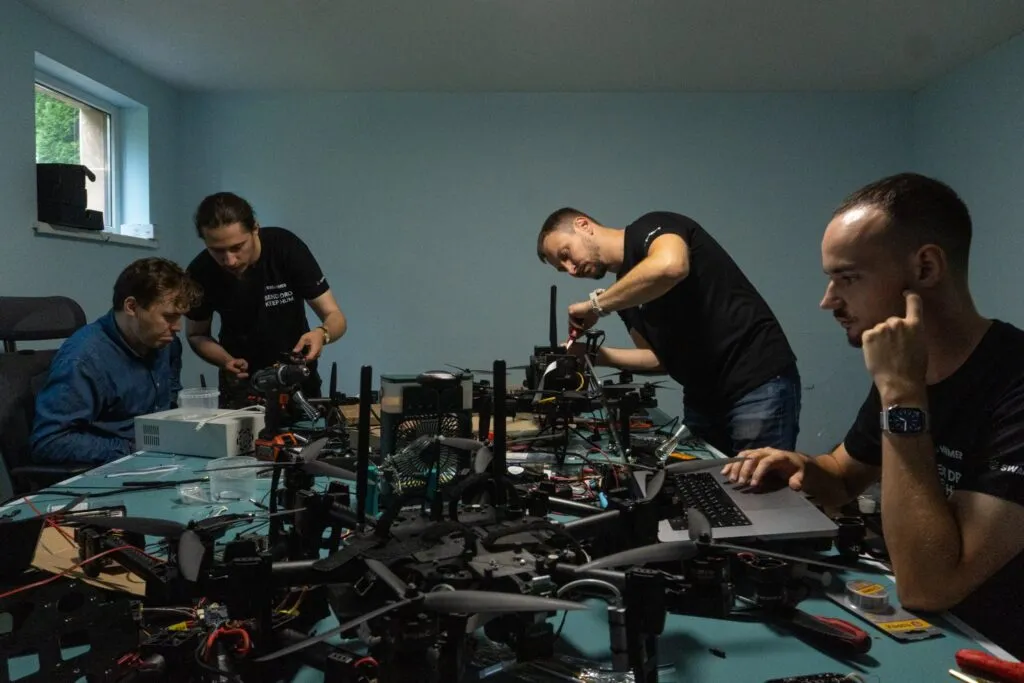

Ukraine’s defense tech market roughly doubled in 2025. The top three segments grew from $2.8 billion to $6.8 billion, the Kyiv School of Economics revealed in a 31 March report.
Production of Unmanned Aerial Vehicles (UAVs) soared by 137%, Unmanned Ground Vehicles (UGV) by 488% and Electronic Warfare systems by 215%. Other segments like battlefield AI are expanding as well.
These are conservative estimates. Many military procurements are shrouded in secrecy and many brigades buy their own equipment, bypassing the center.
Ukraine was a major Soviet arms producer. After independence, it was a top-20 defense exporter. But now, a new innovation-driven ecosystem is diversifying Ukraine’s arms industry beyond conventional weapons and heavy platforms inherited from its past.
“Ukraine’s defense-technology sector is rapidly evolving into one of the most dynamic and scalable components of the country’s industrial economy,” KSE wrote.
“While total defense output in 2025 was constrained by the volume of domestic procurement financing, high-technology segments continued to expand at exceptional rates, confirming a structural shift from legacy platforms toward innovation-driven production.”
In 2025, Ukrainian defense tech companies attracted about $129 million worth of investment that we know of, with the biggest ones going into AI and software.

The financing landscape combines grants, venture equity, accelerators, strategic investments and loans, as well as procurement-linked support from partner states.
KSE estimated that should Ukraine's international agreements with the US and the G7 nations hold, it could set the stage for a post-war defense tech boom, generating $690 billion over 10 years.
UAVs
UAVs represent by far the biggest segment of Ukraine’s arms industry at $6.3 billion in 2025, up from $2.7 billion in 2024.
While bigger companies anchor the UAV output, ensuring volume and stability, the medium-sized companies are the backbone, providing scalable production, according to KSE. Meanwhile, a profusion of smaller companies shorten development cycles and speed up innovation.
Deep strike weapons were the fastest growing subsegment, increasing by 169%.
Ukraine keeps breaking its own records in its long-range attacks on Russian territory. In March, five factories and 10 oil refineries were hit, according to the Ministry of Defense. These attacks are putting a painful strain on Russia's hydrocarbon cash cow and wartime logistics.
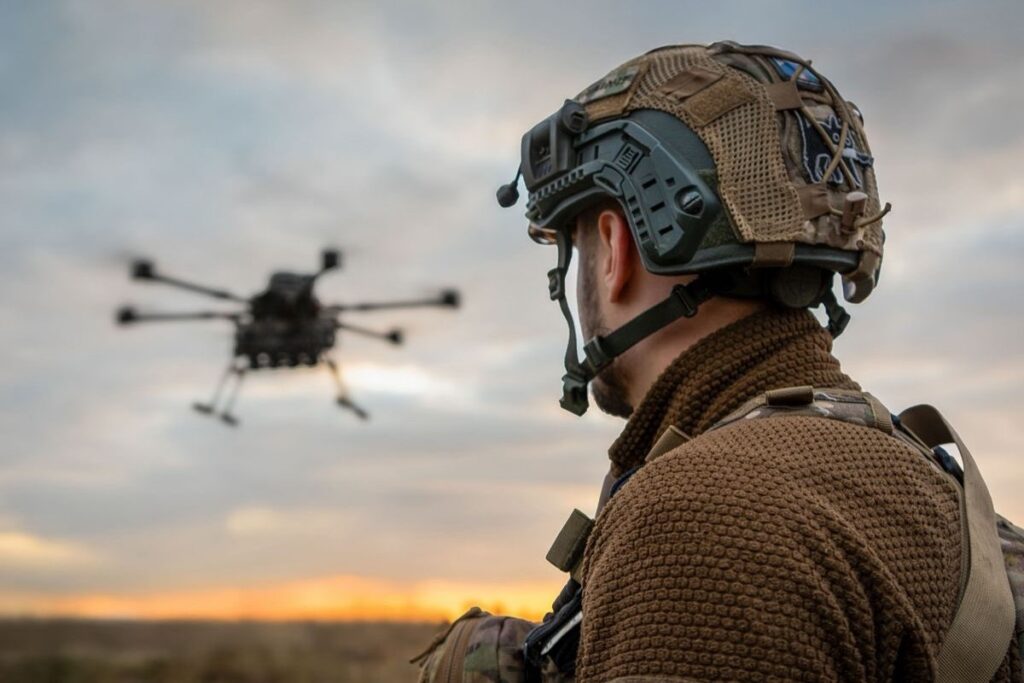
Yet FPV drones are still the poster child of the UAV industry. The FPV market, which grew by 110% last year, produces the most widely used assets for daily engagements along the front lines.
This subsegment is “characterized by intense competition, with a large number of manufacturers with similar products and continuous pressure to improve performance while reducing unit costs.”
Bomber UAV production grew by 121%. These reusable tactical assets are making a killing — literally — often dropping grenades on Russian units whenever they are bunched up. KSE found that the market for bombers is more concentrated, with a limited number of proven models responsible for most deployments.
ISR (intelligence, surveillance, reconnaissance) drones had the most modest growth, at 11%, despite their critical role on the battlefield.
“This is the oldest and most structurally stable UAV market in Ukraine, with clear and consistent market leaders,” according to their report.
The interceptor UAV segment entered an active development phase only in 2025. Although several models have already achieved early dominance, the market is still in its formative stage and offers substantial room for new entrants.
Two more UAV segments are likely to grow in the future.
- Middle strike UAVs — drones that are intended to target enemy logistics in the rear, with a longer range than standard UAVs, but shorter range than ones meant to strike targets deep inside Russia. Both Kyiv and Moscow are trying to expand the drone “kill zone” towards their opponent’s held territory.
- Decoy UAVs are also likely to become more prominent. Their job is to saturate enemy air defenses and allow actual weapons to pass through and strike their targets.
UGVs
Compared to UAVs, the market for ground-based drones is still very young and has yet to reach its full potential, worth just $252 million in 2025. Still, the UGV market is “highly diversified” by manufacturer, with room for producers to enter if they have good products.
Lyuba Shipovich, head of the military support fund Dignitas, expects 2026 to be a year of ground robots.
The majority of this segment is carried by logistics UGVs, which transport materiel and evacuate casualties. These accounted for 61% of UGV sector volume in 2025 and were the primary growth driver, increasing by 556% compared to 2024.

Kamikaze UGVs grew by 967%, but remain a tiny segment of the market for the time being. They are significantly more problematic to operate than single-use UAVs due to their lower maneuverability and vulnerability to difficult terrain and landmines.
The Strike UGV segment grew by 19%, but is a small share of the overall market. These weapon-mounting systems need more time in the oven and have yet to be deployed at scale. However, with future breakthroughs, these machines can become more prominent on the battlefield.
More niche segments include demining and firefighting UGVs, though their development highlights the importance of dual-use technological pathways.
UGVs are becoming more versatile over time. Ukrainian forces still largely use them to deliver supplies and pull out the wounded, but they are increasingly fitted with weapons and launch cradles for UAVs.
Electronic Warfare
Ukraine’s EW sector has expanded rapidly in recent years, moving from a relatively small and volatile segment to one of the key technology-driven components of the defense ecosystem.
In 2025, this part of the market generated $220 million, growing 3.4 times. This growth has been fueled by wartime demand, the critical role of spectrum dominance on the battlefield, and the ability of domestic companies to deliver solutions in a very short development cycle.
While a small group of medium and large manufacturers produce most of the output, they’re joined by many small specialists, according to KSE. Recently, production has become “significantly more concentrated among leading companies, reflecting the transition from experimental development to scaled manufacturing” of proven systems.
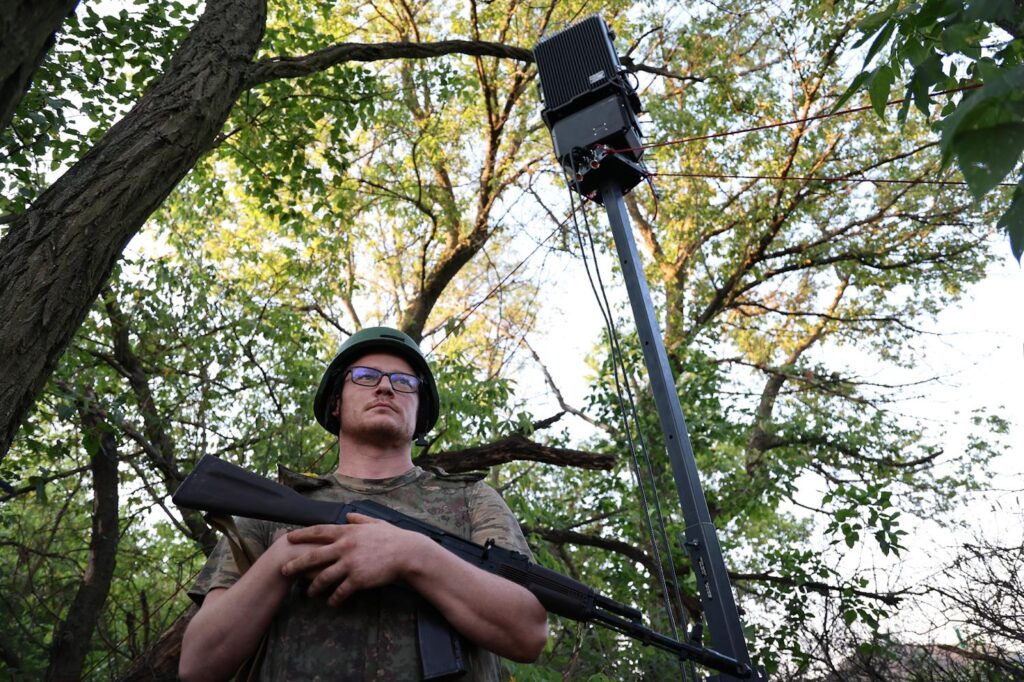
Short-range EW, which provides immediate tactical protection from Russian drones, forms the biggest share of the market, with 36%. This segment grew by 122% over the past year.
The counter-UAV segment also showed substantial growth, increasing by 195%. This reflects the continuing rise in the use of enemy unmanned systems and the need for layered defensive solutions capable of detection, disruption, and suppression across different ranges and frequencies.
KSE noted that in 2025, a key development was the growth of systems meant to combat guided munitions and advanced strike systems — these systems reached 19% of the total EW market in a single year.
The report expects continued growth across all types of EW. As maximum protection is achieved by different systems used in tandem, it’s difficult to isolate the prominence of any single EW category.
Naval drones
According to KSI, surface drones reached operational maturity early on in the full-scale war, with a small number of companies dominating production and deployment.
The biggest trend has shifted from production scaling to improving versatility and integration with other capabilities.
Over four years, Ukrainian sea drones have evolved from being simple swarming bombs towards being able to simulate littoral combined arms operations by mounting different weapons and working together with UAVs.

Multiple countries are interested in Ukraine’s USVs and experience at using them, especially following the start of the latest war in Iran.
The youngest, most unproven, yet promising segment of this market is underwater and semi-submersible unpiloted systems.
Last year, Ukraine unveiled its Toloka series of torpedo-shaped submersible drones, which can operate at depths of 300 meters, making them impervious to many of the above-surface weapons that have no trouble dealing with surface vessels.
The largest Toloka models are claimed to have a range of up to 2,000 kilometers and a payload of up to 5,000 kilograms.
AI
While fully-autonomous weapons are still out of reach, both Ukraine and Russia have made strides in semi-autonomy, from target recognition to navigation to target locking and guidance.
Other important uses of AI include crunching through terabytes and terabytes of battlefield data to create predictive analytics, in addition to simplifying clerical gruntwork such as creating reports.
The report didn’t state the dollar value, citing the fact that AI is embedded across multiple product categories rather than procured as a standalone capability.
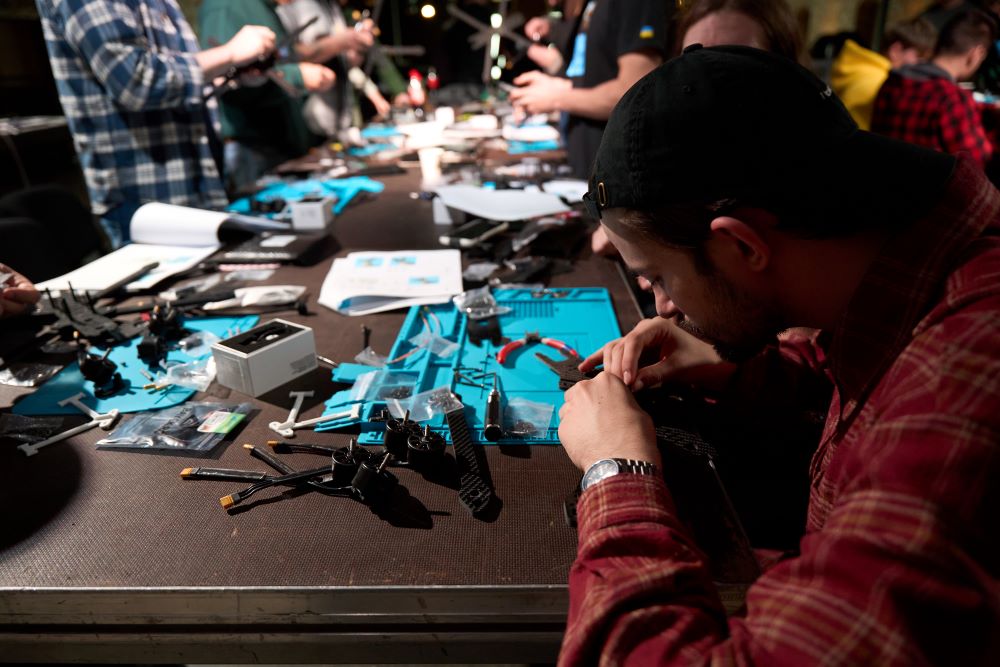
However, as of March 2024, more than 10% of venture capital in Ukraine’s defense sector was channeled towards AI companies.
Ukraine has perhaps the world’s greatest collection of organized battlefield data that can be used for AI training, which the Defense Ministry recently made available to eligible partners. Ukraine recently opened the A1 Defense AI Center hub, whose goal is to develop and implement AI solutions.
“The Ukrainian defense AI sector faces a critical need to stay a step (if not several steps) ahead of Russia, especially given the enemy's significant investments in the field,” KSE wrote.
“To remain competitive, Ukraine must match Russia's investment volumes. While it is debatable whether Russia will be able to develop a fully AI-controlled kill chain, its financial capabilities are undoubtedly more extensive.”