Ukraine strikes Moscow’s largest oil refinery, 15 kilometers from the Kremlin
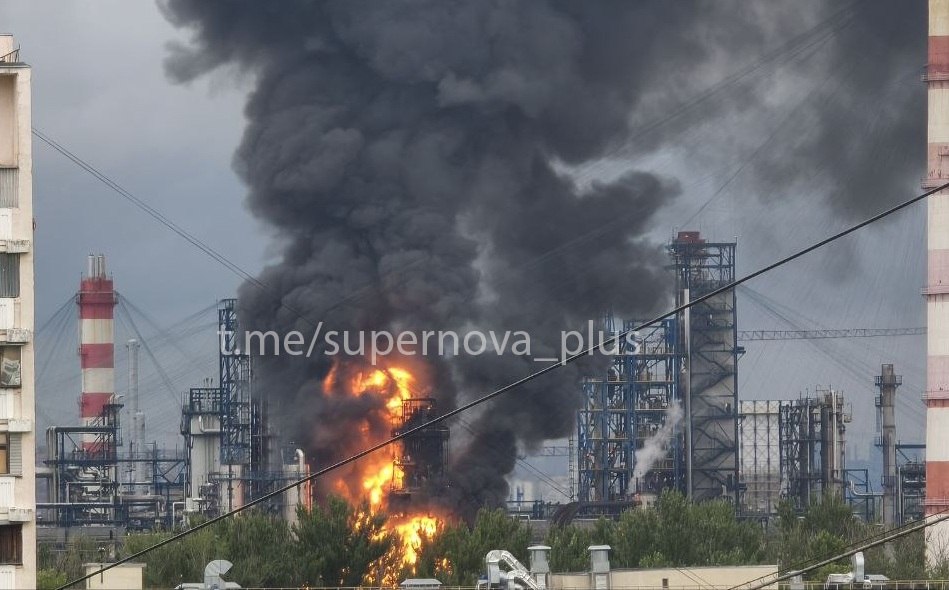
Ukrainian drones struck the Moscow Oil Refinery in the Kapotnya district on the morning of 16 June, igniting a fire at the plant roughly 15 kilometers from the Kremlin and some 500 kilometers from Ukrainian-held territory. Moscow Mayor Sergei Sobyanin conceded that a drone had damaged the facility — the capital's largest refinery — after first reporting that air defenses had downed dozens of incoming drones.
The strike landed on a plant that seems to have seen it coming. Before the hits were even confirmed, the refinery carried out an emergency release of pressure across its system, bracing for impact.
A refinery braced for the hit
The pre-emptive shutdown came from Serhii Sternenko, an adviser to Ukraine's defense minister, and was reported by RBC-Ukraine. The plant was preparing for possible hits, he said. It bled off pressure rather than risk a larger blast.
The Ukrainian monitoring channel Exilenova identified the burning unit as the ELOU AVT-6 — the refinery's primary crude-distillation unit, which it called the heart of the plant. That claim rests on open-source footage and has not been independently confirmed. Sobyanin acknowledged only narrow damage. "One of the drones damaged an MNPZ facility. There are no casualties. Emergency services are working at the scene," he wrote.
His account of the air battle shifted. Across his updates, Sobyanin's claims for drones shot down over the capital ranged from about 25 to 60 before he conceded the refinery had been hit at all.
The most heavily guarded plant in Russia
Kapotnya sits inside the densest air-defense belt in the country. Andrii Kovalenko, who heads the National Security and Defense Council's Center for Countering Disinformation, said that concentration counted for nothing. "Moscow is under attack, the Moscow refinery is ablaze. Although Putin has pulled practically all the key air-defense and missile-defense systems to Moscow, it does not save the Russians. Putin is not a guarantor of safety for a Muscovite," he wrote.
The interceptors that did fire left their own marks. The Russian Telegram channel Astra reported that debris from a downed drone struck a high-rise in Elektrostal, in Moscow Oblast, setting the top floor alight.
A war economy already rationing
The Moscow refinery belongs to Gazprom Neft and processes about 11 million tons of crude a year. It supplies roughly 40% of Moscow's gasoline and half its diesel, plus fuel for the capital's airports. Knocking it offline reaches ordinary pumps faster than a strike on almost any other plant.
The pressure is already showing. Facing repeated strikes, the Kremlin has allowed refiners to release off-specification fuel to keep supply moving. The same night as the Moscow strike, drones hit an oil depot at Poltavskaya in Krasnodar Krai, a logistics link between Lukoil's plants and the region's filling stations.
President Volodymyr Zelenskyy tied the strike directly to forcing an end to the war. "This time, Ukrainian long-range capability was felt in the Moscow Oblast. A refinery was struck at a distance of 500 kilometers," he said, thanking the SBU, the Unmanned Systems Forces, Special Operations Forces, military intelligence, and the missile troops. "Russia must be forced to end the war against our people. And Ukrainian long-range weapons are one of the important components of such coercion. This is a fair response to Russian strikes and a response to the dragging out of the war."
The response framing points back a day. Overnight on 15 June, a Russian strike hit the Kyiv-Pechersk Lavra, and Zelenskyy promised an answer.
Read also
-
Russo-Ukrainian war, day 1573: Russia strikes Kyiv’s ancient monastery in 681-weapon assault
-
Latvia’s defense minister brings 14 British-made combat vehicles to Ukraine’s frontline “from box”
-
“Not a coincidence”: Russia waited to launch its mass strike on Ukraine until Putin congratulated Trump on his birthday, says Zelenskyy