Uganda’s 12th Parliament Faces Renewed Debate Over NGO Funding Proposal
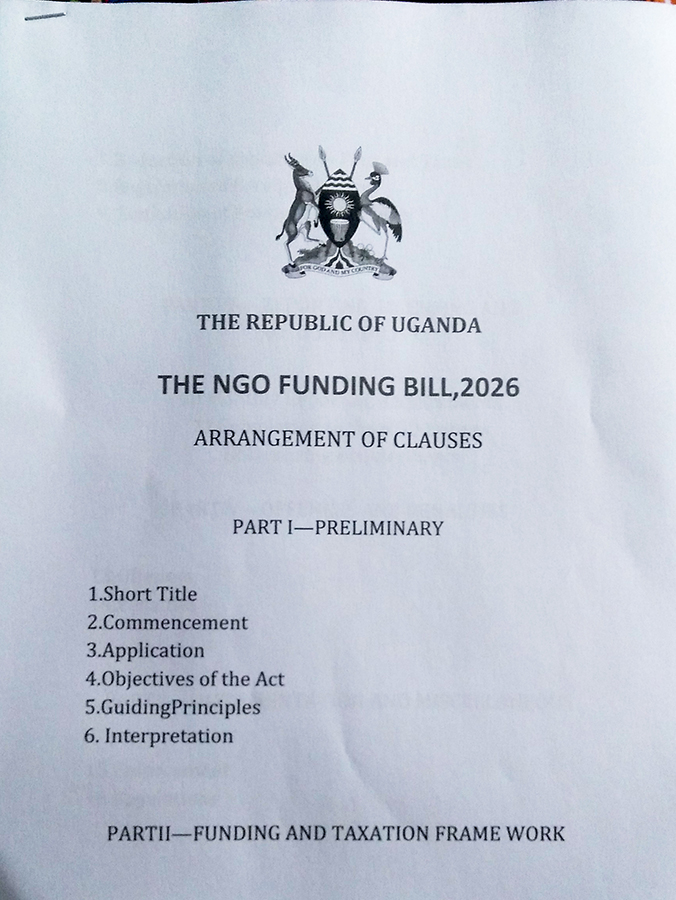
Download The Bill Now
Questions Emerge Over Possible Return of NGO Funding Bill in Uganda’s 12th Parliament
Kampala — Questions are beginning to emerge over whether Uganda’s incoming 12th Parliament could formally consider the controversial NGO Funding Bill, 2026 — a proposal that has already sparked heated debate over foreign funding, civil society independence, and increased state oversight of non-governmental organisations.
The proposal was initially petitioned earlier this year by youth activist and entrepreneur Nyanzi Martin Luther during the transition period between the 11th and 12th Parliament. Although the bill was not tabled for debate before Parliament adjourned, it ignited a national conversation that has continued into the country’s new political cycle.
At the centre of the proposed legislation were sweeping reforms aimed at restructuring how NGOs and Community-Based Organisations (CBOs) are financed, monitored, and regulated in Uganda.
Among the key proposals were the establishment of a National NGO Fund, stricter disclosure requirements for foreign funding sources, mandatory digital reporting systems, and incentives intended to promote local financing for civil society activities.
Supporters of the proposal argued that Uganda’s heavy dependence on foreign donor funding has left many local organisations vulnerable to shifting international priorities and unpredictable funding cuts.
“Foreign donors have been helpful, but they should not remain the only source of support,” Nyanzi Martin Luther said while defending the proposal during public discussions earlier this year.
He maintained that building a locally supported funding framework would improve sustainability for organisations working in critical sectors such as health, education, youth empowerment, governance, and community development.
However, the proposal quickly triggered resistance from civil society actors and governance advocates who warned that increased state involvement in NGO financing could threaten institutional independence.
Among the most vocal critics was Dr. Sarah Bireete, who cautioned that greater government influence over NGO funding mechanisms could weaken the autonomy of organisations if safeguards were not clearly established.
“If not handled carefully, such reforms could limit the operating space for NGOs and CBOs,” she warned during debates surrounding the proposal.
Civil society groups also raised concerns that stricter reporting obligations and state-controlled funding structures could expose organisations — particularly those involved in governance, accountability, and human rights advocacy — to political pressure and administrative interference.
The debate later gained further momentum after similar themes emerged in discussions surrounding the Protection of Sovereignty Bill, 2026, legislation that introduced stronger provisions on foreign funding disclosures and oversight of externally influenced activities.
Political analysts now say the overlap between the two proposals has fuelled speculation that elements of the NGO Funding Bill could resurface in the 12th Parliament — either through a revived private member’s bill or as part of broader sovereignty-related legislation.
So far, however, there has been no formal indication from parliamentary leadership or government officials that the proposal will be prioritised once the new Parliament begins sittings.
Under parliamentary procedure, private member initiatives and public petitions may be reintroduced by their sponsors or taken up by relevant committees if considered of national importance, leaving the future of the NGO Funding Bill politically open-ended.
Government officials have previously defended tighter regulation of NGOs as necessary for transparency, accountability, and the protection of national interests amid growing concerns over foreign influence in domestic affairs.
Critics, however, argue that Uganda already possesses sufficient legal frameworks governing NGO operations and warn that additional restrictions could shrink civic space while affecting organisations that provide essential services in health care, refugee support, education, humanitarian response, and community development.
As the 12th Parliament prepares to begin its legislative agenda, analysts say the central question is no longer whether the proposal generated public debate — but whether it will formally re-emerge on Parliament’s order paper.
For now, the NGO Funding Bill remains politically unresolved, sitting at the intersection of sovereignty concerns, foreign funding dependency, and the future direction of Uganda’s civil society sector.
The post Uganda’s 12th Parliament Faces Renewed Debate Over NGO Funding Proposal appeared first on Watchdog Uganda.