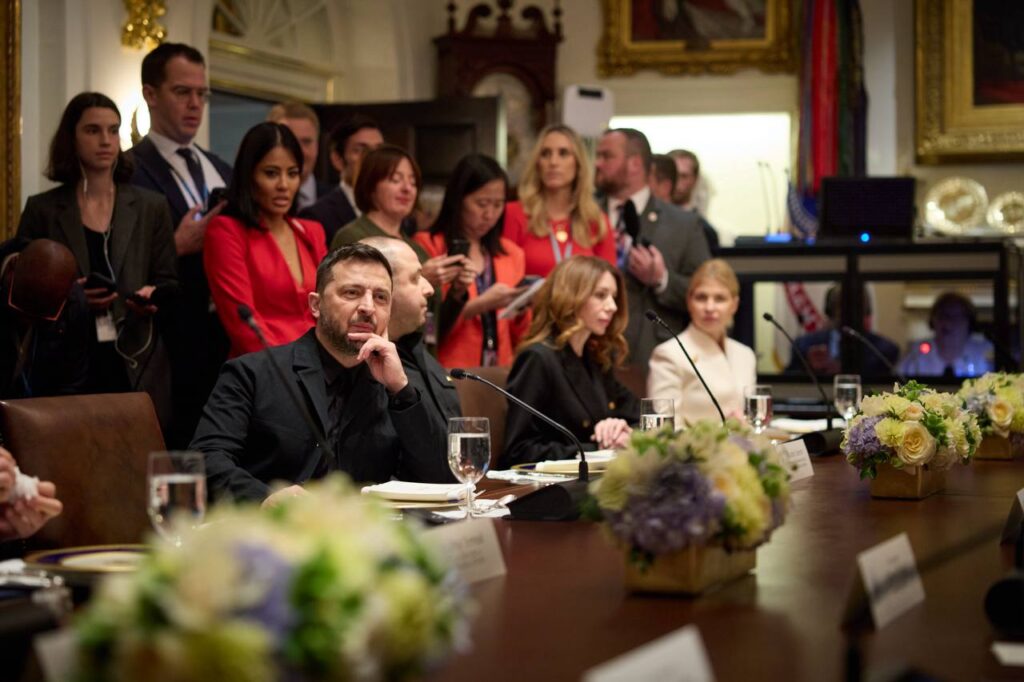
"We’re done." During the 17 October meeting, US President Donald Trump rejected Volodymyr Zelenskyy’s request to supply Ukraine with long-range Tomahawk cruise missiles, Axios reports.
The presidential meeting was set against the backdrop of Washington’s potential plans to impose tariffs of up to 500% on China if Beijing continues purchasing Russian oil, the possible supply of Tomahawk missiles to Ukraine, and Trump’s statements that the Ukrainians “want to go offensive", with the US set to make “decisions” likely related to military assistance.
But when Zelenskyy arrived in Washington, hoping to secure commitments for new US weapons, the next day, after Trump’s lengthy call with Russian President Vladimir Putin, he found the American president in a markedly different mood.
Two sources familiar with the talks say that the atmosphere during Zelenskyy-Trump meeting in the White House was tense — one described the meeting as “not easy,” the other simply as “bad.”
"He was tough and bit emotional"
Axios reports that Trump made several sharp remarks and at times grew emotional — not shouting, but "just tough." After two and a half hours, he abruptly ended the meeting:
“I think we’re done. Let’s see what happens next week,” Trump said, hinting at his upcoming talks with Putin in Budapest.
No concessions
Zelenskyy pressed for the Tomahawk transfer, but Trump showed no flexibility, insisting that his priority was diplomacy, not more arms deliveries.
European reaction: surprise
After the meeting, Zelenskyy held calls with several European leaders. Some, Axios reports, were surprised by Trump’s sudden policy shift.
UK Prime Minister Keir Starmer suggested cooperating with Washington on a peace framework for Ukraine, modeled after Trump’s 20-point Gaza plan.
What experts say?
Earlier, CNN analyst Matthew Chance suggested that in just nine months of Trump’s second term, Moscow has realized that the promise of personal engagement and the hint of a short-term victory can be just as effective as any painful compromise.
Despite agreeing to meet in Budapest, Moscow shows no willingness to compromise.
Even amid mounting battlefield losses and Ukrainian drone strikes on Russia’s energy infrastructure, the Kremlin continues to reject any peace deal until its strategic goals are achieved.
After the call with Trump, Russia has still been launching thousands of its killer drones on Ukrainian civilians.
On the night of 18 October, Moscow attacked Ukraine with three S-300 anti-aircraft guided missiles, capable of destroying residential buildings. Russia also unleashed 164 attack UAVs of the Shahed, Gerbera type, and drones of other types from four directions: Millerovo, Kursk, Orel, and Primorsko-Akhtarsk.