
This Peugeot 205 GTI is the car you remember from your teenage years
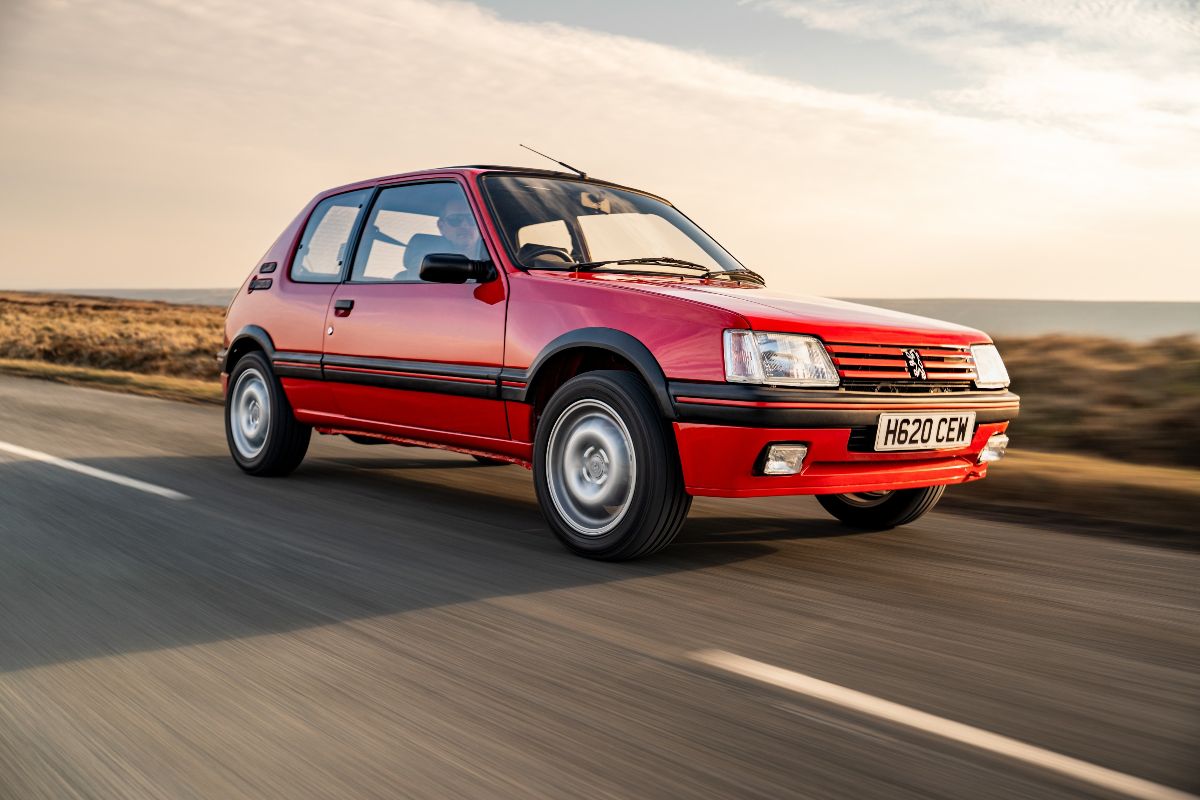
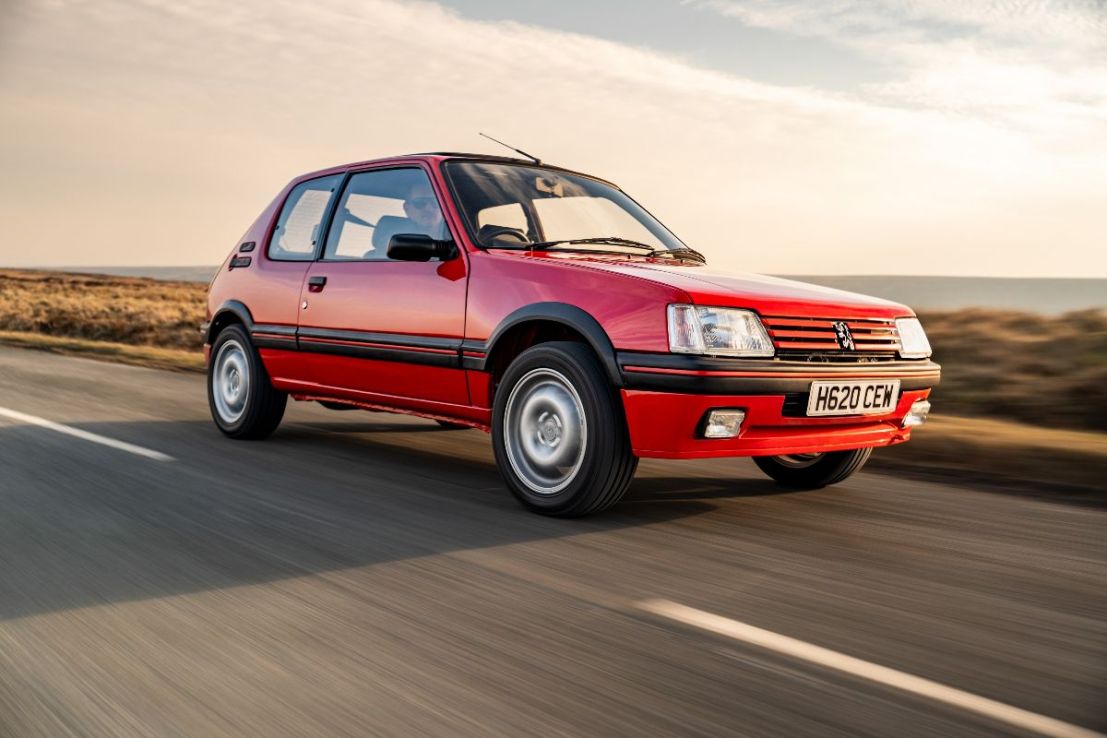
Back in the 1980s, if you were Somebody in the City, you probably drove a Porsche. But if you were an up-and-coming hotshot who’d made some lucky bets on gold futures, you’d splash the cash on a Peugeot 205 GTI.
Launched in 1984, this was Peugeot’s riposte to the runaway success of the original VW Golf GTI. For the princely sum of £6,245, you got a 105hp 1.6-litre engine, lowered suspension, 14-inch alloy wheels and a profusion of red go-faster stripes. The later 1.9-litre GTI upped the ante, with 128hp, 15-inch rims, part-leather seats and disc brakes all-round.
By the time I bought mine for £1,300 in the late 1990s, the 205 GTI had gone from aspirational to expendable. Many were modified, crashed or simply driven into the ground. In recent years, however, the plucky Peugeot’s star has risen again, with prices following a similar trajectory. Indeed, search ‘greatest hot hatchbacks of all time’ and you might see a 205 GTI in the number one spot. Can it really be that fantastique?
Original of the Peugeot species
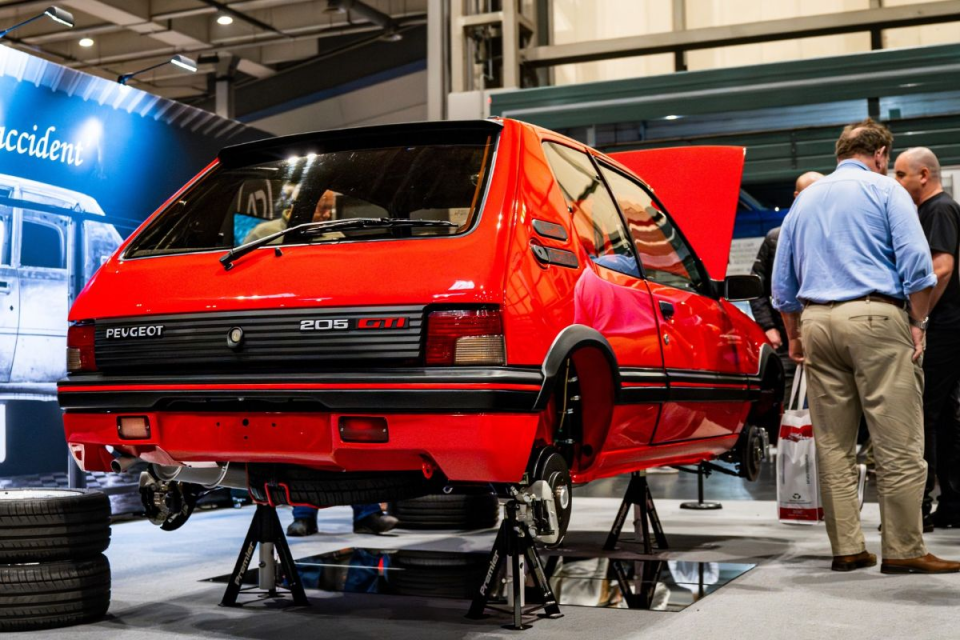
Spoiler alert: the short answer is oui, especially when we’re talking about the car pictured here. Treated to a painstaking, 1,000-hour restoration by Auto RARA of Derby, it’s quite possibly the most perfect 205 GTI on planet Earth.
As Auto RARA co-founder David Stubbs explains, the company took on the project to showcase its talents. “We wanted to do an extraordinary restoration on an ordinary car. Even though a 205 GTI is far from ordinary.”
Unlike Tolman Engineering’s 205 GTI, this isn’t a restomod, so sourcing rare, original parts was paramount. A set of OE-spec Michelin tyres, for instance, was tracked down in Ukraine, then shipped to the UK. “We even replicated the frayed edges on the paint code beneath the bonnet,” David reveals. “These were simply sprayed on with a can when cars left the factory, so that’s how they looked.”
Each job was logged in a dedicated build diary, which allows Auto RARA customers to track their car’s progress using an app. “For more in-depth projects like the 205 GTI, we put together a leather-bound build book that tells the car’s restoration story via all of the people involved,” adds David. “We make three copies: one stays with the vehicle, another is for the customer and the final one is for our records. It’s a real asset if the owner does eventually decide to sell their car.”
A concours-winning car
Seeing the 36-year-old Peugeot reverse out of a delivery truck onto my driveway, I’m buzzing with anticipation. Gérard Welter’s design still looks so crisp and perfectly proportioned. The gorgeous Speedline alloy wheels of this 1.9-litre model are the icing on the gateau.
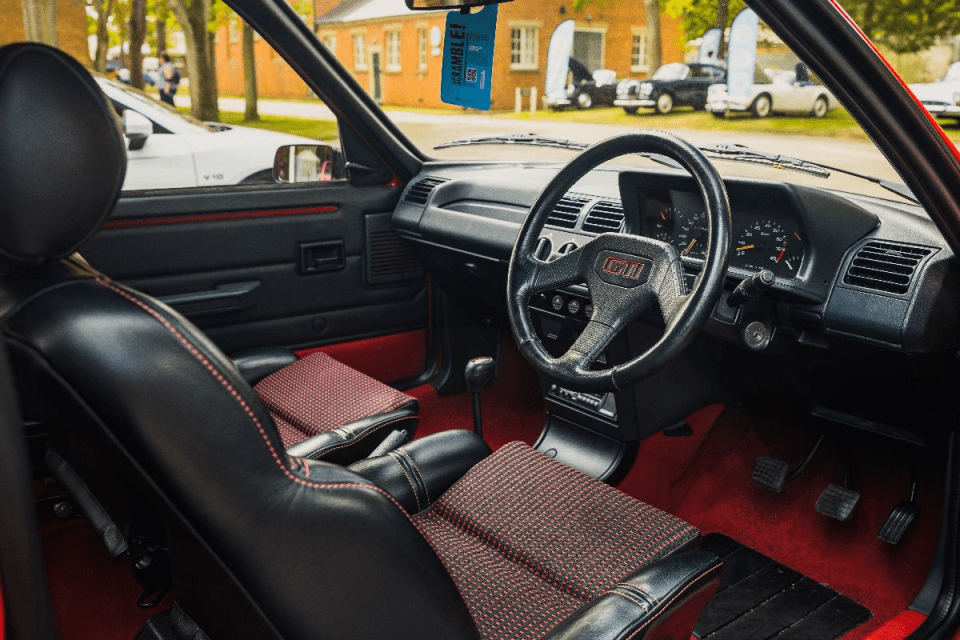
Fittingly for a car that won the Restoration Showcase Award at last year’s Hampton Court concours, the GTI looks factory-fresh. Better than new, in fact. Its Vallelunga Red paint is deep and mirror-like, while the matching red carpets (hey, this was the ’80s) have clearly never seen a muddy boot or a wet dog.
Despite not having sat in a 205 for two decades, it feels instantly familiar. There’s the same gangly gear lever, upright driving position, tinny doors and skinny roof pillars. The same old-school French build quality, too. Unlike my slightly shonky GTI, however, nothing rattles or looks in danger of falling off.
I twist the dainty key and the four-cylinder ‘XU’ engine coughs boisterously into life. Time for a blast down memory lane.
A star of the Scramble
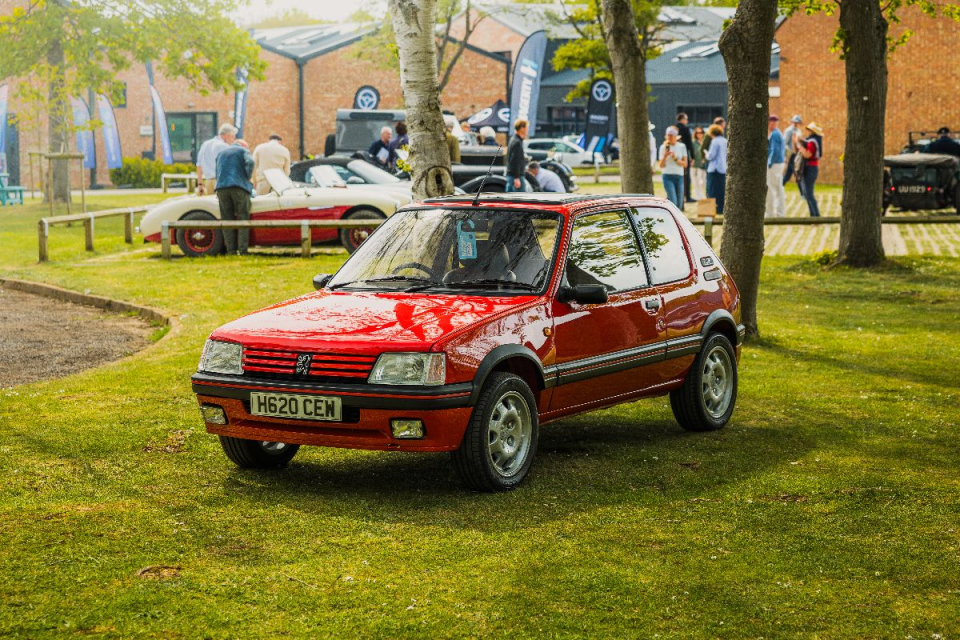
First I must contend with the western side of the M25, though. My destination is the Sunday Scramble in Bicester, Oxfordshire, arguably the UK’s most eclectic car show. Auto RARA has arranged for the 205 to be on display, parked next to a Ferrari 812 GTS and Porsche Carrera GT. I almost feel nervous on its behalf.
With no air conditioning, a tinny AM/FM radio and the tacho reading a busy 3,500rpm in fifth at 70mph, the Peugeot isn’t ideal for eating up motorway miles. Yet that ceases to matter as I merge into a convoy of Scramble-bound traffic on the M40, including an E30 BMW 3 Series and a modified Subaru Impreza. Several supercars come scorching past, the little 205 earning appreciative nods from everyone who looks across.
This continues at Bicester Motion, a lovingly preserved former RAF base, where the car draws a bigger crowd than the Ferrari and Porsche put together. I lose count of the number of people who tell me they “used to have one of these”, usually followed by tales of fondly remembered drives and best-forgotten reliability. “Mine was a silver 1.6,” recalled Craig from Godalming, Surrey. “I drove that car until it fell to bits. They were great times.”
The great engine debate
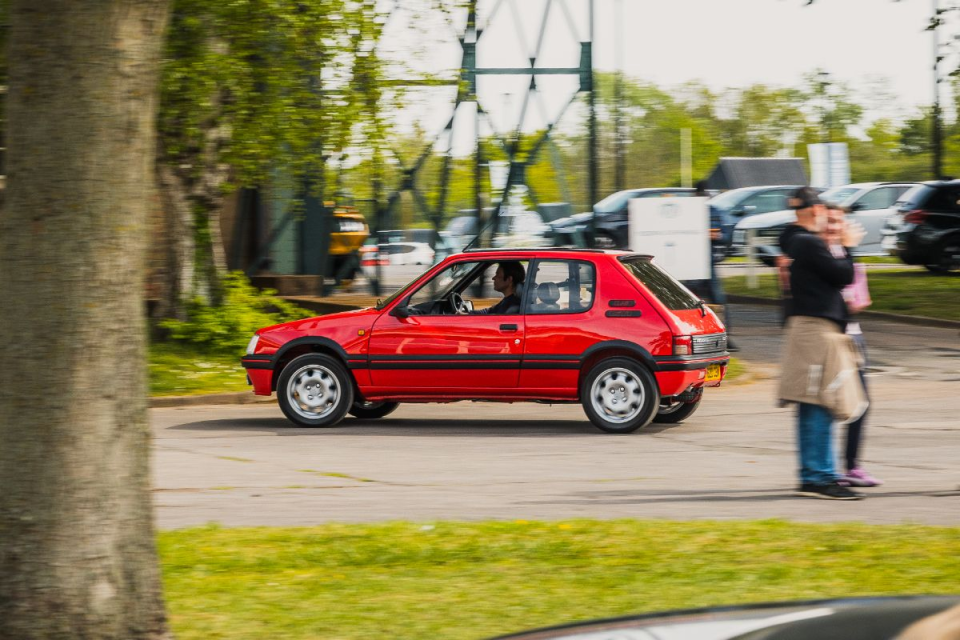
Keen to make more memories of my own, I resolve to take the long route home, on roads where a hot hatchback can really shine. Sitting pretty at car shows is all well and good, but a 205 GTI deserves to be driven.
The Peugeot’s 128hp output looks distinctly underwhelming today, when even a standard Golf GTI serves up 265hp. Yet with eager throttle response, a notchy manual gearbox and just 875kg to shift (that same 2026 Golf GTI weighs 1,466kg), this modern classic still feels fast.
For the record, the official figures are 0-60mph in 7.8 seconds and a 128mph maximum. Enthusiasts will tell you the 1.6-litre motor revs more freely, aided by its shorter gear ratios, but the 1.9 counters with gutsy mid-range torque (up from 99 to 119lb ft). On a flowing B-road, that means you can overtake more easily and are less reliant on maintaining momentum.
Simplify, then add lightness
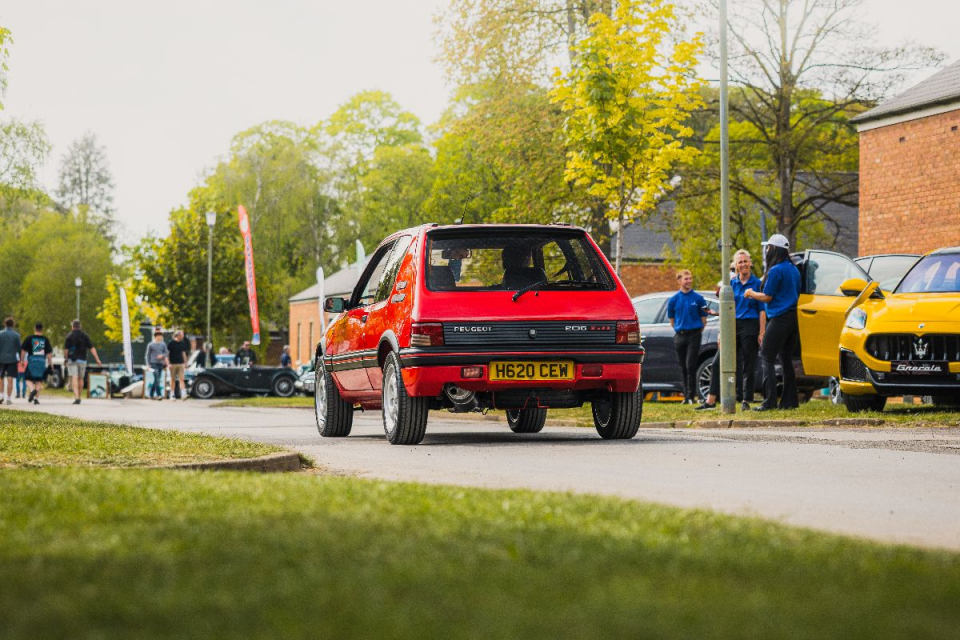
Still, whichever engine you choose – and at this juncture, my advice is simply to buy the best 205 GTI you can afford – these cars have never been about raw performance. Their true magic is conjured in the corners.
This particular GTI has the optional power steering, which makes it less bicep-busting at parking speeds without reducing fidelity as you go faster. It jostles with constant feedback, helping you place the car precisely and judge the limits of grip.
The deux-cent-cinq has a bit of a reputation for snap oversteer, of course, but on dry roads and fresh tyres it never threatened to deposit me backwards into a bus shelter. Besides, I wasn’t inclined to drive a concours-winning car on the ragged edge. This was more about savouring the experience.
And savour it, I did. As the daylight seeped away and evening shadows stretched out, I rediscovered what makes this humble hatchback so special. From its tactile control weights to its keenly balanced chassis, the GTI is a driver’s car of the highest order. In a world of automotive obesity, it feels alert, compact and wonderfully light on its feet.
Verdict: Peugeot 205 GTI
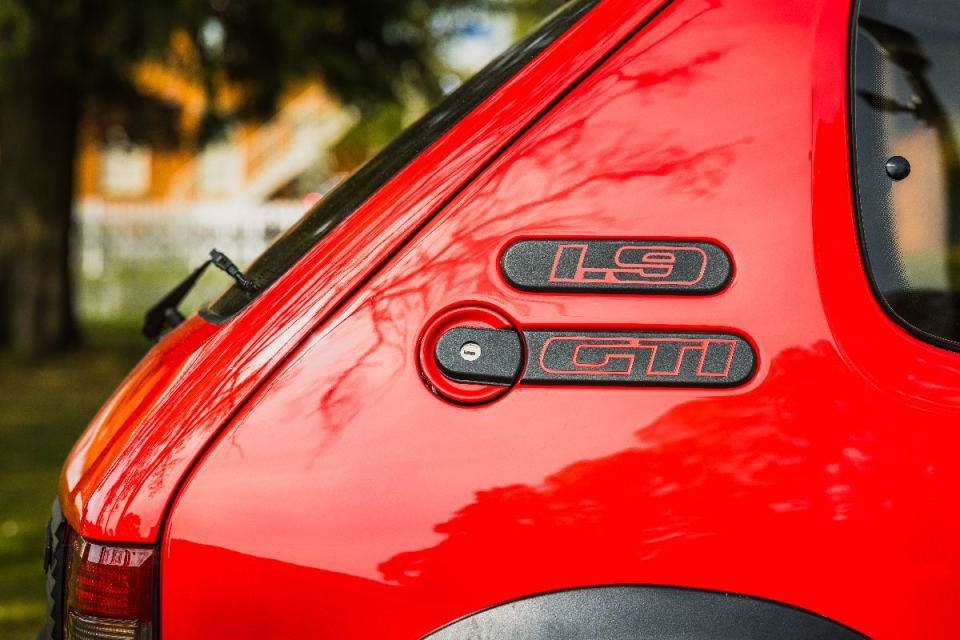
The greatest hot hatchback of all time, then? It’s a tough call that, to me, feels a bit like trying to name the all-time best F1 driver. You simply can’t make direct comparisons, as each era is so different. A new Toyota GR Yaris is a better car than a 205 GTI in pretty much every respect, although that doesn’t necessarily make it more fun on the right road.
I will stick out my neck and name the Peugeot as the best hot hatchback of the 1980s, though. And given that was arguably the golden era for these cars, it has a strong claim to the overall title.
Sadly, you can’t buy one for £1,300 any more. In fact, most for sale at the time of writing were listed as ‘POA’ (price on application), which is a polite way of saying ‘if you have to ask…’
As a ball-park, reckon on paying upwards of £15,000 for something usable, or more like £50,000 for a flawless 205 GTI like this car. If I strike it lucky on the stock market, I’d have another one in a heartbeat.
Tim Pitt writes for Motoring Research