The West saved Moldova from Russia. It’s still “searching” for how to help Georgia
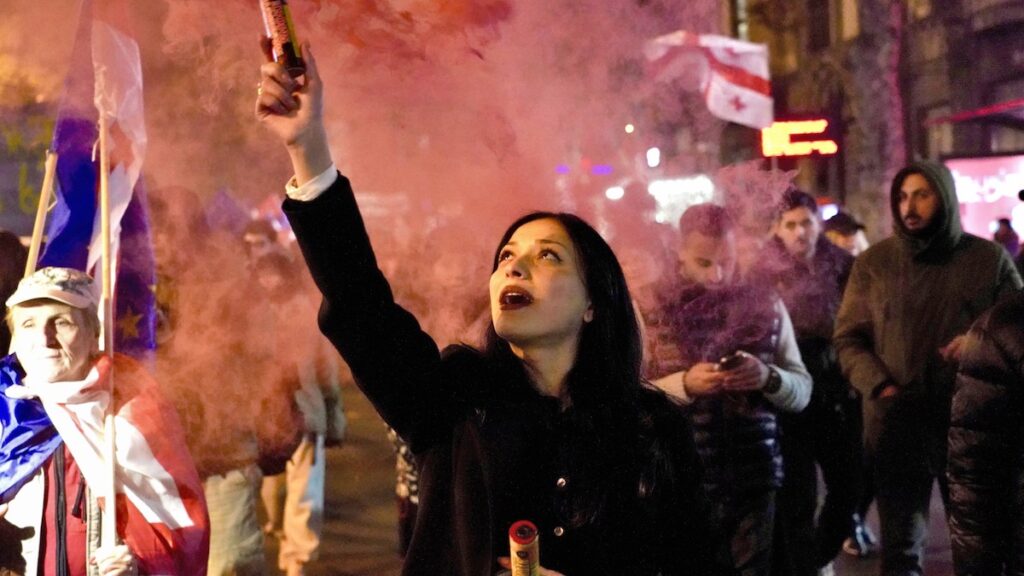

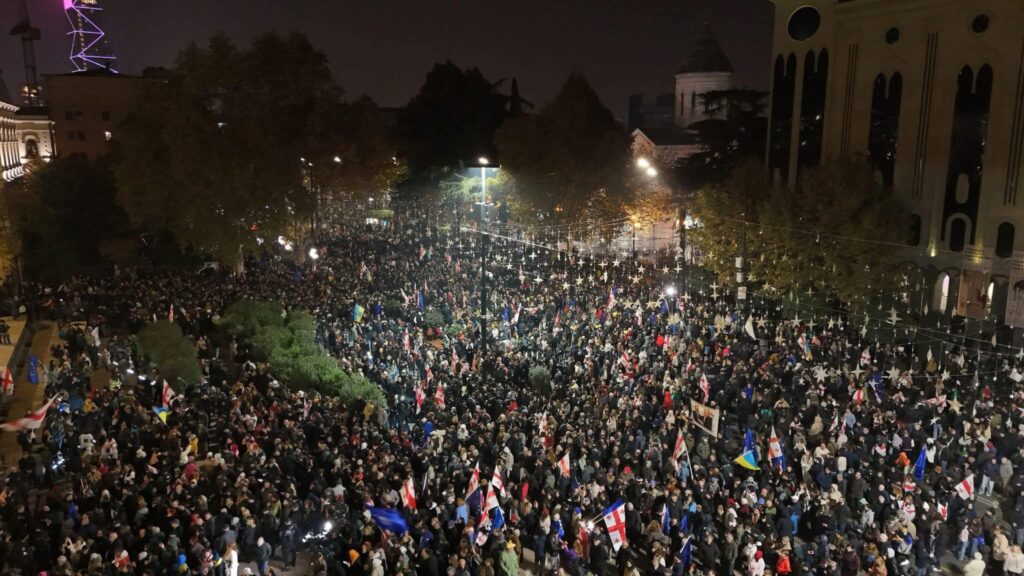
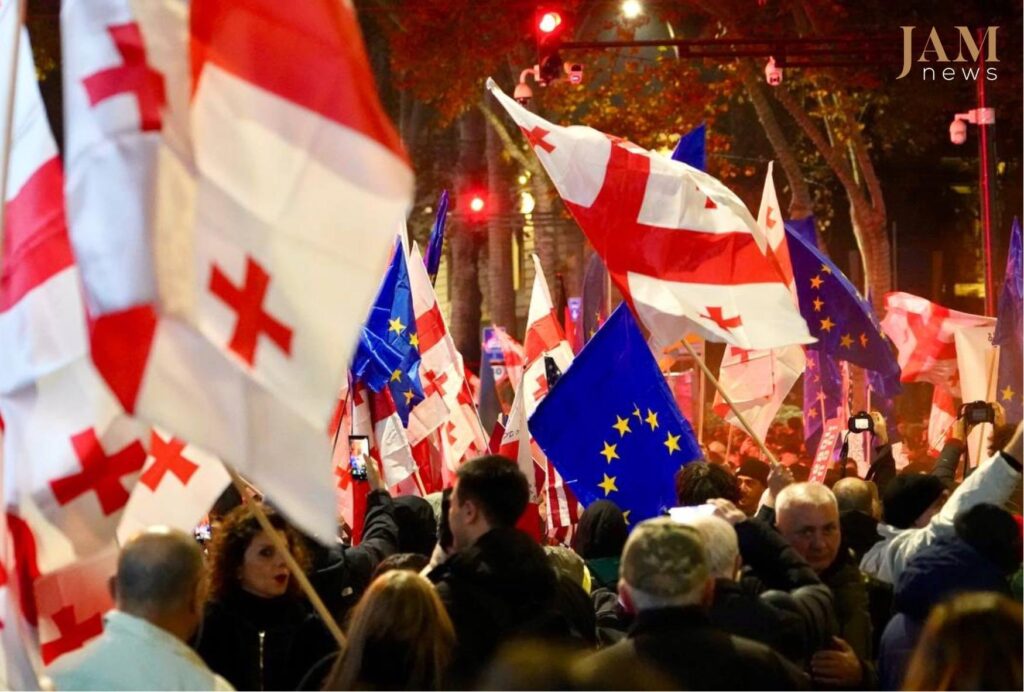
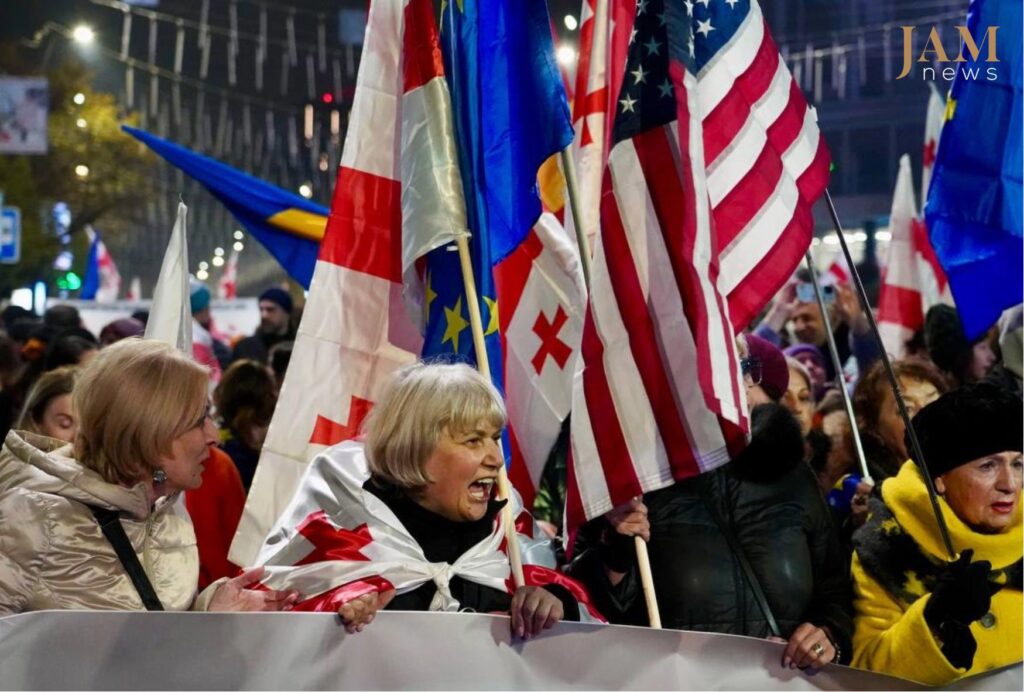
On 28 November 2025, at least 30,000 Georgians (in a nation of 3.7 million) marked a full year of daily protests. Ukraine's Euromaidan lasted three months; Belarus's 2020 uprising—five.
Georgia is now at twelve, and counting. Every single day since the ruling Georgian Dream party halted the country's EU accession, defying the overwhelming majority of Georgians who want Europe.
"We are searching for ways to channel the aid safely," is what Georgians have heard for months from European partners. Meanwhile, the resistance is bleeding out.
Why Georgia matters far beyond Georgia
Georgia is not just a democracy and human rights issue.
- It is a Russia sanctions evasion loophole—Russian oil laundering, suspicious surges in car and equipment exports to Central Asia—dual-use items under false documentation.
- It is China taking over strategic Black Sea infrastructure like the Anaklia Deep Sea Port, from which the American Conti Group was evicted.
- It is Iran gaining a foothold with 13,000 companies registered at a handful of addresses.
Under Georgian Dream, Georgia is a gap in the Euro-Atlantic security architecture that Moscow is actively exploiting.
Georgia has always been Russia's testing ground—from backing separatism in the 1990s, to the 2008 invasion, to installing a puppet regime through Georgian Dream. Today's Georgia, frequently praised by Russian officials and ideologues like Alexander Dugin, is what Moscow wants to achieve in Moldova and Ukraine.
If an unjust peace is ever imposed on Ukraine, Georgia shows what "peace" with Russia actually looks like.
European decision-makers understood this when it came to Moldova. They imposed sanctions on destabilizing actors as early as June 2025, months before parliamentary elections, ensured robust monitoring, quickly exposed disinformation and hybrid threats.
Georgia got a cautionary tale. The 2012 transfer of power was hailed as democracy in action, not treated with suspicion as a hostile takeover.

How Russia captured Georgia without firing a shot
The Georgian Dream party, wholly in service to oligarch Bidzina Ivanishvili, managed to numb the population and Georgia's foreign partners for a decade. Russian propaganda successfully reframed the 2008 invasion as avoidable—if only Georgia had "cooler heads."
The West's own Chamberlainism helped: Obama's Russia reset came immediately after the invasion, and the response to Crimea's annexation was notably modest. An illusion of security persisted—at home and abroad—that Georgia could never leave the Euro-Atlantic path.
Then there was Ivanishvili's immense personal wealth, worth 35% of Georgia's GDP. Unlike Ukraine, where multiple oligarchs serve as checks on each other, Georgia had no counterweight. Add a mixed-member parliamentary system ensuring disproportionate power (as in Hungary), and a hyper-centralized regional administration, and the capture was complete.
After Russia's full-scale invasion of Ukraine in 2022, Georgian Dream's room to play both sides shrank. The party bet on Russian victory.
Whether Ivanishvili was a Russian project from the start or simply gravitated toward Moscow matters less than the result: full alignment with Russia, and everything that comes with it—corruption, human rights violations, mafia governance.

The situation on the ground
Georgia is now a dictatorship in legislation, governance, and institutions. The protests are the only thing separating it from full consolidation—the product of a more diverse civil fabric than existed in Lukashenka's Belarus by 2020, two decades after he had already consolidated power.
Georgia still has opposition parties (soon to be banned), civil society organizations, independent media, a deeply Europeanized urban population, and raw anti-Kremlin nationalism.
But Georgia lacks what Ukraine had during Maidan: multiple competing financial interests, regional power bases for the opposition, and a reckless, miscalculating autocrat. The result is a painful stalemate breeding prolonged instability.
Georgian Dream is desperate to eliminate the core daily protesters but careful not to let repression spill into the "average population."
They want to exhaust the resistance one person at a time. In political prisoners per capita, Georgia now exceeds Russia—123 people currently imprisoned under criminal prosecution. Hundreds more have cycled through detention centers within the year.
The broad resistance is not yet as unified as it needs to be. Democratic parties, civil society, students, families of political prisoners—all are working to consolidate. But they are drained of financial resources. Fighting the Kremlin with bare hands is not sustainable forever.
The dangerous "just doing business" myth
A common and potentially devastating misconception is that Georgian Dream "doesn't love Russia—they're just doing business." This leads Western observers to believe they're dealing with a transactional autocracy like Vučić's Serbia, where more engagement could nudge the regime toward softening positions.
Vučić plays both ways—projecting credibility toward the EU while indirectly providing arms to Ukraine. Georgian Dream's uncompromisingly hostile attitude toward the EU, Ukraine, and the US draws constant criticism. Much of what they do seems unnecessary, straight out of Russian history-revising textbooks, and gratuitously alienating to Georgians.
This year's "Temporary Parliamentary Commission" found that Georgian authorities began the 2008 war at the orders of foreign powers, and that the 2003 Rose Revolution was actually a coup.
Commission head Thea Tsulukiani implied that Eduard Shevardnadze never formally resigned—Saakashvili was illegitimate.
This is precisely the Russian narrative for Ukraine: Yanukovych legitimate, Maidan a coup.
This transcends transactionalism into full ideological alignment with Russia.
Georgian Dream has long tried to project inevitability—"they will have no choice but to embrace us, no matter what we do." This is why Western engagement feeds their narrative, convincing Georgian elites of the regime's invincibility and discouraging protesters.
"Why are they still shaking hands with them?" is the single most fundamental grievance protesters express. Georgian Dream collects such handshakes, however cosmetic, and boosts them on propaganda channels.
What actually works
Targeted sanctions work. As of September 2025, more than 230 Georgian Dream officials have been affected by Western sanctions, primarily travel bans and financial restrictions.
Of seven Interior Ministry and police officials under combined US and UK financial sanctions (Global Magnitsky and Global Human Rights), five have been dismissed—including Interior Minister Vakhtang Gomelauri and violent Special Tasks Director Zviad Kharazishvili—one relocated to a non-police position, and only one remains.
That's 71% dismissed, 85% affected. Western sanctions make a person a socio-cultural pariah in Georgia—and status is precisely why people become regime enablers.
International isolation must continue as a necessary (though insufficient) precondition for restoring justice. This should include inquiries by international financial institutions into where their money flows. In October 2025 resolutions, ALDE and EPP both called for EU member states to use Council of Europe instruments like GRECO and Moneyval to follow up on corruption and money-laundering cases.
Georgian Dream is desperate to project any semblance of international legitimacy, frequently trying to catch European officials in corridors so propaganda media can broadcast: "See? We are embraced!" Their lack of resources to achieve normalcy and stability should not be underestimated.
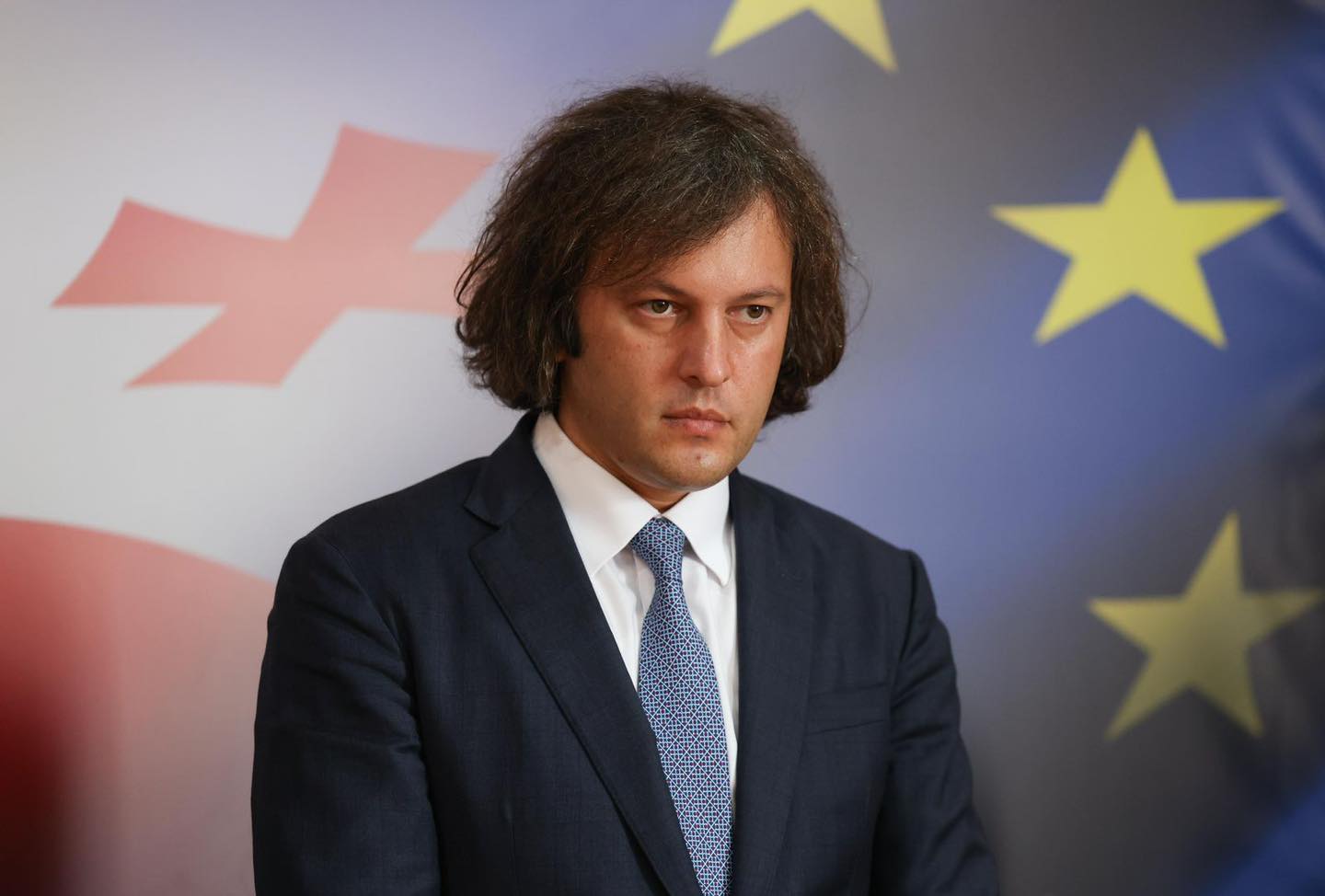
Georgia’s PM courts authoritarian allies as Western ties collapse after sham elections
What needs to happen
Aid to civil society organizations and independent media must increase—vital for survival. Georgians have strength and mobilization; they need resources, strategic channeling, and external support.
Internally, the unified opposition platform must consolidate. From abroad: maintain and expand international isolation, expand targeted sanctions, demand transparency from international financial institutions operating in Georgia.
For Georgians, this is a fight for their democratic, European future. A fight against Russia. And a forging of a new social contract—because the old one, built on crony elitism and cosmetic fairness across 35 years of restored independence, is no longer acceptable.
Georgia could be a success story again. Crushing Russia's dream in Georgia would be a blow to Moscow's plans for subversion elsewhere—Moldova, Ukraine, the Western Balkans, and beyond.
Georgians have proven they will not stop. The question is whether the West will find that "safe channel" before the resistance runs out of air.
Individuals can help by contacting decision-makers, ensuring the struggle gets media attention, and donating to initiatives like the joint GoFundMe of independent Georgian media outlets.

Editor's note. The opinions expressed in our Opinion section belong to their authors. Euromaidan Press' editorial team may or may not share them.
Submit an opinion to Euromaidan Press