The Unifier: Inside Faruk Kirunda’s Mobilisation Strategy in Busoga
By Lawrence Kazooba
For decades, the political landscape of Busoga has been defined by fragmentation, intense local rivalries and recurring economic challenges.
Despite its vast economic potential, strategic location and rich cultural heritage, the sub-region has often struggled to translate these advantages into sustained social and economic progress. Periodic tensions among political actors, institutional friction and economic shocks—particularly those linked to the sugar industry—have frequently undermined efforts to build a unified regional development agenda.
Against this backdrop, a quiet but notable shift has been taking shape.
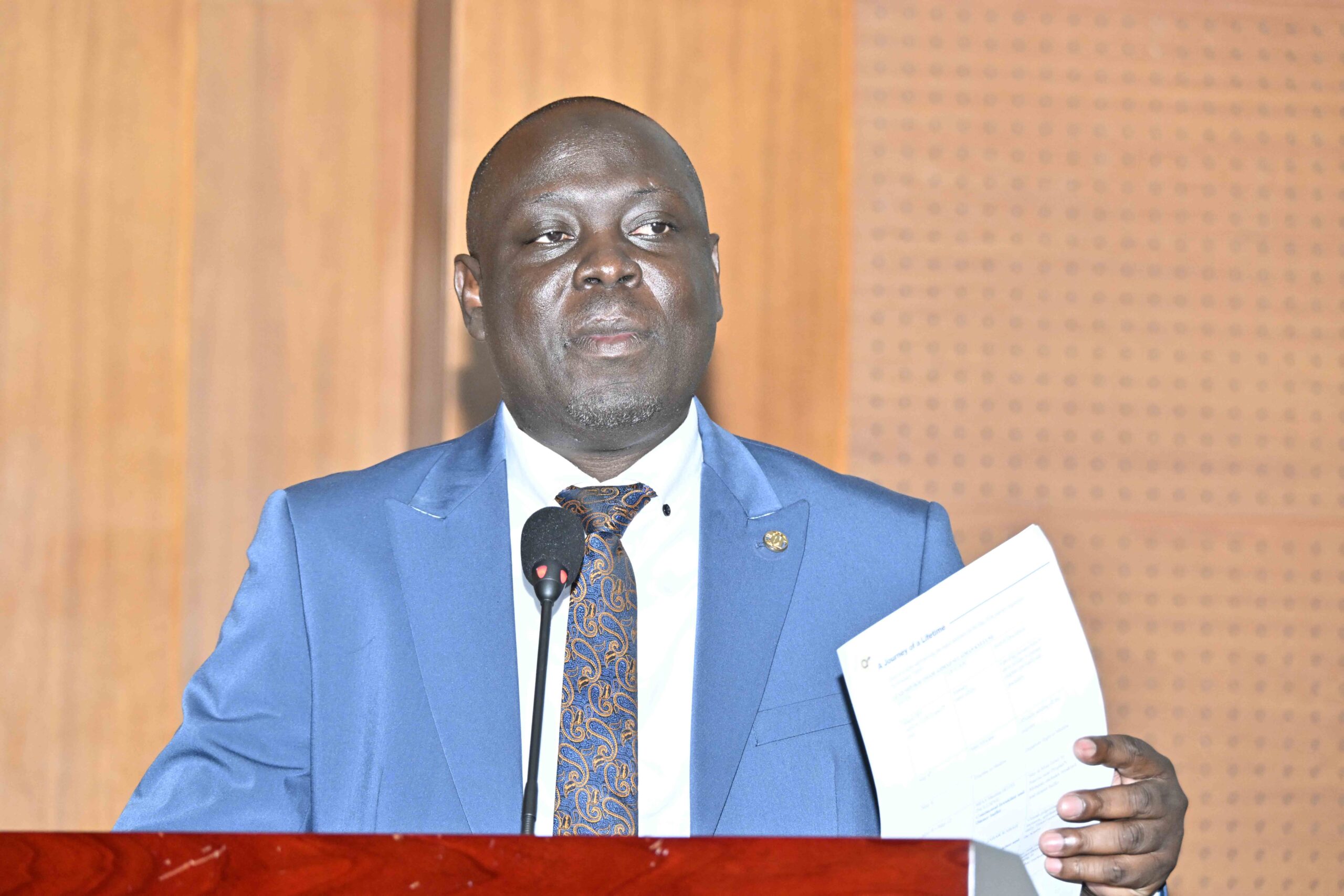
At the centre of that shift is Faruk Kirunda, the Deputy Presidential Press Secretary, who has increasingly emerged as a key link between State House and grassroots communities across Busoga.
Rather than pursuing conventional political mobilisation centred on electoral competition, Kirunda has adopted an approach focused on economic empowerment, community engagement and consensus-building across political, religious and social divides.
A Public Servant Beyond Politics
Those who have worked closely with Kirunda describe him as disciplined, methodical and deeply committed to public service.
Unlike many political mobilisers who rely on confrontational rhetoric, Kirunda is known for a consultative approach that emphasises dialogue, listening and institutional engagement.
His role as a presidential aide, rather than an elected politician, has enabled him to navigate sensitive political environments with a degree of neutrality that many local actors find difficult to maintain.
President Yoweri Kaguta Museveni has on several occasions publicly praised Kirunda for his dedication to duty and his efforts to engage citizens across religious, ethnic and political lines.
Colleagues within government often describe him as a hardworking and accessible official who remains closely connected to ordinary citizens and community concerns.
Away from official duties, Kirunda is also known for his strong religious convictions and recently fulfilled the Islamic pilgrimage to Mecca, a milestone that further strengthened his standing within sections of the Muslim community.
Mobilising Beyond Traditional Structures
One of the defining features of Kirunda’s approach has been his deliberate engagement with informal community structures.
Rather than relying exclusively on traditional political hierarchies, he has sought to work with groups that interact with citizens on a daily basis.
Among these are boda boda leaders, masters of ceremonies, youth groups, religious leaders and community-based associations.
A notable example was the mobilisation of boda boda chairpersons and members of the Busoga Cultural and Events Speakers Association (BUSUSA), bringing together more than 250 masters of ceremonies and community mobilisers.
Recognising their influence within communities, Kirunda encouraged them to become ambassadors of wealth creation, social cohesion and government programmes.
The objective was simple: use existing grassroots networks to promote development messages while reducing political polarisation.
Youth Empowerment as a Stability Strategy
Kirunda’s engagement has also focused heavily on urban youth, particularly those living in informal settlements and ghetto communities.
Working alongside security and intelligence structures, including the Director of Crime Intelligence, Maj Gen Christopher Ddamulira, he has supported initiatives aimed at organising youth into structured SACCOs and economic groups.
The strategy seeks to shift young people from dependency and political vulnerability toward entrepreneurship and financial inclusion.
Supporters argue that providing access to capital and organised economic opportunities offers a more sustainable solution than short-term political patronage.
Driving an Economic Mindset Shift
Busoga’s economy has historically been heavily dependent on sugarcane farming, exposing many households to fluctuating market prices and periodic exploitation by middlemen.
Kirunda has consistently argued that long-term stability in the region requires economic diversification and increased participation in the money economy.
Among the initiatives linked to this vision was the facilitation of a benchmarking visit to Kenya by a delegation of model farmers from Busoga. The programme focused on modern fish farming and livestock production, exposing participants to alternative income-generating opportunities beyond sugarcane cultivation.
The approach complements government programmes such as the Parish Development Model (PDM) and Emyooga by linking financing opportunities with practical skills and knowledge.
The Neutral Broker
Perhaps the most distinctive aspect of Kirunda’s work is his role as a facilitator of dialogue.
Through engagements held at State Lodge Nakasero and other platforms, he has brought together market vendors, youth leaders, religious leaders, cultural stakeholders and political actors to engage directly with government.
Observers say this approach has helped reduce tensions in several instances by creating channels for dialogue and problem-solving.
His involvement in facilitating discussions among competing political interests in districts such as Luuka has further strengthened his reputation as a consensus-builder.
By focusing on development outcomes rather than political labels, Kirunda has managed to earn support from a broad spectrum of stakeholders, including some outside the ruling party.
The Emerging “Kirunda Model”
Whether by design or circumstance, an emerging model appears to be taking shape around Kirunda’s work in Busoga.
Its central pillars include grassroots engagement, economic empowerment, institutional accessibility, transparency and conflict resolution.
Supporters argue that this approach offers an alternative to traditional forms of political mobilisation that often rely on division and confrontation.
The broader lesson may be that sustainable political stability is not achieved through rhetoric alone. It is built through economic opportunity, responsive institutions and a sense of inclusion among citizens.
For Busoga, that experiment continues to unfold.
For Kirunda, it has cemented a reputation as one of the region’s most influential behind-the-scenes mobilisers and one of the government’s most visible grassroots connectors.
The post The Unifier: Inside Faruk Kirunda’s Mobilisation Strategy in Busoga appeared first on Watchdog Uganda.