
The secret to Reform’s rise? They don’t put their out of offices on
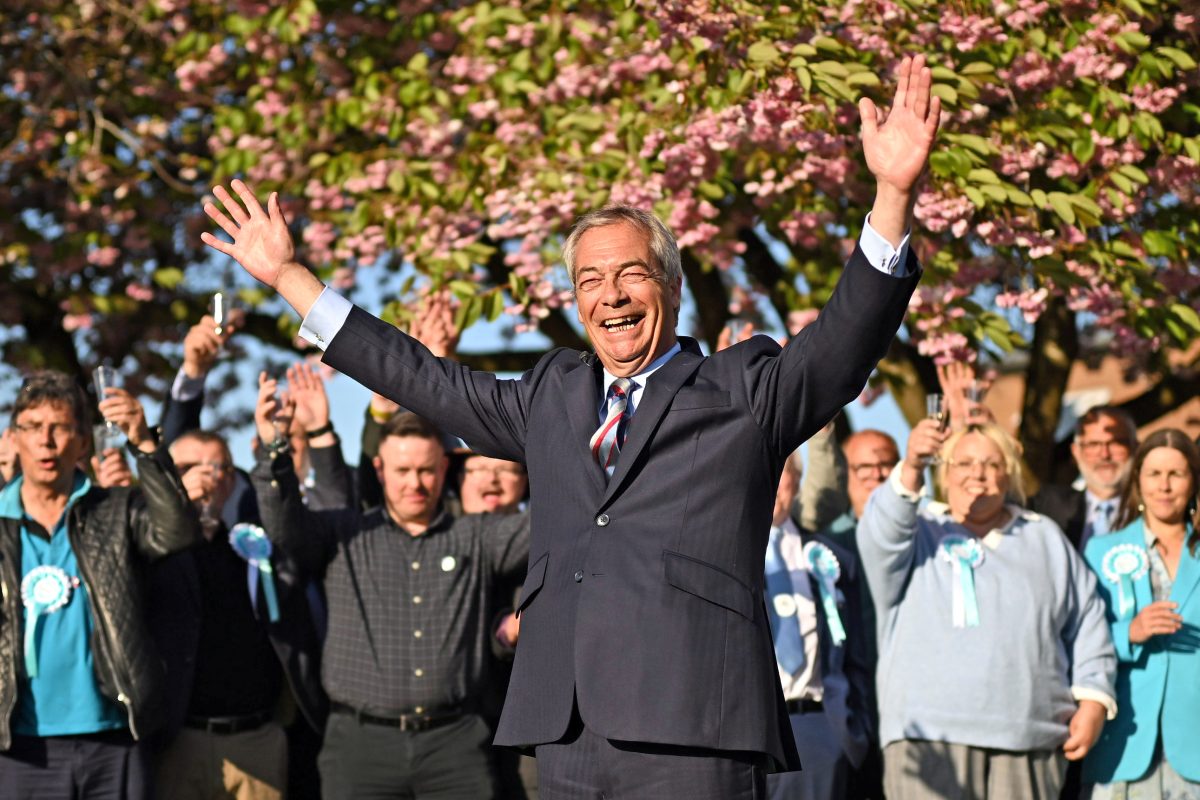

Reform used the summer holiday vacuum to further their cause, and it’s made all the difference, writes Michael Martins in today’s Notebook
My political winners of the year? Reform spin doctors who didn’t go on summer holiday
December is a time of reflection and so it got me thinking about who I found most politically impressive this year.
Even though they led the polls most of the year and moved multiple political debates in their favour, I only began taking Reform seriously in August, months later than many.
My reasoning for the switch was straightforward. Beginning in mid-July, swathes of Labour SpAds and researchers began changing their Whatsapp statuses to “Out of Office”, while their Reform counterparts didn’t. With the government on holiday, Reform used that vacuum to stoke a fresh burst of summer unrest around asylum-seeking.
Reform’s bit of tactical brilliance has paid off massively. The government has spent the months since trying to win back the migration debate, prompting ever more crackdowns and strategy consultations. The effort has largely failed, whilst also denting their standing with the wider electorate, their own MPs and party members. Labour now sits six points lower in the polls today than at the beginning of the summer holiday.
The aftershocks of those months are being felt outside the polls, too. Pivoting away from Reform voters, the Deputy PM, David Lammy MP, has alluded to rejoining the EU to win back disgruntled businesses and Lib Dem and Conservative voters.
While more than half of MPs have no parliamentary experience (read: PTSD) of that time, for anyone in Westminster that lived through the Groundhog Day-esque Brexit years, they will know how deeply unappealing this prospect is. The fundamentals have not changed. The EU’s approach has hardened, even amidst war in Ukraine and a second Trump Presidency, so asking nicely is unlikely to work. If anything, Lammy’s approach may just make Reform’s electoral offer look cleaner and the government’s more chaotic and/or submissive.
And so, although an immigrant myself, Reform’s politicos have shown that they are more opportunistic and will do what it takes to win, even while the government’s staffers were at the beach having some, no doubt, well deserved R&R — they are my standout political winners of 2025.
Ministers shouldn’t advertise for SpAds
Health secretary Wes Streeting recently advertised a job to be one of his special advisers on Linkedin. Although I can appreciate the arguments for transparency in one of the more powerful roles in government, I am in favour of the non-application route, where it is more about earned networks, reputation, resourcefulness and capabilities, i.e. the things that matter in Westminster. Although Wes’ approach sounds good in theory, in practice, I think this will end up being a resource-intensive, performative CV sift for a pre-filled role given to someone he trusts with his political fortunes.
A Christmas miracle: The Tories have started to think about small businesses again
At a recent roundtable Overton held with a prominent member of the Treasury Select Committee, it became apparent that as the Conservative Party rebuilds from its historic loss, some of its policy ideas will be aimed squarely at small and microbusinesses. One of the most interesting was a tax incentive (or even *hold for applause* tax holiday) to hire and scale, which I expect will be music to the ears of many business owners forced to hit the pause button on growth and investment amidst the tax rises and Employment Rights Bill.
Entrepreneurs and civil servants now have the same marginal tax rate
For an overtly pro-growth government, it does impress me how many of its decisions seem to be limiting growth. Take the Chancellor raising the dividend tax rate on entrepreneurs at the Budget. This means that, after accounting for corporation tax, entrepreneurs profiting above £50,000, most of whom work the 9-9-6 system, are now facing the same marginal tax rate as a civil servant who leaves their desk at 5pm. This tax hike has led to an effective (and nonsensical) £50,000 salary tax cap on entrepreneurs and should be reversed.
What I’m watching: Pluribus, a fun critique of our relationship with AI
I recently binge-watched Pluribus and, by episode two, I had an odd sense of déjà vu. Pluribus’ protagonist, Carol, is hellbent on reversing an alien viral infection that transforms all of humanity, bar 13 naturally immune people, into a giant hive mind of “Others”. Others co-exist peacefully with the 13, catering to their every wish and answering their every question (sound familiar?), even as they work out how to absorb them.
The show is a refreshingly satirical social critique amidst the AI culture wars, but for balance, I asked for ChatGPT’s take: “Pluribus is an analogy for humanity’s reliance on AI — but its real target is a civilisation that trades agency for comfort and which will not notice the loss until resistance itself feels pathological,” which is how I feel when my AI notetaker doesn’t turn up to meetings.
Michael Martins is the founder of Overton Advisory