
The new US security strategy includes a clause on “containing NATO expansion” and criticism of Europe
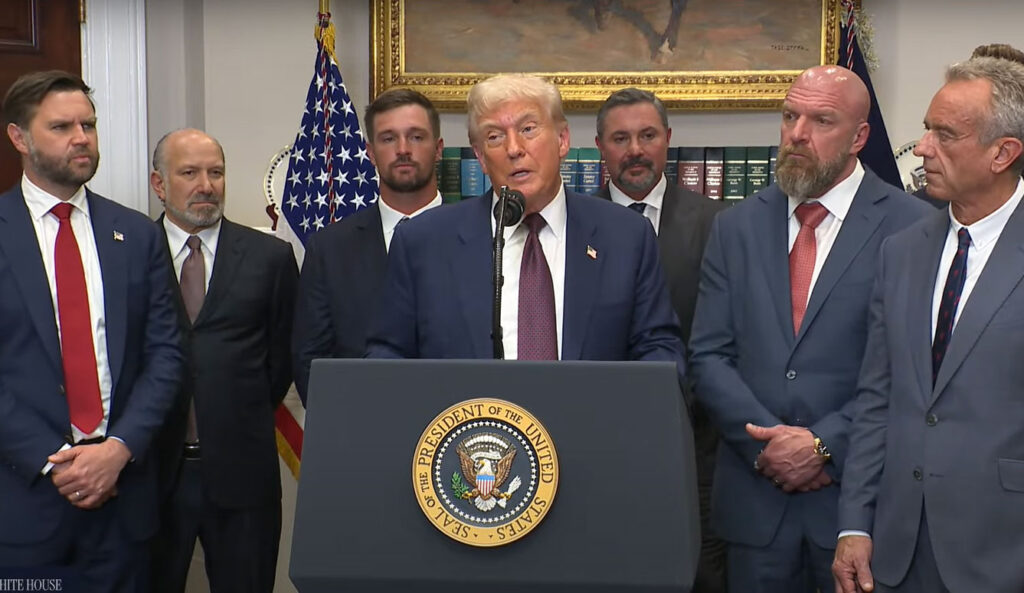

The White House released its National Security Strategy on 4 December, outlining a foreign policy vision that includes ending perceptions of NATO as an expanding alliance and criticizing European Union governance practices.
The 30-page document states among US foreign policy objectives: "Ending the perception, and preventing the reality, of NATO as a perpetually expanding alliance." This language appears in the Europe section of the strategy, which describes the continent's challenges in stark terms.
The strategy addresses the war in Ukraine without using the term "Russian-Ukrainian war" or mentioning Russian aggression. Instead, it refers to "the Ukraine War" and lists among US priorities "an expeditious cessation of hostilities in Ukraine, in order to stabilize European economies, prevent unintended escalation or expansion of the war, and reestablish strategic stability with Russia."
According to the document, European nations view Russia as "an existential threat," while the United States seeks to restore "strategic stability" with Moscow. The strategy notes that "managing European relations with Russia will require significant US diplomatic engagement, both to reestablish conditions of strategic stability across the Eurasian landmass, and to mitigate the risk of conflict between Russia and European states."
The document includes criticism of European governance, stating that US diplomacy "finds itself at odds with European officials who hold unrealistic expectations for the war perched in unstable minority governments, many of which trample on basic principles of democracy to suppress opposition." It adds: "A large European majority wants peace, yet that desire is not translated into policy, in large measure because of those governments' subversion of democratic processes."
The strategy describes Europe's situation as facing potential "civilizational erasure," citing issues including "activities of the European Union and other transnational bodies that undermine political liberty and sovereignty, migration policies that are transforming the continent and creating strife, censorship of free speech and suppression of political opposition, cratering birthrates, and loss of national identities and self-confidence."
The document warns: "Should present trends continue, the continent will be unrecognizable in 20 years or less."
On military spending, the strategy references "the Hague Commitment, which pledges NATO countries to spend 5 percent of GDP on defense and which our NATO allies have endorsed and must now meet." It emphasizes burden-sharing, stating: "The days of the United States propping up the entire world order like Atlas are over."
The strategy also raises concerns about NATO's future composition, noting: "Over the long term, it is more than plausible that within a few decades at the latest, certain NATO members will become majority non-European."
Vice President JD Vance has stated that good news on resolving the war against Ukraine can be expected in the coming weeks. President Donald Trump has said his negotiators left Moscow with the impression that Vladimir Putin wants to end the war, though he added he does not know what will happen next.
European leaders recently issued a warning to President Volodymyr Zelenskyy not to yield to Russian demands without reliable security guarantees from the United States, according to reports.