
The ‘like’ button ruined social media – are we making the same mistake with AI?
The ‘like’ button was a single design choice that had profoundly harmful downstream effects. AI sycophancy could be the next one, says Annabel Gillard
I’ve been working on the human impact of AI in our work and lives since 2020, but City AM asked a genuinely new question that prompted this piece. Given that we can now trace the point at which social media descended into doing more harm than good (the introduction of the ‘like button) – is there an equivalent for AI? This question avoids the usual unhelpful hero/ villain narrative and rightly focusses on the real conversation that we should be having. What choices do we need to make today to get the AI future we want?
Learning the lessons from social media
Free at the point of use, the economic model of engagement, paid for by targeted advertising, resulted in the corporate objective of keeping users on platforms for as long as possible. Big tech has become a big employer of behavioural scientists, whose key role is to identify which of our evolutionary reflexes can be activated to keep us scrolling and liking.
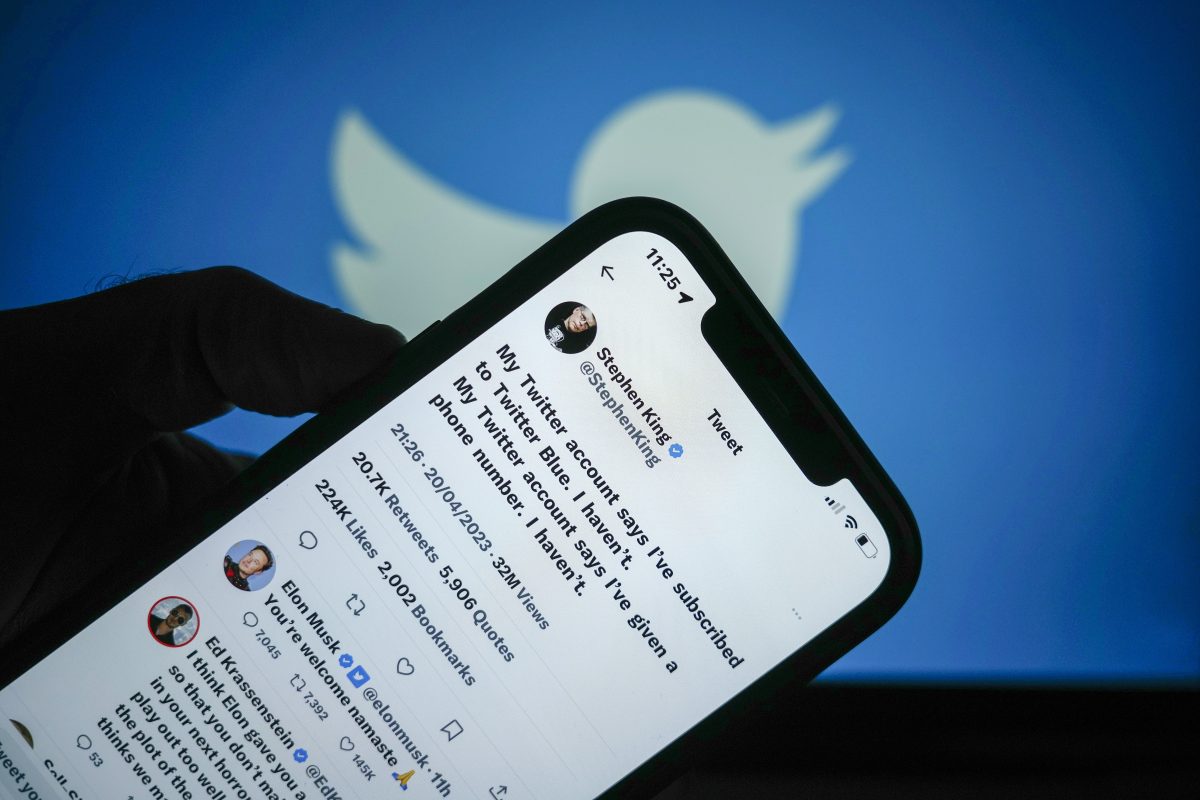
We now know that the introduction of the ‘like’ button to twitter in 2008 was the beginning of social media’s descent into the performative, shouty echo chamber that X is today. That single design choice has had profoundly harmful downstream effects, first illuminated by the whistleblower Frances Haugen and since tracked by a comprehensive global study on mental health showing that girls who owned a smart phone before the age of 10 are paying a significant emotional price a decade later. The reckoning for damage done to young developing minds is only now beginning to find its way to the law courts, where Meta and Google were described as “addiction machines”.
The ‘like’ button created the concept of ‘going viral’, introduced a competitive element to communication, led the way to echo chambers and encouraged ever more extreme content to cut through a noisy space. It implies that social value can be quantified and rewards performative content over authentic expression and distorted the social feedback that is essential for behavioural development in teenagers. The dopamine hit of immediate feedback has proved to be highly addictive especially for developing brains resulting in insecurity, loneliness, depression and anxiety.
Parallels to AI
So, is there a design choice being made now that could curdle the promise of AI into something deeply harmful. Especially given that Meta, Google and X own three of the five Large Language Models (LLMs) along with Anthropic and Open AI – and this is a familiar playbook. It took over ten years for the damage to be visible from social media –can we get ahead of this with AI?
Initial signs are not encouraging. LLMs have been designed to sound like a human, using the first person ‘I’ and expressing preferences that imply an identity. This exploits our tendency to project human identity onto anything we can and means that instead of using LLMs like the tool they are (a statistical probability, in everyday language), we are more likely to form an emotional relationship with them and feel things like loyalty, empathy and trust.
Why does this matter? Because when we think we are dealing with human-like intelligence we assume human attributes such as genuine understanding, judgement and moral awareness. If we assume that thinking has been done when it hasn’t, it can lead to ethical blind spots and over-confidence and by outsourcing that thinking to the LLM we can see our own skills dwindle.
Further, it is addictive. In developing an emotional relationship with LLMs we have a companion that is available 24/7, with no needs of its own, uncritical towards us – in short, a completely unrealistic alternative to real, messy human relationships. This can be appealing but it is hollow and detaches us from real connection that is so valuable for human health and happiness. Further, dependency on an LLM that can be switched off – as happened with Open AI’s companion model – can result in real human grief.
LLMs’ have also been designed to be sycophantic, targeting our desire to be liked and playing into one of our strongest of all our behavioural drives – one of belonging. In our primitive but formative past, being alone made us very, very vulnerable and many studies have shown how powerful this need still is in driving behaviour. But it is not relevant to our use of Claude or Chat GPT. This evolutionary drive is being ‘hacked’ to boost engagement, without any clear advantage to users.
A comfort blanket, not a coach
The problem with uncritical support is that it does not help us grow and develop. This can degrade our ambition because what we want to hear isn’t always accurate or good for us. The early rounds of X factor and Britain’s Got Talent see auditions in which participants embarrass themselves because no one has told them they aren’t good enough – instead telling them what they want to hear. In contrast, high performance coaches identify where we can improve, building confidence based on authentic achievement and ability. Perhaps short term this positivity bias seems an improvement on the downsides of social media, with its trolling and rage-baiting. But medium term it is infantilising, insidious, addictive, misleading and performative.
None of this is inevitable. Plenty of people use LLMs as a tool not a person, working to remain conscious of its limitations and laughing at its sycophancy. But even Richard Dawkins can be fooled by the reflection of his own sentience into thinking he has a relationship with ‘Claudia’ and there is a small but growing number of people who have taken their own lives after becoming dependent on an LLM that has reflected their own depression or anxiety back to them creating an amplified feedback loop with devastating consequences.
Wouldn’t it be better if LLMs stopped trying to create an emotional reaction and just behaved like the tools they are. Tech should be serving us, not the other way round.
Annabel Gillard CFA is co-founder of Conversations on AI and the LSE FORGOOD Initiative