The 160th Mechanized Brigade’s M-1 tanks might not shoot very well. Does it matter?

- The 160th Mechanized Brigade is the fourth Ukrainian unit to get American-made M-1 tanks
- The inexperienced brigade is adding clumsy anti-drone armor to the tanks
- But the awkward armor might not matter in the roles tanks currently fulfill in Ukraine
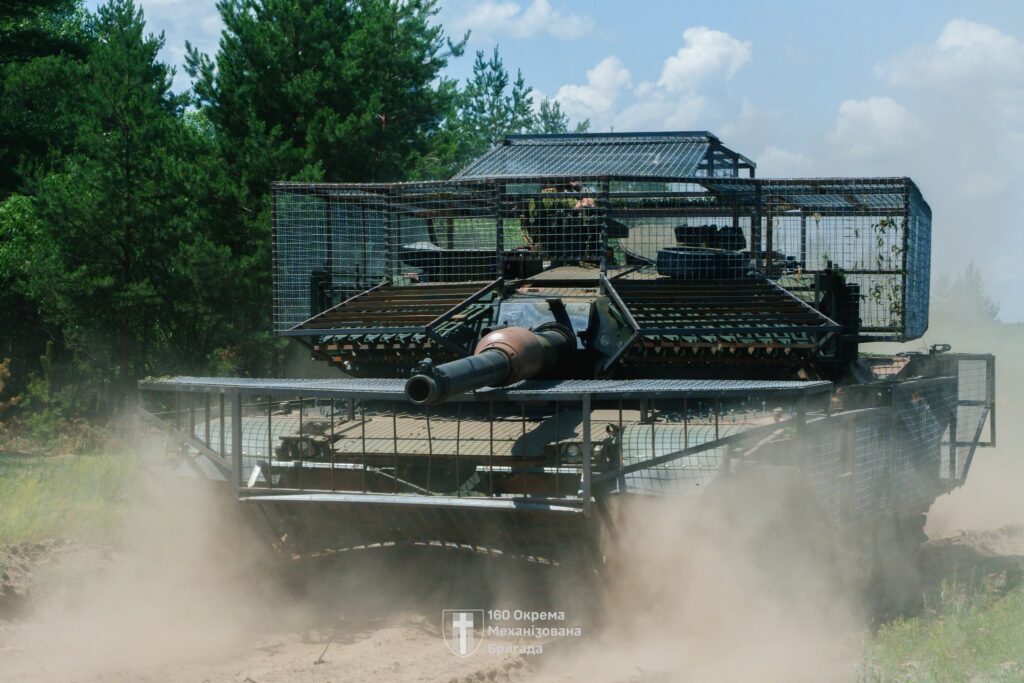
The Ukrainian army's 160th Mechanized Brigade is the fourth unit confirmed to operate American-made M-1 Abrams tanks. On Friday, the brigade posted photos of one of its 69-ton, four-person M-1s with its custom-made anti-drone armor.
"The Abrams tank is a force that can pave the way where the enemy is trying to hold its ground," the 160th Mechanized Brigade stated. "Powerful armor, accurate fire and a crew ready to take on the most difficult tasks."
It's a seemingly odd pairing, however. The other units that operate Ukraine's small inventory of M-1s are widely considered elite units: the 47th Mechanized Brigade, the 425th Assault Regiment and the 1st Assault Regiment. Why did the general staff in Kyiv assign Abrams to a somewhat immature mechanized brigade, many of whose battalions are still undergoing initial training?
Yes, some of the 160th Mechanized Brigade's subunits have seen combat in eastern and southern Ukraine since the brigade officially formed in 2024. But the 160th Mechanized Brigade troopers always fought under the command of much more experienced units including the 71st Jaeger Brigade, the 23rd and 155th Mechanized Brigades and the 425th Assault Regiment.
Perhaps the 160th Mechanized Brigade's experience fighting alongside the 425th Assault Regiment's own up-armored M-1s factored into the decision to assign at least a company of a dozen or so Abrams to the less-experienced brigade. The 425th Assault Regiment's M-1s saw action in Ukraine's local counteroffensive in Zaporizhzhia Oblast this spring. The regiment lost at least one M-1 in the attacks.
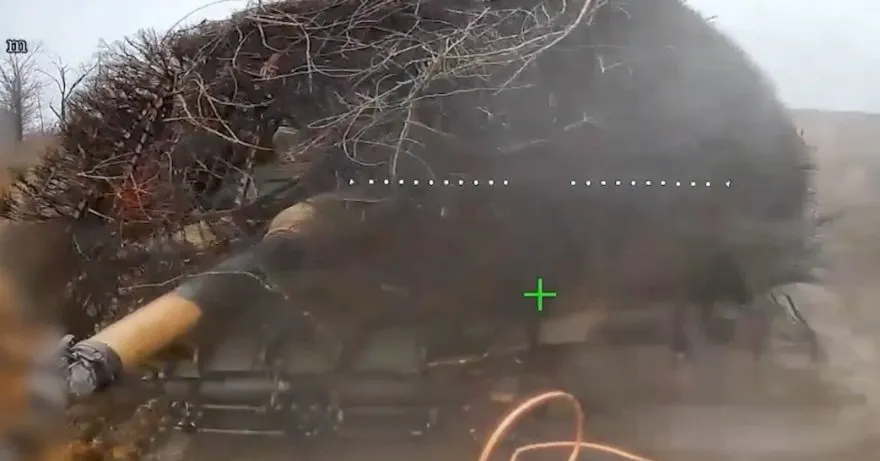
The 160th Mechanized Brigade may be struggling to induct its M-1s, however. Every Ukrainian unit that operates Abrams installs unique anti-drone protections on their tanks, mixing and matching explosive reactive armor, rubber mats, metal cages, metal spines and nets.
The most intensive applications, including those by the 425th Assault Regiment, combine almost all of the different defenses. Arguably the most elegant applications, potentially including the 1st Assault Regiment's, include separate metal cages for the tank's hull and turret so that the turret can rotate in order to aim the 120-mm main gun.
The 160th Mechanized Brigade has copied the twin-cage arrangement for its Abrams. But it made a small yet critical error. The problem with the 160th Mechanized Brigade's anti-drone kit is the shape of the separate hull cage. It's so tall that it prevents the main gun from pointing downward. A 160th Mechanized Brigade M-1 may struggle to shoot at a target that's at a lower elevation than itself.
"This is possibly the dumbest cage idea I’ve seen so far," one observer quipped. "Why yes, I love not being able to depress my gun at all in the frontal arc."
Does it matter?
The vagaries of one brigade or regiment's add-on tank armor may not matter all that much, however. As Russia's wider war on Ukraine grinds into its 52nd month, tanks rarely fight as tanks. The sheer density of drones and mines, respectively above and below the disputed gray zone, makes it practically suicidal for tanks to do what they were originally designed to do: close with and engage the enemy with overwhelming firepower.
Instead, tanks tend to either hide out far behind the gray zone and occasionally fire their main guns at targets over the horizon, or they pile on the anti-drone protections and mineclearing gear and function as heavy escorts for infantry carriers. In the former role, a tank needs to elevate its main gun, not depress it. In the latter role, it might not fire its main gun at all; its job is to clear mines and absorb drones.
So yes, it's a bit worrying that the Ukrainian command gave some of its roughly 50 surviving M-1s, out of 80 donated by the United States and Australia, to an immature brigade. But it's less worrying that the same brigade appears to be constraining its M-1s by limiting the range of motion of the tanks' main guns. There just aren't a lot of scenarios anymore where any tank in Ukraine needs to aim its main gun at a nearby target.
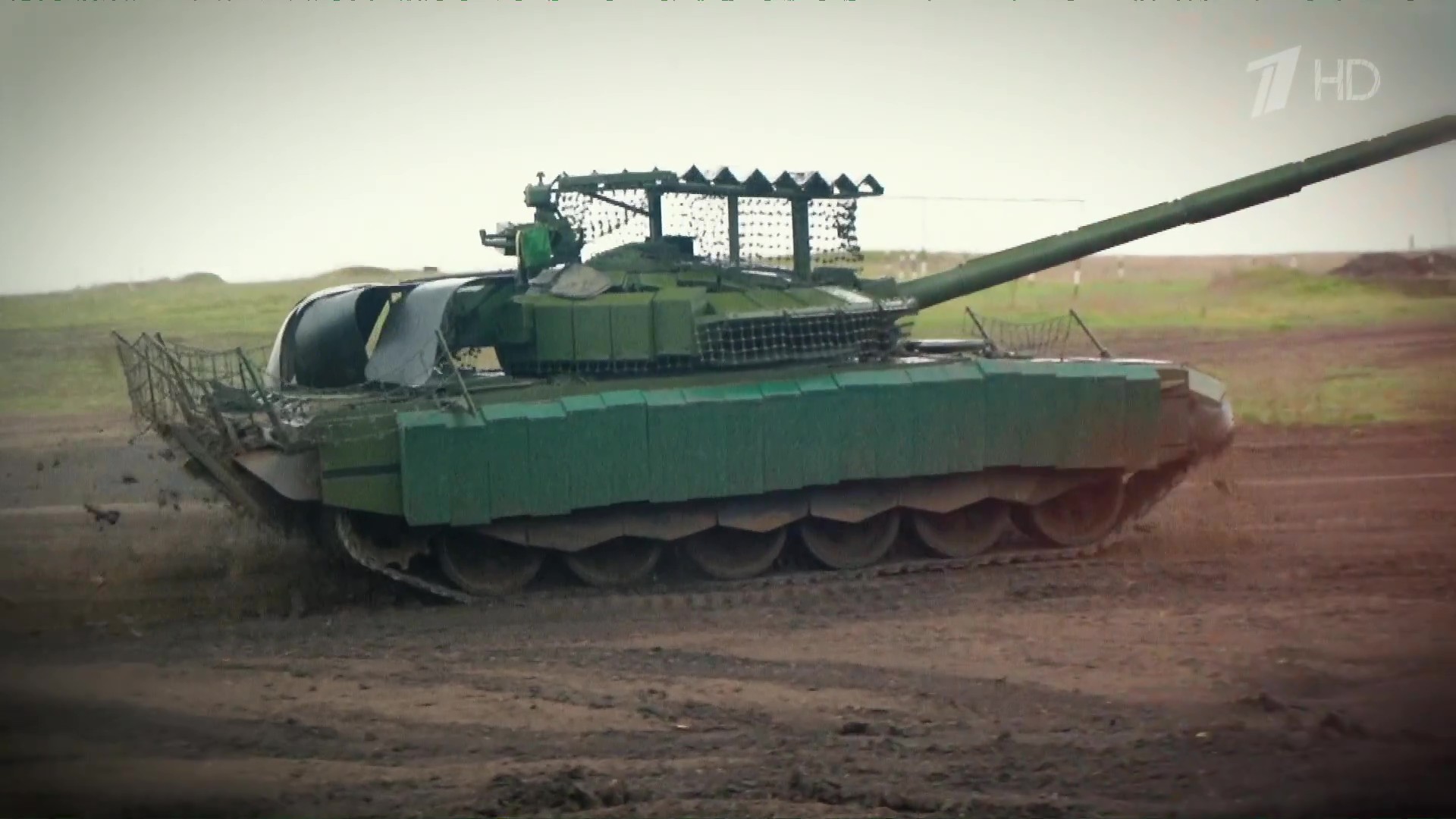
Russia’s T-72AM is a very old tank with a fresh coat of paint. Expect it to stay parked like other tanks.