
St. Mugaga Secondary School Eyes Model Status in Greater Masaka as Government Support Deepens
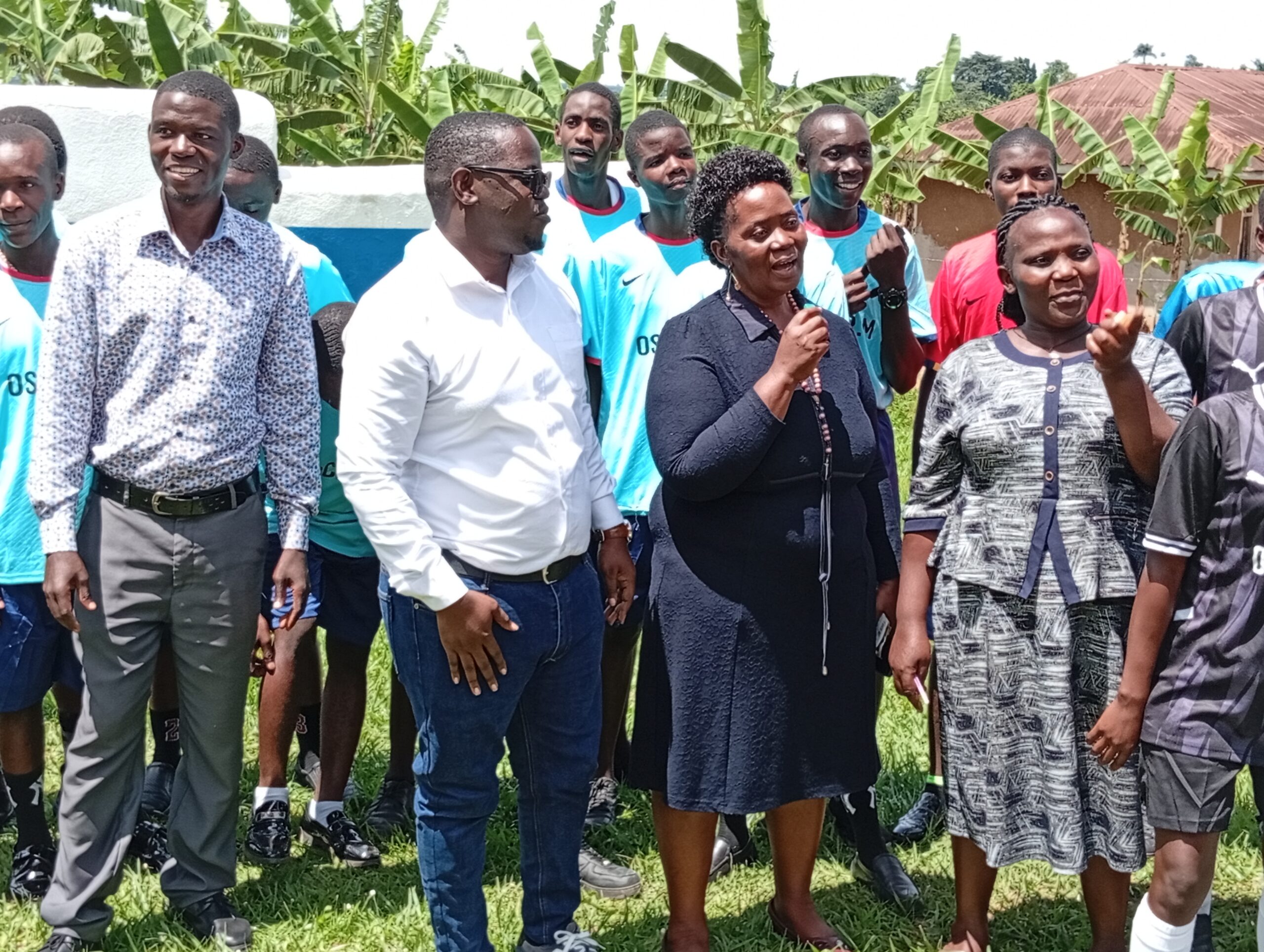
St. Mugaga Secondary School Eyes Model Status in Greater Masaka as Government Support Deepens
Writes Brian Mugenyi
mugenyijj@gmail.com
Rural Masaka District– St. Mugaga Secondary School has expressed strong ambition to transform into a fully-fledged government-aided model school in Greater Masaka, as stakeholders and government representatives intensify calls for improved infrastructure, digital learning resources, and vocational training support under President Yoweri Kaguta Museveni’s ongoing leadership agenda.
The development push was highlighted during a recent visit by the Personal Assistant to the Emeritus Vice President Edward Kiwanuka Ssekandi, Mr. Oscar Mutebi, who commended the school administration for what he described as “steady progress in improving welfare, discipline, and academic environment” under the leadership of Head Teacher Ms. Peace Magoba.
Mr. Mutebi visited the school on April 1, 2026, as part of community outreach engagements under the Office of the Vice President, where he also delivered sports equipment to learners and interacted with both staff and students on key challenges affecting the institution.
Government Support and Digital Learning Push
During his address, Mr. Mutebi praised the Ministry of Education and Sports, led by First Lady Janet Kataaha Museveni, for ongoing efforts to expand digital learning in government-aided schools through the distribution of computers and ICT equipment.
He noted that St. Mugaga Secondary School, like many institutions in Rural Masaka District, has benefited from government ICT interventions, including the allocation of 20 computers to support students pursuing computer science and related disciplines.
“This is part of the government’s broader initiative to ensure that rural schools are not left behind in the digital transformation agenda. The 20 computers received here are a strong foundation, but still not enough for the growing number of learners,” Mr. Mutebi said.
He further appealed for additional ICT equipment, emphasizing that access to computers is critical in preparing students for a competitive global economy driven by technology and innovation.
Infrastructure and Learning Challenges Highlighted
Despite the progress, school leadership raised concerns over persistent infrastructure and resource gaps that continue to affect learning outcomes.
According to Head Teacher Ms. Peace Magoba, St. Mugaga Secondary School currently accommodates over 1,008 students, a number that has significantly stretched available facilities.
She noted that classroom congestion remains a major challenge, with students often sharing desks beyond recommended capacity.
“Most of our desks are overcrowded, with five students sitting where three are supposed to sit. This affects concentration and the overall learning environment,” Ms. Magoba said.
She also highlighted inadequate classroom space, limited instructional materials, and insufficient ICT access as key barriers to achieving the school’s academic goals.
Electricity and ICT Constraints
The school administration further pointed out that unreliable electricity supply continues to affect evening study programs and ICT-based learning.
Although a solar system has been installed to support basic operations, Ms. Magoba said it remains insufficient to sustain full academic activities, especially during night preps and computer lessons.
“We still struggle with electricity stability. The solar system helps, but it cannot fully support the school’s needs, especially when students are engaging in ICT lessons or evening studies,” she added.
Call for Expansion of Facilities
Ms. Magoba appealed to the government through the Ministry of Education and Sports to expedite support for the second phase of classroom construction, including completion of a flat-topped building project intended to expand learning space.
She also requested additional support in the form of tents and plastic chairs to accommodate students during examinations, assemblies, and co-curricular activities.
The Head Teacher emphasized that improved infrastructure would not only ease congestion but also enhance the emotional well-being and academic performance of learners.
“Learning conditions directly affect performance. We need more classrooms, more desks, and more computers so that students can learn comfortably and effectively,” she said.
Sports Development and Youth Empowerment
As part of his visit, Mr. Mutebi donated sports jerseys, footballs, and related equipment to the school through Head Prefect Deo Ssembatya, in a gesture aimed at promoting co-curricular development.
The donation was received with excitement by students and staff, who described it as a morale booster for the school’s sports teams.
Mr. Mutebi underscored the importance of sports in youth development, noting that talent in athletics and football can provide future opportunities for students beyond academics.
“Sports is not just recreation; it is a career path. We have seen global players earning livelihoods and transforming their families through football and athletics. Our students here should also be given that opportunity,” he said.
He further revealed plans to extend similar support to other schools across Greater Masaka, including districts such as Kyotera, Rakai, Masaka, and Lwengo, as part of a broader regional development initiative.
Vocational Training and Regional Development Agenda
Mr. Mutebi also emphasized the need for vocational education expansion in the region, proposing the establishment of a well-equipped vocational institute to provide practical skills for youth who may not pursue traditional academic pathways.
He noted that such an institution would help address unemployment and equip young people with hands-on skills in areas such as carpentry, tailoring, mechanics, and ICT.
He also hinted at efforts to revive the Greater Masaka Development Initiative, aimed at improving education, infrastructure, and youth empowerment across the sub-region.
Appreciation from School Leadership and Students
Ms. Magoba expressed gratitude to Mr. Mutebi for his continued engagement and support, describing him as a committed partner in the school’s development journey.
“We are very thankful for Mr. Mutebi’s support. The sports kits, computers, and other contributions we have received have greatly boosted student morale,” she said.
Head Prefect Deo Ssembatya also appreciated the intervention, noting that the support has motivated students to work harder both academically and in sports.
“We are happy and encouraged. These donations show that our leaders care about us. We are now more motivated to excel,” he said.
Outlook
St. Mugaga Secondary School continues to position itself as a rising educational institution in Rural Masaka District, with aspirations of becoming a model school under Uganda’s broader education transformation agenda.
However, stakeholders agree that achieving this goal will require sustained investment in infrastructure, ICT, staffing, and student welfare.
As government programs continue to roll out under the Ministry of Education and Sports, the school remains hopeful that ongoing interventions will bridge existing gaps and elevate it to a fully-fledged model institution in the region.
Edit this story in Watchdog Uganda Website style in 600 words keep my style
St. Mugaga Secondary School Targets Model Status as Government Support Deepens in Rural Masaka
Writes Brian Mugenyi
mugenyijj@gmail.com
Rural Masaka District — St. Mugaga Secondary School has set its sights on becoming a fully-fledged government-aided model school in Greater Masaka, as renewed calls for improved infrastructure, ICT development, and vocational training intensify under President Yoweri Kaguta Museveni’s education transformation agenda.
The push was highlighted during a community outreach visit by the Personal Assistant to the Emeritus Vice President Edward Kiwanuka Ssekandi, Mr. Oscar Mutebi, who commended the school leadership for what he described as “visible progress in improving welfare and discipline” under Head Teacher Ms. Peace Magoba.
Mr. Mutebi visited the school on April 1, 2026, as part of engagements under the Office of the Vice President, where he interacted with staff and students and delivered sports equipment aimed at strengthening co-curricular development.
He applauded the Ministry of Education and Sports, led by First Lady Janet Kataaha Museveni, for ongoing digital learning interventions in government schools, noting that rural institutions like St. Mugaga are increasingly benefiting from ICT programs, including computer distribution.
According to him, the allocation of 20 computers to support students studying computer science is a significant step in bridging the digital gap between urban and rural schools. However, he emphasized that more support is still required.
“This is a strong foundation, but it is not enough. The demand is growing and we must ensure that rural learners are fully equipped to compete in the modern digital world,” Mr. Mutebi said.
He appealed for further government intervention to increase ICT equipment at the school, stressing that technology is now central to education, research, and innovation.
Infrastructure Gaps Remain a Challenge
Despite progress, the school continues to face serious infrastructure challenges that threaten its ambition to achieve model school status.
Head Teacher Ms. Peace Magoba revealed that St. Mugaga Secondary School currently accommodates 1,008 students, a number that has overstretched available classrooms and learning facilities.
She noted that congestion remains a major issue, with students sharing desks beyond recommended capacity, affecting concentration and academic performance.
“Most of our classrooms are overcrowded. In some cases, five students sit where three should sit. This is not conducive for effective learning,” Ms. Magoba said.
She added that the school still lacks adequate classroom space, instructional materials, and proper ICT infrastructure to support the growing student population.
Electricity and Learning Constraints
The school also continues to struggle with unreliable electricity supply, which affects both ICT learning and evening study programs.
Although a solar system has been installed, Ms. Magoba said it is not sufficient to fully sustain academic operations, especially during computer lessons and night preps.
“The solar system helps, but it is not strong enough to support all school activities. We still need stable electricity to fully implement ICT-based learning,” she noted.
Call for Government Intervention
Ms. Magoba appealed to the government through the Ministry of Education and Sports to expedite funding for the second phase of classroom construction, including completion of a flat-topped building project.
She also requested support in form of tents and plastic chairs to accommodate students during examinations, assemblies, and co-curricular activities.
She emphasized that improved infrastructure would significantly boost learner morale and academic performance.
“When learners study in a comfortable environment, their performance improves. We urgently need more classrooms, desks, and ICT facilities,” she added.
Sports and Youth Empowerment
During the visit, Mr. Mutebi also donated sports jerseys, footballs, and training equipment to the school through Head Prefect Deo Ssembatya, in a move aimed at strengthening sports development.
The donation was received with excitement by students and staff, who described it as a major morale booster for school sports activities.
Mr. Mutebi emphasized that sports should be viewed as a career pathway and not just a recreational activity, citing global examples of athletes who have transformed their lives through sports.
“Sports can change lives. Our students must be supported to develop their talent so they can compete at national and international levels,” he said.
He also revealed plans to extend similar support to other schools in Greater Masaka, including Kyotera, Rakai, Masaka, and Lwengo districts.
Vocational Training Agenda
Mr. Mutebi further called for the establishment of a vocational institute in the region to equip youth with practical skills in carpentry, mechanics, tailoring, and ICT.
He said vocational training would help address youth unemployment and provide alternative pathways for learners who do not pursue formal academic progression.
He also hinted at efforts to revive the Greater Masaka Development Initiative aimed at improving education, infrastructure, and youth empowerment across the sub-region.
Appreciation from School Leadership
Ms. Magoba expressed gratitude for the continued support from stakeholders, describing Mr. Mutebi as a key partner in the school’s development journey.
“We appreciate all the support. It has boosted morale among students and improved our co-curricular programs,” she said.
Head Prefect Deo Ssembatya also thanked the delegation for the sports donation, noting that students feel encouraged and valued.
“We are motivated and ready to work harder in both academics and sports,” he said.
Outlook
St. Mugaga Secondary School remains one of the fast-growing government-aided institutions in Rural Masaka District, with ambitions of becoming a regional model school.
However, stakeholders agree that sustained investment in infrastructure, ICT, and student welfare will be critical in achieving this goal under Uganda’s broader education development agenda.
The post St. Mugaga Secondary School Eyes Model Status in Greater Masaka as Government Support Deepens appeared first on Watchdog Uganda.