Spring Statement 2025 LIVE: Rachel Reeves set to unveil further benefit cuts

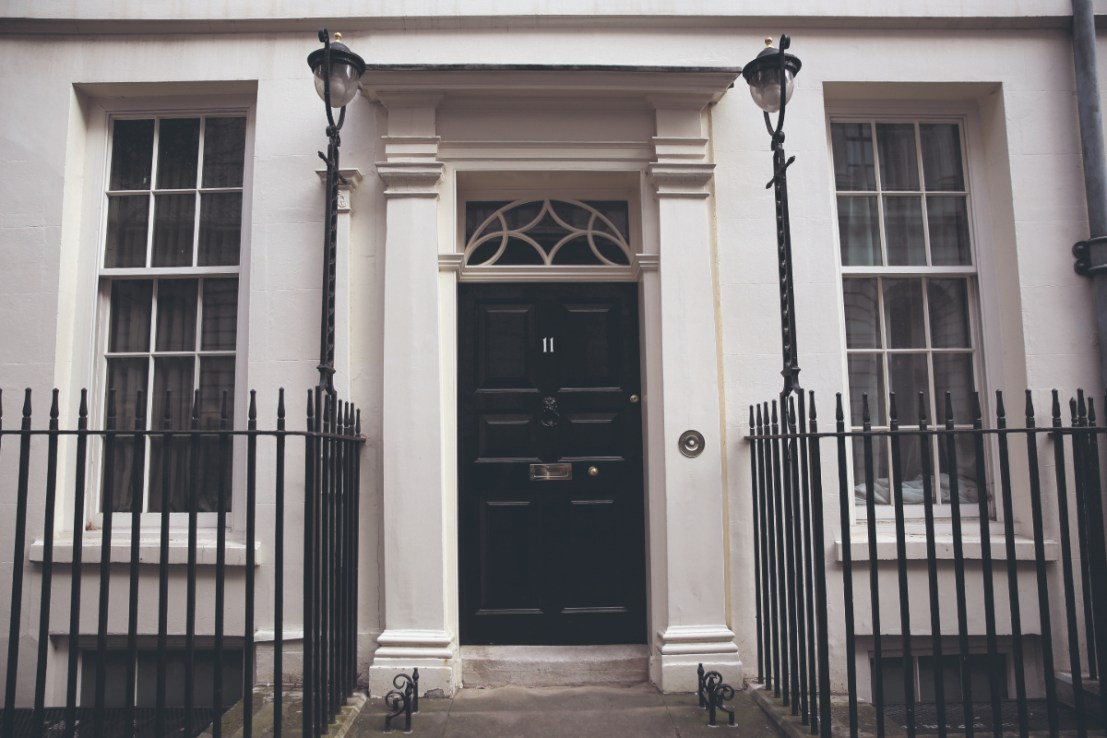
Chancellor Rachel Reeves is set to update MPs on the state of the UK economy and make a range of economic policy announcements on Wednesday afternoon at the Spring Statement.
She is also set to give updates on the government’s plan to go “further and faster” on delivering growth.
Spring Statement 2025: What is it – and when will Rachel Reeves speak?
The Spring Statement will come as the Office for Budget Responsibility (OBR) releases its new forecasts for the UK economy.
Tax rises are not expected to be announced but the Chancellor has indicated that up to £10bn of cuts will be made to public spending.
LIVE UPDATES:
[09.45] With very little fiscal room for manoeuvre, a number of delivery departments will be in the firing line at the Spring Statement and – crucially – at the government’s spending review in June.
While NHS cuts are too politically toxic to carry out, the health secretary has written in The Times that the government will force the NHS to modernise.
Wes Streeting wrote: “It falls to all of us in the cabinet to help pull this country out of the doom loop it was left in by the Conservatives — of low growth, low productivity and high tax.”
He touched on the government’s mission to get recipients of long-term sickness benefits back to work, saying that he and work and pensions secretary Liz Kendall “have a shared mission to get our country back to healthy and back to work.”
“While there has been defensiveness about NHS productivity in the past, I won’t stick my head in the sand to spare blushes,” he added.
“NHS productivity is a serious problem for our economy, the public finances, and the sustainability of the health service.”
[09.34] Former Chancellor George Osborne has warned Rachel Reeves that she must reverse “negative sentiment” among businesses.
In an interview with Bloomberg at the HSBC Global Investment Summit in Hong Kong, Osborne said: “The overall message needs to be a bit reset, frankly.”
“The government didn’t get off to the best of starts, although they had a lot of good will. They inherited a lot of problems.
“But the result is that at summits like this, on the other side of the world, there’s quite a negative impression of the UK.”
[09.25] Economists are warning that Autumn tax rises are “inevitable” at the next Budget – despite rumours that Rachel Reeves could offer an extension to tax threshold freezes.
That’s according to ING economist James Smith, who told City AM that the Chancellor will be boxed in to tax hikes if she sticks by her self-imposed fiscal rules.
Investec analysts seem to agree: “If the public finances continue to deteriorate between now and the autumn, the government will have to make more difficult decisions at the Budget in the autumn.“
It would be the second year in a row that Reeves has increased taxes, after announcing a string of changes to national insurance contributions and inheritance tax in a bid to raise as much as £40bn.
Those tax hikes are set to come into effect next week.
[09.12] The defence secretary has told Times Radio that “the Americans have absolutely got a case” about Europe not spending enough on defence.
The comments emerged in the US Signal group chat blunder which revealed vice president JD Vance hated “bailing Europe out” and Pentagon chief Pete Hegseth said “European freeloading” was “pathetic”.
Speaking ahead of the Spring Statement, John Healey said he regarded the remarks as “more of a challenge” and added: “The Americans have got a case, the Americans have absolutely got a case that on defence spending, on European security, on our support for Ukraine, European nations can and will do more and the UK is leading the way.
“I’m proud of that on defence spending, on European security and on Ukraine. It’s why we’re pulling together the coalition.”
He continued: “We’re responding to that American challenge for European nations to do more to support Ukraine and we are.
[09.09] The Chancellor’s self-imposed fiscal rules are under extra scrutiny today, with the Institute for Fiscal Studies (IFS) warning that the fiscal headroom is vanishingly small.
Helen Miller, deputy director of the IFS, told BBC Radio 4’s Today programme that Reeves’ pledge to fund day-to-day government spending by tax receipts had left her with a “tiny margin” to operate within during today’s update.
She added the Chancellor had “set herself up” after making a series of promises where “she can’t keep all of them”.
“She promised she wouldn’t change her fiscal rules, she promised no more tax rises, and she promised no more spending cuts – and she can’t deliver all of those things.”
Miller said the Chancellor’s commitment to the “non-negotiable” rules meant it would be “very difficult” to break them at the Spring Statement, which will mark Reeves’ first hurdle since announcing the rules in the Autumn Budget.
[08.54] With the government pushing defence as their key spending priority, John Healey appears to have confirmed significant cuts to welfare.
Speaking to Times Radio, the defence secretary has said that MPs and voters will “hear more” from the Chancellor on cuts at the Spring Statement.
Healey told Times Radio: “There’s a calculation we may see confirmed by the OBR about the longer-term savings that our plans to change the welfare system may bring.
“That’s a must-do for any responsible government, particularly one that believes in the importance of our social security system.”
It’s the first time that a government minister has publicly accepted that further cuts to welfare spending will be required – after the OBR is reported by The Times to have concluded that previously announced will only save £3.4bn, not the £5bn previously planned.
[08.47] The pre-briefing operation is underway…
Ahead of the Statement, Sir Keir Starmer said: “In an era of global change, we will deliver security for working people and renewal for Britain.”
Meanwhile, defence secretary John Healey – who was out on the broadcast round this morning – blamed an “overhang” from the brief Liz Truss government for high costs of UK debt servicing.
“Strong public finances and fiscal responsibility will in the end provide the foundation for us to rebuild the economy and rebuild the confidence in British investment.”
[08.43] New research published just hours before the Spring Statement reveals that around a third of mid-sized businesses are considering leaving the UK in the next two years.
That’s from Business Leader, which surveyed 100 businesses and found that these firms have low confidence in the UK economy.
Two in five mid-sized firms also said that they were scaling back hiring.
These latest business confidence figures pile more pressure on the Chancellor to throw business a bone.
[08.24] The Chancellor is expected to tell the Commons at 12.30pm: “This government was elected to change our country… that work of change began in July – and I am proud of what we have delivered in just nine months.
“Now our task is to secure Britain’s future in a world that is changing before our eyes. The job of a responsible government is not simply to watch this change.” This moment demands an active government stepping up to secure Britain’s future.”
But Shadow Chancellor Mel Stride has said ahead of the Statement: “Our national security demands a strong economy. Yet since Rachel Reeves’ first Budget, growth is down, borrowing is up and business confidence has been destroyed.
“The Chancellor should use the emergency budget later today to fix her own mistakes and end Labour’s war on enterprise.”
[08.18] Rachel Reeves will be hoping that the best offence is a good defence.
A £2.2bn defence spending boost is set to be a tentpole pledge in the Spring Statement – including cash to kit out Royal Navy vessels with laser weapons.
The Chancellor will announce the new package as a significant step towards pushing defence spending up to 2.5 per cent of GDP by 2027.
Reeves is expected to back the increase as “the right decision in a more insecure world”.
Alongside equipping ships with lasers – which can hit a £1 coin a kilometre away – much of the cash is set to be invested in refurbishing homes for military families.
[08.05] If you’re just tuning in, here’s what to expect from Spring Statement day.
The Chancellor is set to give an update in Parliament on the state of the UK economy. She has to do this because the Office for Budget Responsibility is releasing its own economic forecasts.
First off, we’re not expecting fresh tax rises – but up to £10bn of cuts are expected to public spending.
And if that £10bn number sounds familiar, it’s because that was roughly the leeway (or, fiscal headroom) that Rachel Reeves left herself after the Budget in October.
With slower than anticipated growth, and with the UK buffeted by trade and geopolitical headwinds, that headroom is likely gone.
The statement itself will be delivered in the Commons at 12.30pm, directly after Prime Minister’s Questions.
Shadow Chancellor Mel Stride will then give a response off the cuff, having not seen the contents of the statement in advance.
[07.58] The Chancellor is under pressure to drop her tax hikes on businesses ahead of the Spring Statement.
City AM’s editor-in-chief Christian May writes that if – as Rachel Reeves says – the world really has changed, that is justification enough to ditch new levies on business and go for growth.
Meanwhile, economist Paul Ormerod argues that Reeves has got herself into too tight a fiscal corner, and that it is time to get rid of the Office for Budget Responsibility altogether.
Former Liberal Democrats leader Vince Cable says that the Chancellor needs to “get real” and raise taxes.
“Guns plus butter plus debt service equals higher tax,” he says.
[07.36] Ahead of the statement, the Office for National Statistics (ONS) has revealed that inflation hit 2.8 per cent in the year to February.
Most analysts slightly overestimated inflation for the month, saying that Consumer Prices Index (CPI) inflation would come in at 2.9 per cent.
This remains above the Bank of England’s target of 2 per cent.
Grant Fitzner, the ONS’s chief economist, said: “Inflation eased in February. Clothing prices, particularly for women’s clothes, was the biggest driver for this month’s fall.”
Chief secretary to the Treasury Darren Jones said that the government is “protecting working people’s payslips from higher taxes.”
And the research firm Pantheon Macroeconomics projects that inflation could spike up to 3.5 per cent next month, indicating that this month’s slight dip might be an anomaly.
This month, the Bank stuck to its prediction that inflation would hit a peak of 3.75 per cent in 2025.
The update is unlikely to calm members of the Monetary Policy Committee (MPC), and an interest rate cut in May is under question.