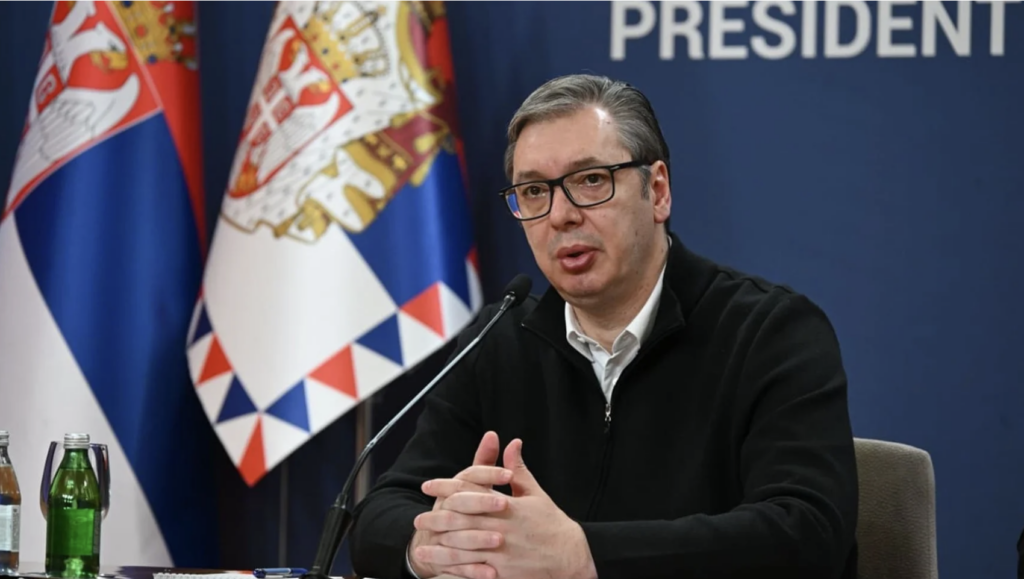
Serbia has revealed the details over a recent gas pipeline sabotage amid the elections in Hungary. The country says it has found no evidence of Ukraine’s involvement in the attempted sabotage of the main gas pipeline leading to Hungary, according to Kurir.
Earlier, explosives were discovered on the pipeline connecting Serbia and Hungary. Against this backdrop, Serbian President Aleksandar Vučić held a conversation with Hungarian Prime Minister Viktor Orbán, after which Hungarian Foreign Minister Péter Szijjártó claimed there were alleged plans to blow up the “TurkStream.”
He also accused Ukraine of organizing an “oil blockade” against Budapest and of allegedly carrying out previous attacks on the section of the pipeline that passes through Russia.
Markings are not proof of plots against Ukraine
Djuro Jovanic, head of the Military Security Agency, has categorically denied these claims.
“This is false. The manufacturer of the explosives does not mean that they are the executor or instigator," says Jovanic.
He has added that the markings on the explosives point to the US, but this does not indicate Washington’s involvement in the operation.
“Will anyone now claim that this is somehow beneficial to the US at this moment? The Serbian army is a serious institution, and it will carry out any task,” he states.
The backpacks with explosives were allegedly found a few hundred meters from the pipeline near Tresnjevac in the Kanjiza district of northern Serbia, close to the Hungarian border.
Serbian army outside politics: shield against disinformation
Jovanic has emphasized that the Serbian army does not interfere in political processes, neither in Serbia nor in other countries.
This statement is intended to refute any attempts to use Serbian forces to discredit Ukraine.
Hungary PM Orbán's election campaign has largely
run on anti-Ukraine messaging. Russia has a strong incentive to keep Orbán in power: he has been Moscow's most effective instrument inside the EU, blocking aid, vetoing sanctions, and
feeding Russian intelligence real-time information on closed EU deliberations.