
Russia’s governor said a pipeline was hit in Primors. Two hours later he said it wasn’t. NASA showed a fire at the tank farm
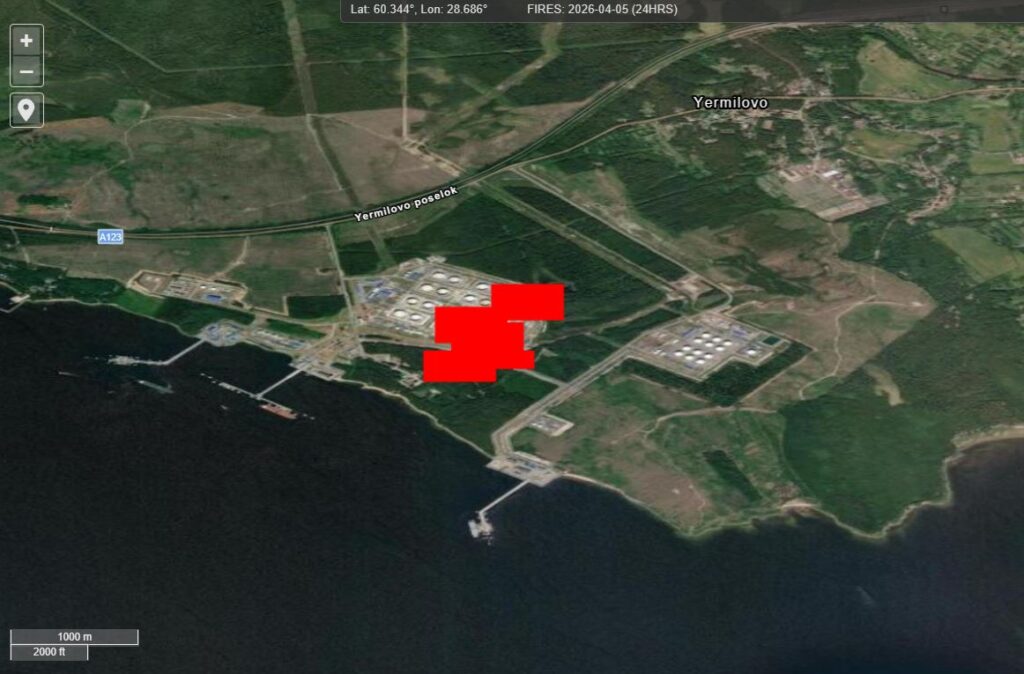

Drones again struck fuel infrastructure at the port of Primorsk, Russia's largest oil export terminal on the Baltic Sea, located next to Finland, over 900 km from Ukraine, overnight on 5 April. Leningrad Oblast governor Aleksandr Drozdenko initially reported an attack on an oil pipeline — though his account changed significantly within two hours — and NASA FIRMS satellite data placed the fire at the tank farm rather than a pipeline.
Governor's account shifts: pipeline claim walks back to fuel tank
Drozdenko initially posted at around 7:30 a.m. that air defenses had downed 19 drones over Leningrad Oblast, that drone "debris" — standard Russian wording used to mask failed air defenses and downplay a successful strike — had damaged "one section of the oil pipeline in the area of Primorsk port," and that a "safe burn-off from a shut pipe" was underway, with no casualties.
By 9:30 a.m., he updated that the pipeline had not been damaged after all. Instead, he claimed, shrapnel from a downed drone had punctured a fuel tank, causing a fuel leak, and that the consequences had already been addressed.
Defense news outlet Militarnyi noted that NASA's FIRMS satellite fire-monitoring system placed the blaze not at a pipeline but directly at the oil depot on port territory — likely the same fire burning there since 23 March.
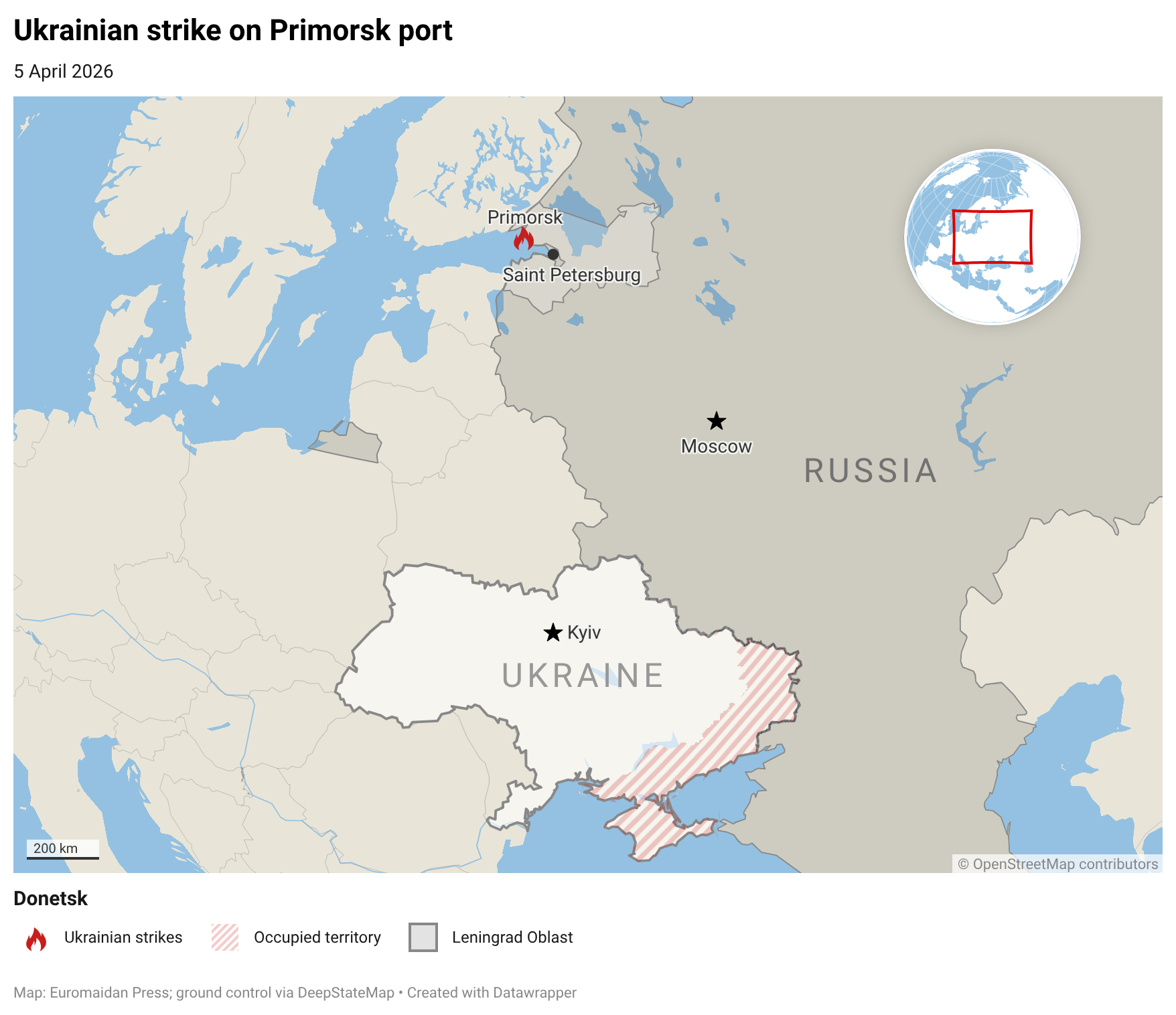
Militarnyi suggested the governor may have been referring to the port's coastal pipeline infrastructure rather than a separate mainline, given that Primorsk is the terminal point of the Baltic Pipeline System.
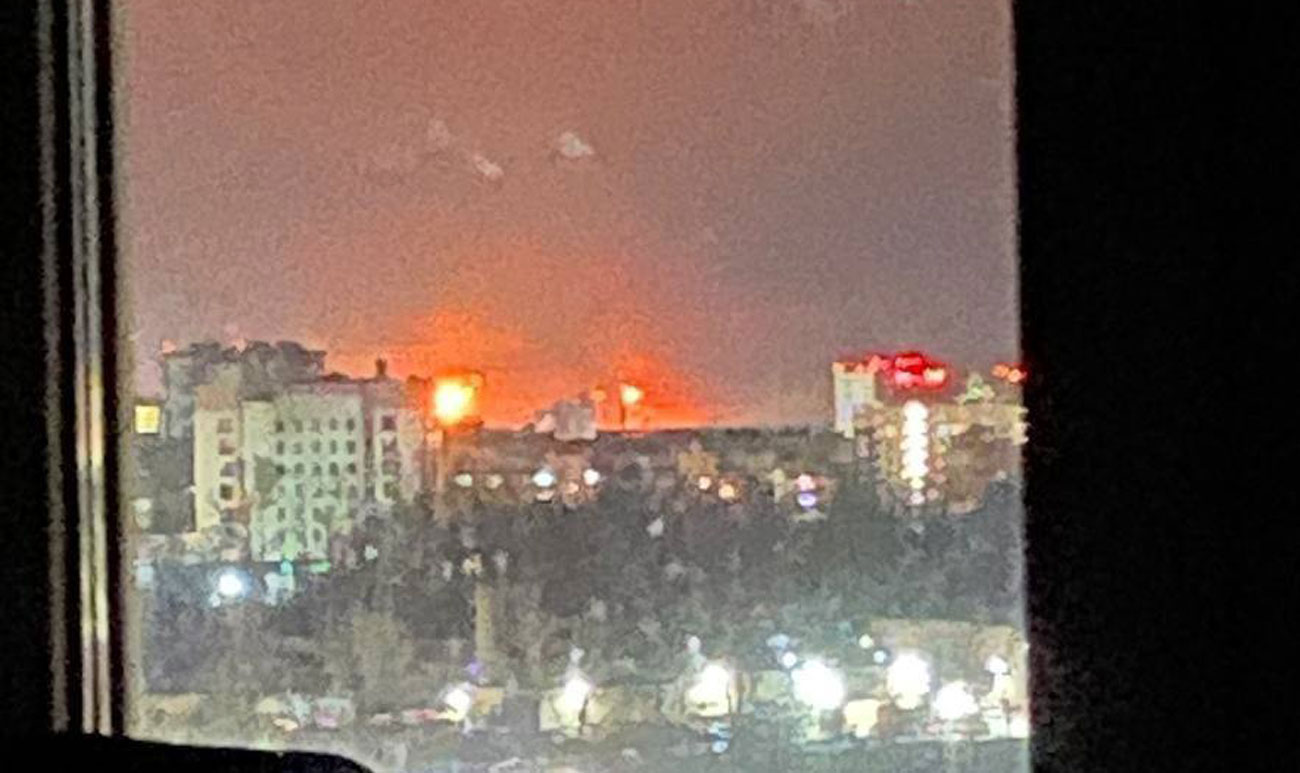
Ukraine struck a refinery 800 km inside Russia — then hit the power plant keeping it running
Primorsk: Russia's main Baltic crude export hub, under fire since March
Primorsk is one of Russia's largest oil export gateways on the Baltic Sea, operating as the endpoint of the Baltic Pipeline System and capable of handling around 1 million barrels of oil per day. Together with Ust-Luga, Primorsk handles around 2 million barrels of Russian crude exports daily.
The 5 April strike lands on a port already severely degraded. Ukraine first struck Primorsk on the night of 22-23 March in a 249-drone overnight attack, igniting fuel tanks and forcing evacuations. Fires were confirmed to be still burning days later. Satellite imagery showed that at least eight 50,000 m³ tanks had burned — roughly 40% of the terminal's total storage capacity.
After another attack on Ust-Luga, Ukraine returned to both Primorsk and Ust-Luga on the night of 26-27 March, the third attack on the two ports in five days, with NASA satellite data confirming new fires at both. Ust-Luga was struck a fourth time on 30-31 March, with fires still burning and tankers backing up offshore. Estonian intelligence estimated the campaign had halted 40-50% of Russia's Baltic oil exports.
Read also
-
Ukraine struck a refinery 800 km inside Russia — then hit the power plant keeping it running
-
Ukraine’s drones return to Bashneft-Novoil refinery in Ufa 1,300+ km from the front — the primary distillation unit is burning again
-
Ust-Luga burning again: Ukraine is now hitting this Russian oil port every other day — the shadow fleet tankers that load here keep waiting offshore