
Russia works on giving Putin legal pretext to invade any country with Russian citizens in it
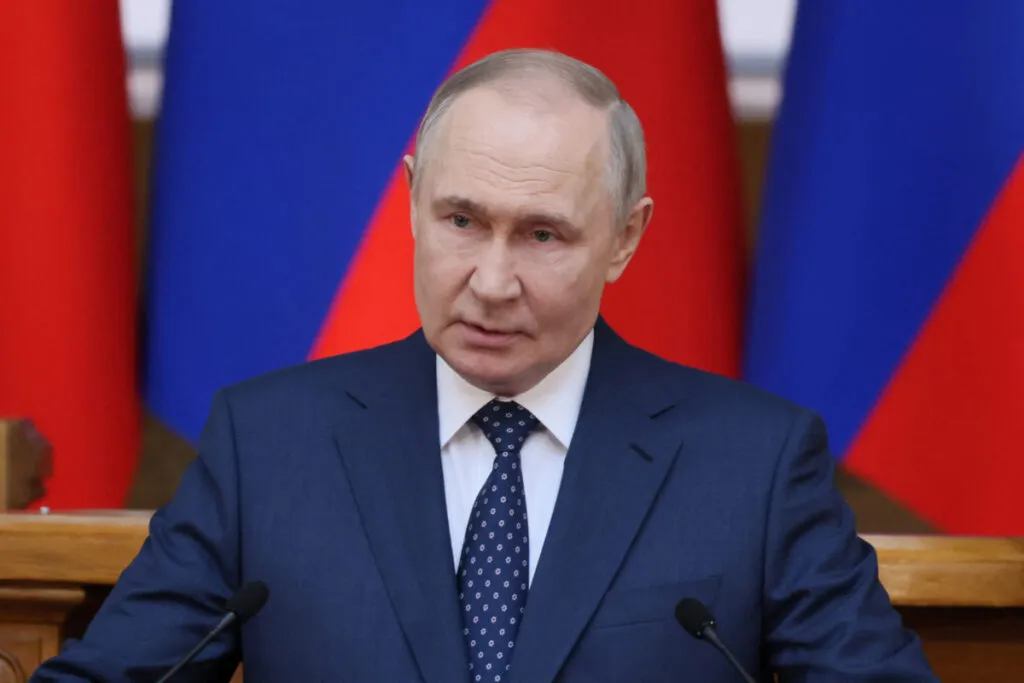

The Russian State Duma has passed a bill in the first reading that expands the president's powers to deploy troops abroad under the pretext of protecting Russian citizens, Interfax reports.
The bill was advanced amid concerns over a potential operation against Estonia, as an investigation found social media accounts that promote the idea of a “Narva People’s Republic”, a separatist project aimed at detaching parts of northeastern Estonia bordering Russia.
Repeating scenario for Ukraine
The term “People’s Republic” is closely associated with Russian-backed separatist movements in the post-Soviet space, including the so-called Donetsk and Luhansk People’s Republics in eastern Ukraine.
By using such terminology alongside state symbols — flags, coats of arms, and military insignia — these channels portray the Narva movement as a quasi-state, repeating tactics Russia has previously used to justify territorial claims and military intervention in Ukraine.
Russia used “People’s Republic” branding to precede occupation in Ukraine. Now it’s appearing in NATO-member Estonia.
“Protection of citizens” as universal trigger for war
The explanatory note to the bill states the need to respond in cases of arrests, detentions, or criminal prosecutions of Russian citizens based on foreign court decisions.
Andrey Kartapolov, head of the State Duma Defense Committee, stated that the measure is intended to protect citizens’ rights and counter what Moscow describes as “Russophobia,” which it claims is a systematic Western campaign.
Parallel escalation rhetoric
In 2025, the head of Russia’s Foreign Intelligence Service, Sergey Naryshkin, accused NATO of escalating military activity near Russia’s borders. He warned that Poland and the Baltic states would be the first to suffer in the event of a war between Moscow and the Alliance.
He claimed that Poland and the Baltic states were showing particular aggressiveness. As an example, he cited an alleged plan by Warsaw to deploy about two million anti-tank mines along its borders with Belarus and Russia’s Kaliningrad Oblast.