
Russia won’t start a nuclear war. It might cause a nuclear disaster.
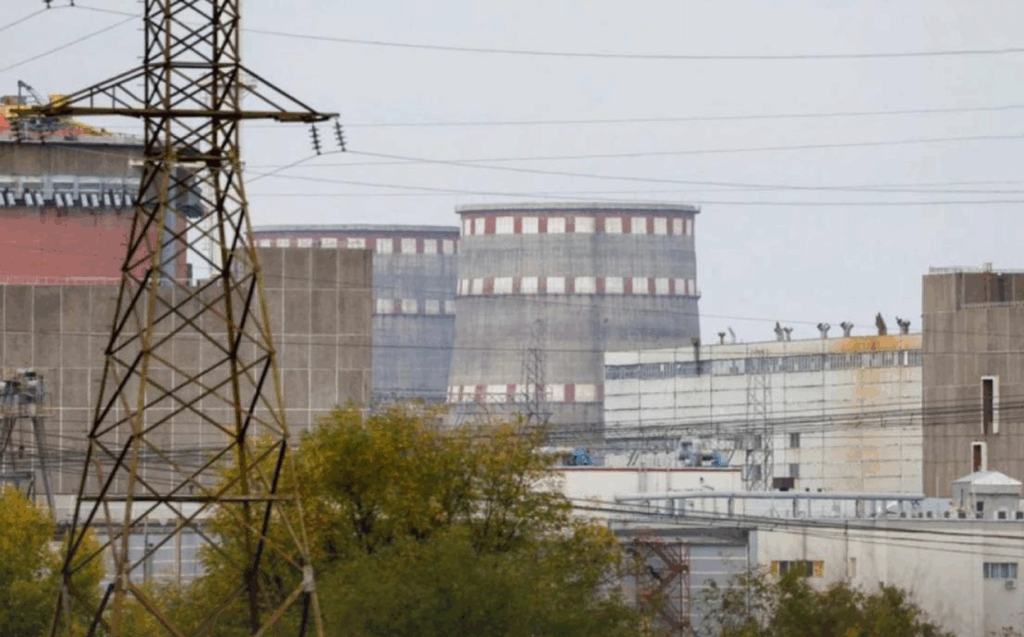

Two weeks ago, Europe's largest nuclear plant lost its grid for the 17th time. Diesel through a war zone is what stands between us and meltdown.
The West has developed an irrational fear of a nuclear confrontation with Russia. Don't get me wrong: there is nothing illogical about fearing a nuclear confrontation. I am simply arguing that the scenario in which a nuclear war serves Russian interests does not exist, and that the West does not have a monopoly on the fear.
Russian nuclear doctrine is governed by the same considerations as those of the US, the UK, and France. Both the threat of mutual destruction and the consequences of nuclear war greatly reduce the likelihood of nuclear arms ever being used. This is why nuclear weapons have not been used since August 1945.
The Soviet Union lost in Afghanistan and Russia in the First Chechen War without reaching for the button—even when its conventional forces were humiliated and, in Chechnya, its territorial integrity in question.
We have seen a series of "close calls," leaving us hanging on the brink of a nuclear disaster.
Two weeks ago, Europe's largest nuclear power plant lost its grid connection for the 17th time since Russia occupied it—the fifth blackout since January. The Zaporizhzhia Nuclear Power Plant (ZNPP) runs on diesel generators when external power fails, and the diesel has to be trucked in through a war zone. That is the operating condition of a six-reactor facility in 2026. Western capitals fear a Russian nuclear strike. They have learned to live with the steadily accumulating threat of a Russian nuclear disaster.
For the first time in human history, a high-intensity war is being fought in between and around 15 nuclear reactors. We have seen a series of "close calls," leaving us hanging on the brink of a nuclear disaster. More than 500 missiles and drones were recorded within the 30-km surveillance zones of Ukrainian nuclear power plants during 2025 alone. As late as 13 and 14 May 2026, more than 160 Russian UAVs were recorded flying over the South Ukraine, Khmelnytskyi, Rivne, and Chornobyl nuclear power plants. Available data suggest that the total number since February 2022 likely exceeds a thousand.
The Chornobyl reactor, the epicenter of the world's biggest nuclear disaster, has been hit.
On 14 February 2025, a Russian drone strike with a high-explosive warhead struck the former Chornobyl Nuclear Power Plant, damaging a protective shield built after the 1986 disaster to prevent further radiation leaks. IAEA Director General Rafael Mariano Grossi stated that "attacking a nuclear facility is an absolute no-go, it should never happen."
Russia's seizure of the ZNPP in March 2022 introduced a level of risk never experienced before. The occupation of Europe's largest nuclear power plant created an unprecedented situation: a six-reactor nuclear facility on an active battlefield, controlled by a military force. The IAEA repeatedly stressed that nuclear plants were never designed to operate under combat conditions. This event created the framework for virtually every subsequent nuclear-safety crisis.
For the first time in human history, a high-intensity war is being fought in between and around 15 nuclear reactors. We have seen a series of "close calls"...
During the battle for its capture, a training building caught fire and shells landed within the plant perimeter. It was the closest the war came to direct combat fire on a working nuclear reactor.
Russia's stated objective is to occupy all of Ukraine—which means capturing its remaining nuclear plants by military force.
Russia's occupation of the ZNPP has long been deemed outright unsafe. Frequent shelling, loss of power, and intimidation of the staff increase the risk of nuclear accidents. Russia has broken nearly every safeguarding principle the plant was designed around.
Russia's destruction of the Kakhovka Dam on 6 June 2023 is arguably the single most important nuclear-safety incident after the occupation itself. It severely compromised the water supply to the ZNPP. While the loss of the Kakhovka reservoir caused no immediate meltdown, it forced the plant into a highly vulnerable, precarious state regarding its vital, long-term reactor cooling systems, further eroding the nuclear safety and security situation at the plant.
"The nuclear safety and security situation at the Zaporizhzhia Nuclear Power Plant is extremely fragile. The loss of the Kakhovka reservoir was a catastrophe for the region as a whole and has also added to the severe difficulties for this major nuclear power plant," IAEA's Director General Grossi said.
Russia's massive and persistent strikes on Ukraine's energy system increase the risk of a nuclear disaster. The principal danger is that repeated attacks on transmission networks can deprive nuclear facilities of reliable external power, forcing reliance on backup systems and steadily reducing safety margins. This is why the IAEA has repeatedly described attacks affecting Ukraine's electrical infrastructure as a matter of nuclear safety, not merely energy security.
Europe should fear a nuclear disaster. Its actions do not reflect the fear.
A high-intensity war fought between 15 nuclear reactors puts us all at risk. There is only one way to reduce that risk: end the war.
More than a decade of negotiations—from Minsk through Istanbul to the current talks—has not ended it. It has bought Moscow time to entrench, to rearm, and to learn that Western fear of escalation outweighs Western commitment to outcome.
Russia is a revanchist, imperial state that has integrated military power into its foreign policy. It will not be negotiated out of its war aims. It will be stopped, or it will continue. The risks of continued Western inaction now exceed any risk a decisive response would carry—and they compound with every drone overflight, every blackout, every near-miss at a reactor whose name the West has already learned to pronounce.
Russia will not be negotiated out of its war aims. It will be stopped, or it will continue.
What is required is a new strategy. I have made that case at length elsewhere. The argument I am making here is narrower and harder to refute: the current course is not working, and every month it continues raises the probability of a disaster the West has chosen not to see.