
Russia captures Hornet AI drone that Ukraine uses to cut logistics 150 km behind front — without software that makes it work
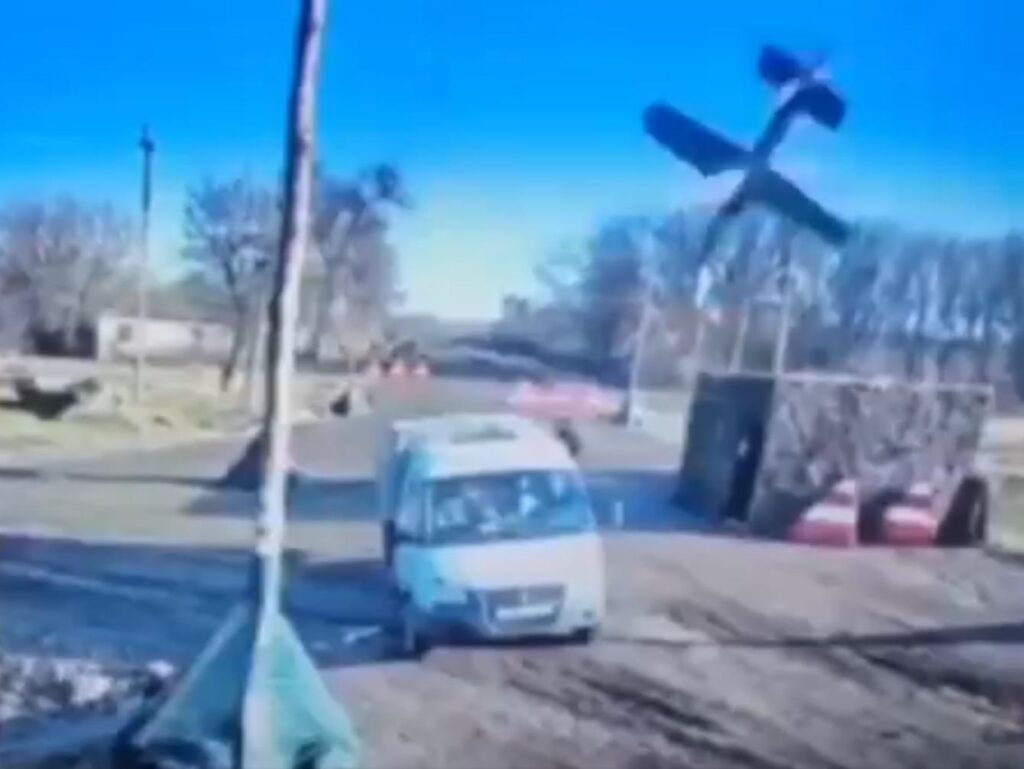

Russian forces have captured and disassembled the US-made Hornet AI strike drone. Ukraine has used it to cut Russian logistics lines at distances of 50 to 150 kilometers behind the front line, Defense Express reports.
Russian-language military channels have themselves acknowledged that Hornet strikes against logistics are inflicting systematic losses, the outlet noted, citing Ukrainian operational footage and Russian sources.
The Hornet is the operational centerpiece of the US-Ukraine drone partnership announced in July 2025 by Ukraine and US-based Swift Beat LLC. It is part of the defense ecosystem of former Google CEO Eric Schmidt under the "Project Eagle" framework.
Russia has reverse-engineered the hardware, but the operational advantage doesn't transfer with the airframe, because the proprietary software stack is what makes the Hornet work.
What Russians captured, and what they didn't
The Hornet is a fixed-wing one-way attack drone with a wingspan of over 2.2 meters. It has a takeoff weight of approximately 15 kilograms, a cruising speed of 100 to 120 kilometers per hour, a maximum dash of 200 kilometers per hour, and a dive speed reaching 200 to 300 kilometers per hour. It can stay airborne for up to 2 hours, cover distances of up to 150 kilometers, typically operate at altitudes between 300 and 500 meters, and ascend to 5,000 meters to evade short-range air defense.
The drone is launched from a pneumatic catapult, with a unit cost estimated at $5,000 to $12,000, depending on configuration, according to Defense Blog. Russian forces have dubbed the platform "Martian-2."
Ukrainian operators have reportedly added Starlink terminals and mesh modems on the drones, indicating an intent to extend strike depth via relay.
Where does drone hunt?
The primary "hunting" corridors for the drones are the R-280 highway, which connects Rostov-on-Don to occupied Crimea via Mariupol, Berdiansk, and Melitopol, and the highway between Donetsk and Mariupol. The 1st Azov Corps of the National Guard of Ukraine patrols Russian-occupied roads up to 160 kilometers behind the line of contact using reconnaissance-strike drone systems, including the Hornet, Euromaidan Press reported on 12 May.
Read also
-
Putin wants war concluded this year on victorious terms including Donbas, Bloomberg reports
-
Ukraine strikes “Rubicon” elite Russian drone unit in occupied Luhansk Oblast — while Moscow accuses Kyiv of hitting civilians
-
US wants Ukraine’s AI-assisted targeting, GPS-free navigation, and IP to reproduce it, but Zelenskyy has red line