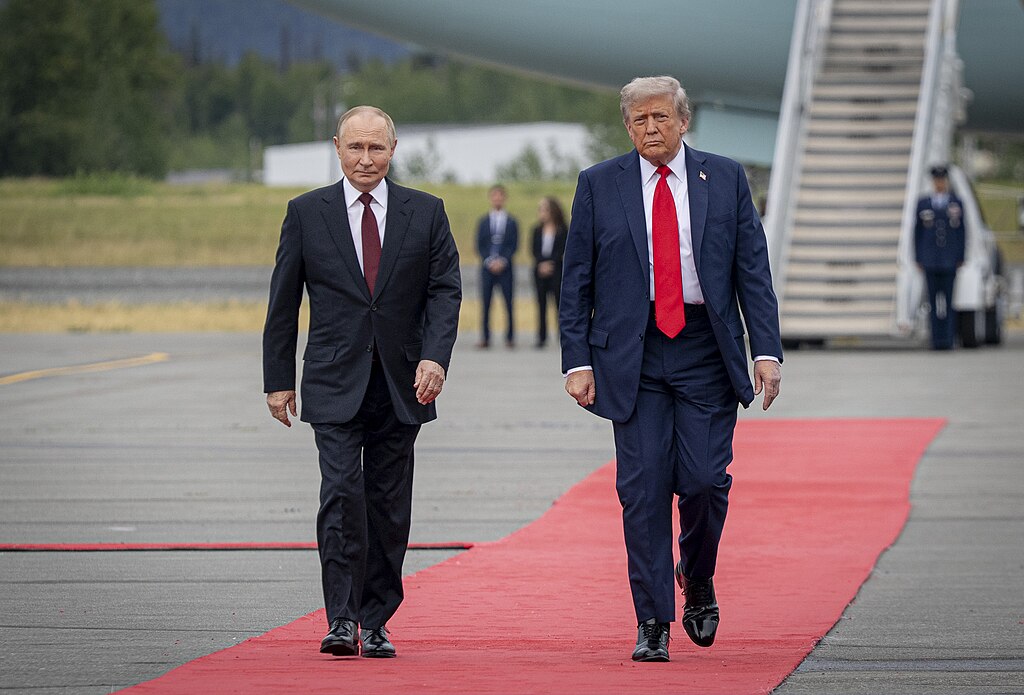
Russian President Vladimir Putin persuaded US President Donald Trump to meet in Budapest because he feared the possible supply of Tomahawk missiles to Ukraine. These long-range weapons could eliminate his war machine, says military expert Pavlo Narozhnyi, as per Radio NV.
Before meeting with Ukrainian President Volodymyr Zelenskyy, Trump unexpectedly held a call with Putin. Reports indicate that Trump rejected the transfer of Tomahawk missiles to Ukraine, did not impose any new sanctions on China, and offered no additional military aid packages.
"He dragged Trump into the swamp of talks"
“Putin outplayed Trump again. He dragged him into this swamp of negotiations and effectively forced him to go to Budapest for yet another meeting that will lead to nothing. We’ve already seen this in Alaska — they talked, then left, no results,” Narożnyi said.
The expert believes Putin will again play on his historical grievances, but no real peace dialogue will take place.
Fear of Tomahawks
Putin, Narożnyi said, fears long-range missiles because they could quickly bring Russia’s economy to its knees.
“With dozens or hundreds of Tomahawks, Ukraine could paralyze the Russian economy, which depends entirely on oil and gas,” he explained.
"He doesn't care about people — he fears for his economy"
According to the expert, Putin is unmoved by mass casualties on the battlefield, since Russia has “many expendable people” whose lives “mean nothing to the system.”
“This war exists because Russia can afford to throw these people into the grinder without hurting its economy,” Narożnyi added.
How to stop the war?
The only way to end the war, Narożnyi argued, is to destroy Russia’s economy. He recalled that the collapse of oil prices in the 1980s proved fatal for the USSR.
“Putin fears a repeat of that scenario. He’s ready to drag this war on until his own death, the death of the economy, or a shift in public mood," he recalled.
New surge of attacks before the summit
Before the Budapest meeting, Putin is likely to intensify attacks to create an illusion of battlefield success before facing Trump.
“It’s already happened — before the previous meeting, they increased shelling to show a ‘counteroffensive.’ But afterward, it took them three or four months to recover,” Narożnyi noted.