Poland stripped Zelenskyy’s White Eagle over a UPA decree—but kept Mussolini’s
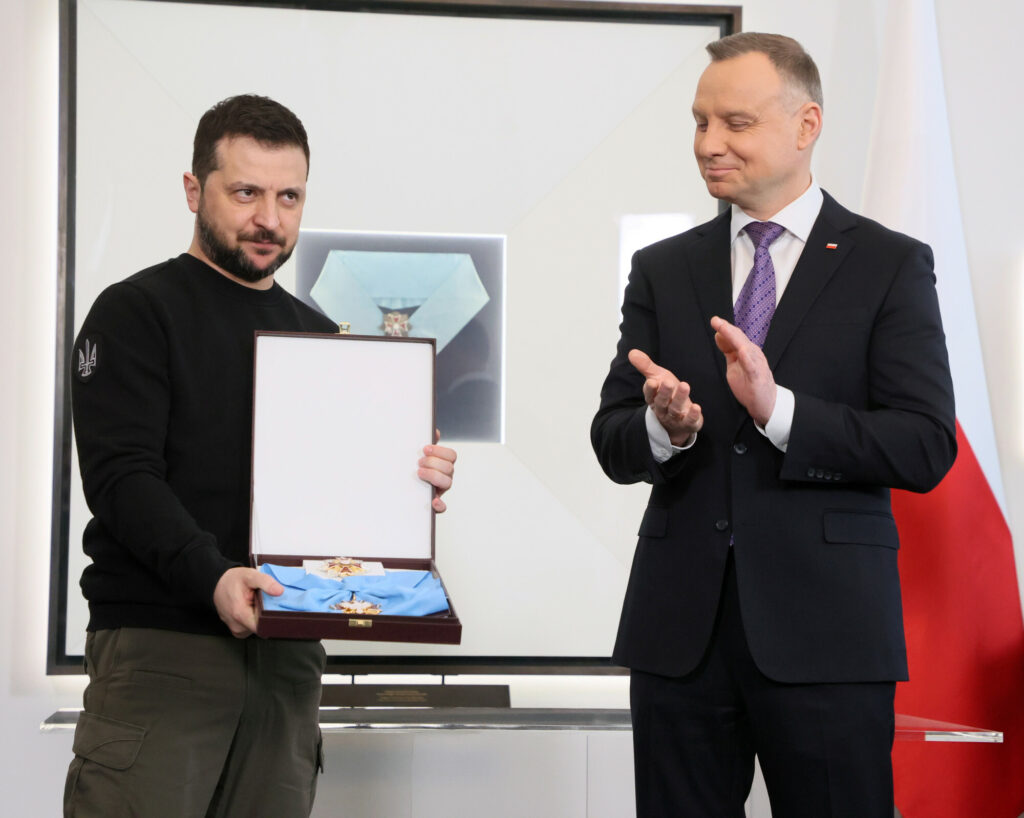

President Volodymyr Zelenskyy has returned Poland’s highest honor to Warsaw, with the office of Polish President Karol Nawrocki confirming that the Order of the White Eagle arrived on 22 June. It will now be placed in a sealed archive, preserved but never awarded again.
The handover turns what began as a one-sided snub into a mutual rupture between two wartime allies, and a lasting one. Poland remains Ukraine’s lifeline: Rzeszów is still the main hub for Western arms deliveries, and Warsaw helps shape Kyiv’s path toward the EU. A rift between the two serves only Moscow. Euromaidan Press traced the broader trend of anti-Ukrainian sentiment in Poland.
A Ukrainian was among the White Eagle's first recipients
The move is striking partly because Poland rarely revokes the Order of the White Eagle. Nawrocki’s chancellery acknowledged that the Order of the White Eagle still appears in state records alongside the names of Catherine II, who helped wipe Poland off the map in the 18th-century partitions; Benito Mussolini; and former German Chancellor Gerhard Schröder. Warsaw left the honor untouched in all three cases. Zelenskyy is the exception Nawrocki chose to make.
History adds its own irony. Among the order’s first recipients after its founding in 1705 was the Ukrainian hetman Ivan Mazepa — a detail Radio Svoboda revisited under a headline joking that history keeps laughing at Nawrocki. It wondered whether Mazepa himself might refuse the decoration today, in solidarity with the presidents now handing theirs back.
What Warsaw will do with the medal
Nawrocki’s spokesman, Rafał Leśkiewicz, said on Polsat News that the insignia and annulled certificate will be placed in the orders bureau’s deposit for permanent storage, with the dignity befitting Poland’s highest distinction. The medal itself will never be awarded to anyone else: a single retired piece, not one passed on.
The act is not yet final. The formal order still needs the countersignature of Prime Minister Donald Tusk, whose government supports Ukraine’s EU accession. Leśkiewicz played down talk of escalation, pointing to Nawrocki’s line that the move targets a cult of history, not Ukrainians, and that Russia remains the enemy of both Ukraine and a free Europe.
Ukraine's leaders give back their Polish honors
The return of awards has gone both ways. On 20 June, Ukraine’s second, third, and fifth presidents, Leonid Kuchma, Viktor Yushchenko, and Petro Poroshenko, renounced their own White Eagles. Within days, the wave had reached serving officials: Foreign Minister Andrii Sybiha, Presidential Office chief Kyrylo Budanov, his deputy Ihor Zhovkva, Ukraine’s ambassador to Warsaw Vasyl Bodnar, and former Prime Minister Volodymyr Groysman.
The sharpest response came from Sybiha. He warned that Kyiv would “mirror all steps, especially if those steps are unfriendly and disrespectful towards our country,” called Nawrocki a destroyer of recent progress, and said it was no coincidence that he had drawn “applause from Moscow.” Even so, Sybiha stressed that Ukraine still valued the partnership and remained open to dialogue.
Zelenskyy invokes Orbán — Nawrocki denies it
Zelenskyy argued that Nawrocki was doing what Viktor Orbán has done — stoking the memory conflict as election-season theater — and warned it would end badly.
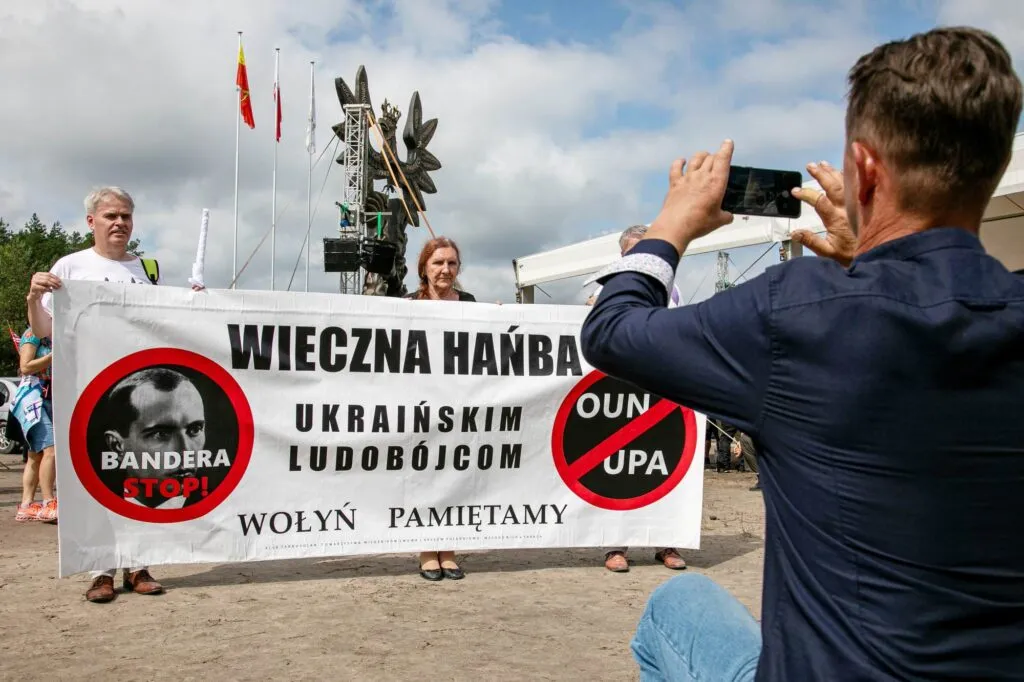
Nawrocki rejects the reading. His office says the decision had nothing to do with Poland's internal contest, and answered Zelenskyy's 26 May decree naming a special-forces unit for the Heroes of the UPA — the insurgent army Warsaw blames for killing up to 100,000 Poles in Volhynia and Eastern Galicia between 1943 and 1945, killings its parliament has declared a genocide.
What the rupture costs both sides
The medals are symbolic; the dependencies underneath them are not. Tusk warned the standoff was "a strategic mistake that will cost both sides: in business, geopolitically, and reputationally," and said he was working with European partners to lower the temperature.
Ukraine's western border is its lifeline for aid and trade, and Polish farmers have blocked it before, blockading the crossings for months and holding up even humanitarian convoys. Alienating Warsaw puts that artery — and the EU path that runs through it — back at risk.
Poland carries its own exposure. Warsaw has made Ukraine's reconstruction a national economic strategy, and analysts warn the feud risks turning it from a decision-maker into a petitioner, sidelined from the rebuild it has bet on and from the forums shaping Europe's security.
The row lands days before Poland hosts the Ukraine Recovery Conference in Gdańsk on 25–26 June — an event Nawrocki will not attend.
For now, the lifelines hold. Rzeszów stays open, the trains still run, and Polish and Ukrainian forensic teams continue working together on the Volhynia graves. What is left undone is the smallest thing of all — a single decree, still waiting on the countersignature of a prime minister who would rather see Kyiv reach Brussels.
Read also
-
Poland and Ukraine's memory war has spilled into the streets. Its consequences might be disastrous
-
Former Polish ambassador returns Ukrainian Order of Merit after UPA Heroes unit decree
-
"Heroes of UPA" unit will keep its name, Budanov's office says despite Polish pressure
-
Blood-stained past looms over Ukraine-Poland stance against Russia