
PM, VP, Speaker! Here Are The Juicy Positions Every Presidency Minister Before Babalanda Went on to Hold in Cabinet
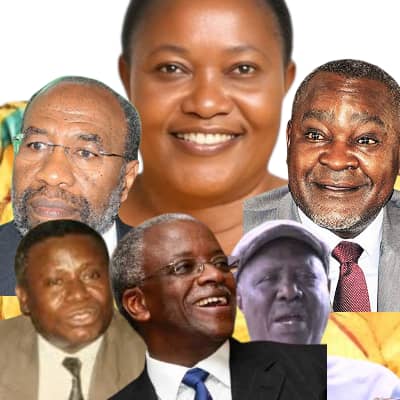
Since 1986, Uganda has cycled through more than ten Ministers for the Presidency, each entrusted with the delicate task of managing State House affairs and serving as the President’s political bridge to cabinet and parliament. Their careers after leaving the docket reveal the shifting fortunes of Uganda’s political elite, and today, speculation abounds that the current holder, Milly Babalanda, could be tipped for an even bigger role in the next cabinet.
The story begins with Kintu Musoke, one of the early custodians of the docket. His tenure was marked by loyalty to the NRM cause, and he later ascended to the premiership in 1994, serving until 1999. Musoke’s post-docket career cemented him as a respected elder statesman, often consulted on party matters.
Eriya Kategaya, Museveni’s childhood friend and comrade in the bush war, also held the docket. Afterward, he became Deputy Prime Minister and Minister for East African Affairs, playing a pivotal role in regional integration. His legacy is one of principled loyalty, even when he briefly fell out with Museveni in the early 2000s.
Francis Ayume, a distinguished lawyer and Speaker of Parliament, was appointed Minister for the Presidency in the late 1990s. His tenure was cut short by his tragic death in a car accident in 2004, but he is remembered for his integrity and commitment to constitutionalism.
James Wapakhabulo, another towering figure, combined diplomacy with political acumen. After serving as Minister for the Presidency, he became Speaker of Parliament and later Foreign Affairs Minister. His untimely death in 2004 robbed Uganda of a seasoned statesman who had been tipped for even higher office.
Kirunda Kivejinja, a veteran of Uganda’s political struggles, also held the docket. He later served as Minister for Internal Affairs and Deputy Prime Minister. His post-docket career was characterized by ideological mentorship, often reminding younger cadres of the NRM’s historical mission.
Gilbert Bukenya, remembered for his populist touch, used the Presidency docket as a springboard to the Vice Presidency, which he held from 2003 to 2011. After his fall from grace, he oscillated between opposition flirtations and reconciliation with the NRM, but his legacy remains that of a man who sought to connect State House with ordinary Ugandans.
Beatrice Wabudeya, one of the few women to hold the docket before Babalanda, later served as Minister of Health and played a role in parliamentary affairs. Though she eventually lost her parliamentary seat, her career reflected the growing inclusion of women in high-level politics.
Dr. Crispus Kiyonga, a versatile minister, held the docket briefly before moving on to Defence and Health. His post-docket career was defined by his stewardship of Uganda’s health sector and his role in regional peace negotiations.
Amama Mbabazi, perhaps the most consequential holder, used the docket as a launchpad to the premiership. His later fallout with Museveni and presidential bid in 2016 marked him as one of the few ministers whose post-docket career challenged the status quo.
Ruhakana Rugunda, another trusted cadre, held the docket before serving as Foreign Affairs Minister and eventually Prime Minister from 2014 to 2021. His calm demeanor and diplomatic style made him a stabilizing figure in government.
Kabakumba Masiko held the docket briefly but resigned in 2011 after a broadcasting scandal. Her post-docket career has been subdued, though she occasionally resurfaces in local politics.
Frank Tumwebaze brought youthful energy to the docket, later moving to ICT and Agriculture. His post-docket career reflects the NRM’s strategy of grooming younger leaders for continuity.
Esther Mbayo held the docket from 2016 to 2021, focusing on streamlining State House operations. After leaving cabinet, she has remained active in Busoga politics and community development.
Finally, Milly Babalanda, the current Minister for the Presidency, has distinguished herself by tightening State House administration and reinforcing grassroots mobilization. Her loyalty to Museveni and organizational skill have led many to speculate that she could be elevated to an even bigger role in the next cabinet—perhaps Deputy Prime Minister or even Vice President. In a political culture where loyalty and competence are prized, Babalanda’s trajectory mirrors that of predecessors like Musoke, Mbabazi, and Bukenya, who all rose higher after stewarding the Presidency docket.
The docket has thus served as both a proving ground and a political springboard. Some ministers, like Wapakhabulo and Ayume, were cut short by fate; others, like Mbabazi and Bukenya, saw their careers soar before faltering. Yet the common thread is that the Presidency docket remains a crucible for Uganda’s political elite. As speculation mounts about cabinet reshuffles, all eyes are on Milly Babalanda, whose stewardship may well mark the beginning of a new chapter in Uganda’s political story.
The post PM, VP, Speaker! Here Are The Juicy Positions Every Presidency Minister Before Babalanda Went on to Hold in Cabinet appeared first on Watchdog Uganda.