
OP-ED: Dr. Lawrence Muganga Appointment Debate and the Renewed Questions on Citizenship, Identity, and Equal Treatment in Uganda
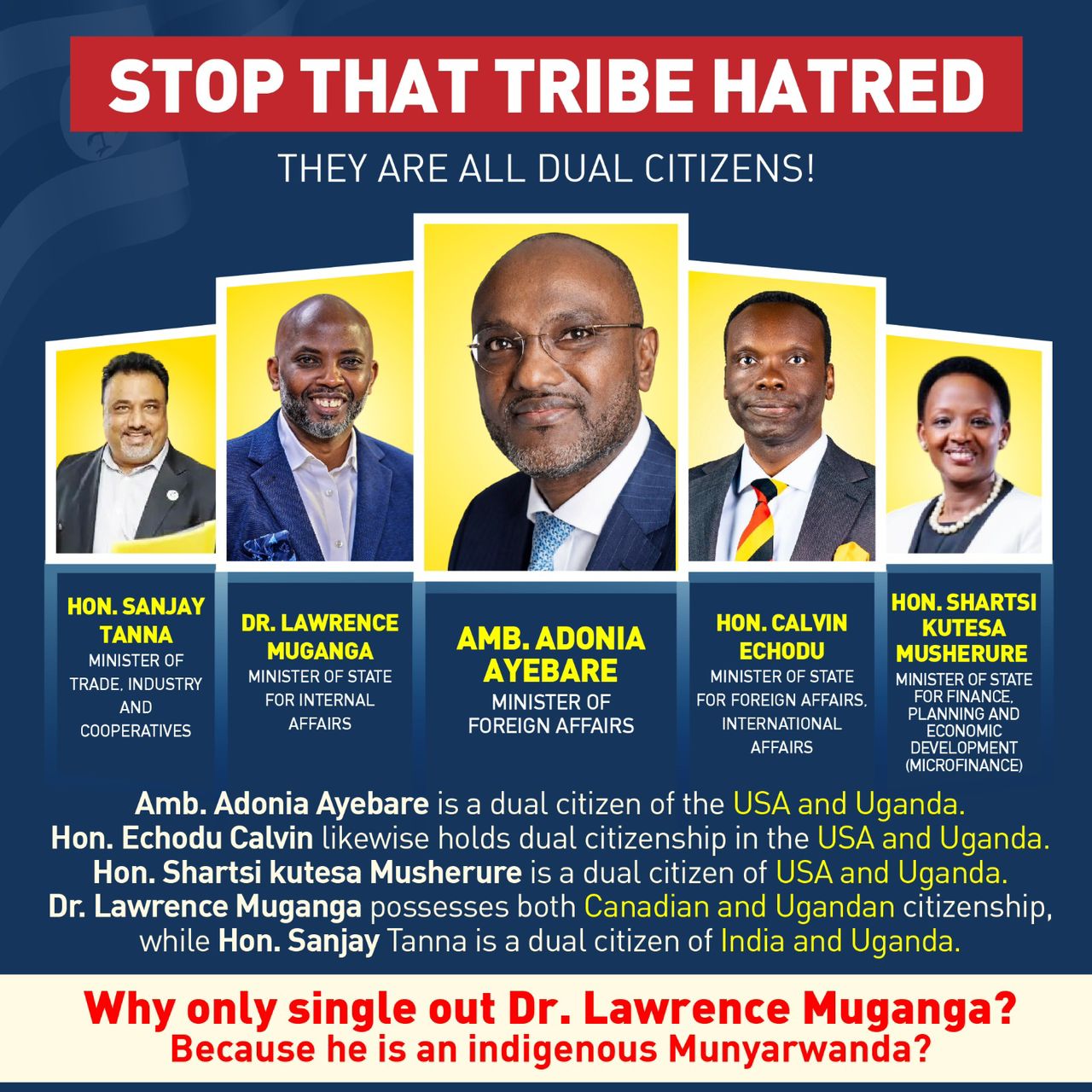
The ongoing debate surrounding the appointment of Dr. Lawrence Muganga as State Minister for Internal Affairs has gone beyond constitutional interpretation and entered the deeper terrain of identity, belonging, and perceptions of fairness in Uganda’s public life.
Since President Yoweri Kaguta Museveni unveiled his 2026–2031 cabinet, scrutiny of several appointees alleged to hold dual citizenship has triggered intense public discussion. While legal provisions governing eligibility for ministerial office are clear and must be respected, the pattern of public focus has raised broader questions about consistency, equality before the law, and whether certain individuals are subjected to more intense scrutiny than others.
At the center of this conversation is Dr. Muganga, Vice Chancellor of Victoria University and a well-known academic and advocate for educational reform. A petition challenging his eligibility has cited provisions of the Uganda Citizenship and Immigration Control (Amendment) Act, 2009, which restrict dual citizens from holding certain ministerial positions.
However, supporters argue that the debate has increasingly shifted from law to identity politics, with attention disproportionately directed at Dr. Muganga compared to other appointees reportedly facing similar citizenship verification processes.
Reports indicate that the President directed the Directorate of Citizenship and Immigration Control to verify the status of multiple cabinet nominees, including Amb. Adonia Ayebare, Hon. Calvin Echodu, Dr. Muganga, and Hon. Sanjay Tanna. Yet public outrage and online debate have largely concentrated on one individual, raising questions about selective scrutiny.
A Long-Standing Debate on Citizenship and Identity
For years, Council for Abavandimwe leader Frank Gashumba has publicly raised concerns about what he describes as ethnic profiling and victimization of Ugandans of Rwandan descent in the issuance of national identity documents and passports.
He has previously argued that some Ugandans of Banyarwanda heritage—despite being born, raised, and fully integrated within Uganda—often face additional verification processes when applying for national documentation. These concerns prompted him to call on President Yoweri Kaguta Museveni to issue clearer administrative guidance to ensure uniform and fair issuance of identity documents.
To supporters of Dr. Lawrence Muganga, the current scrutiny surrounding his ministerial appointment is viewed as part of this broader historical concern. They argue that his personal background is well documented—his birthplace, upbringing, education, and professional record are not in dispute—and therefore the intensity of focus on his ancestry raises questions about fairness.
From this perspective, the concern is not merely legal compliance, but whether similar standards are consistently applied across all individuals holding or being considered for public office.
Consistency Versus Selective Scrutiny
Uganda’s citizenship laws and constitutional requirements for ministerial appointments are not in question. What is under debate is the consistency with which they are enforced.
While critics of Dr. Muganga emphasize dual citizenship provisions, supporters point to the fact that several other appointees reportedly linked to foreign citizenship ties have not attracted the same level of public scrutiny. This perceived imbalance has fueled accusations of selective enforcement and identity-based profiling.
The issue, therefore, is not only about eligibility but also about perception—how fairness is interpreted by the public when enforcement appears uneven.
Merit, Contribution, and National Service
Beyond the controversy, Dr. Muganga is widely recognized as an accomplished academic, lawyer, and university leader with extensive international experience in education reform. His supporters argue that Uganda should prioritize competence, integrity, and proven leadership when assessing public officials, particularly in a globalized world where dual nationality is increasingly common among professionals.
Uganda has long encouraged its diaspora and internationally trained professionals to contribute to national development. In that context, critics of the current narrative caution against allowing identity-based debates to overshadow merit-based evaluation.
A Broader National Conversation
This debate has also revived long-standing conversations about citizenship, identity, and belonging—particularly among Ugandans of Banyarwanda heritage. Advocates argue that individuals from this community have lived in Uganda for generations, contributing to national development in business, education, public service, and other sectors.
Council for Abavandimwe leadership and other community voices have consistently raised concerns about unequal treatment in access to national documentation and recognition. Whether one agrees with these claims or not, the recurring nature of such debates suggests an unresolved tension in Uganda’s national identity discourse.
Parliament’s Responsibility
As Parliament proceeds with vetting, the Appointments Committee faces a critical test: to apply the law consistently, transparently, and without regard to ethnicity, social status, or political influence.
If legal disqualifications exist, they must be addressed through proper constitutional channels. However, if no such disqualifications are proven, then decisions should be guided by competence, integrity, and national service rather than public pressure or identity-based narratives.
Conclusion
Ultimately, the controversy surrounding Dr. Muganga’s appointment is about more than one individual. It reflects Uganda’s ongoing struggle to balance law, identity, and unity in a diverse society.
Whether viewed as a legal compliance issue or a broader question of fairness, the debate underscores the importance of consistent application of the law and equal treatment of all citizens.
As Uganda continues to navigate these sensitive questions, one principle must remain central: citizenship rights and public office eligibility should never be determined by ethnic origin, but by law, merit, and equal justice for all.
The post OP-ED: Dr. Lawrence Muganga Appointment Debate and the Renewed Questions on Citizenship, Identity, and Equal Treatment in Uganda appeared first on Watchdog Uganda.