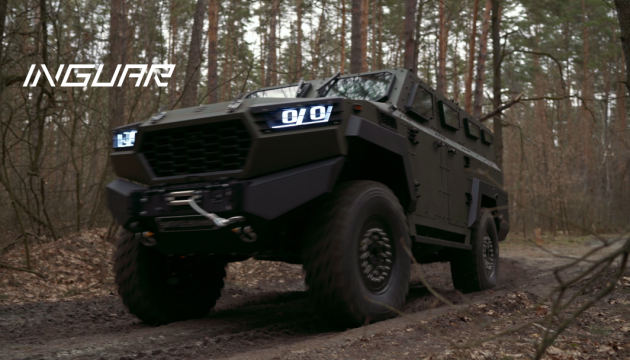
Ukraine is receiving a new mobile air defense system. The Norwegian company Kongsberg has developed an anti-aircraft combat module for Ukrainian Inguar-3 armored vehicles, specifically adapted to counter mass drone attacks, Defence Blog reported.
The system was presented during a visit by a Polish delegation to Norway, where the developers confirmed that the platform has already passed its first stage of testing and is being prepared for deployment to the front with international support.
Mobile air defense that goes hunting
The core of the system is the CROWS C-UAS module, designed to detect and destroy aerial threats, including Shahed-type drones and certain cruise missiles.
It is equipped with electro-optical and thermal imaging sensors, enabling target detection even in poor visibility conditions.
Elevated mast: breaking advantage of low-altitude attacks
A key feature is the use of a raising mast for sensors and weapons, significantly expanding the crew’s field of view.
This allows earlier detection of targets attempting to use terrain or urban structures to approach undetected at low altitude.
Low-cost interception for mass drone threats
Targets are engaged using 70 mm laser-guided rockets, a cost-effective solution for countering large numbers of drones without expending expensive surface-to-air missiles.
The integration of the Ukrainian Inguar-3 platform with Kongsberg technologies demonstrates a new cooperation model that combines local production with NATO-standard systems.
This mobile air defense solution is expected to strengthen protection for combat formations, artillery positions, and logistics convoys, providing rapid response capabilities and improved survivability for crews in active combat zones.
Earlier, Ukraine showcased a new surface-to-air missile at a defense exhibition. It was identified as the missile known as “Koral”.
The development was underway for several years as part of Ukraine’s ground-based air defense systems, with potential additional capabilities that may also support counterintelligence-related missions.
Its initially declared range was 30–50 km, but by around 2023, it was revised upward to approximately 100 km.