
NEW YORK: Uganda government officials, development partners commit to advance sustainable and inclusive coffee sector
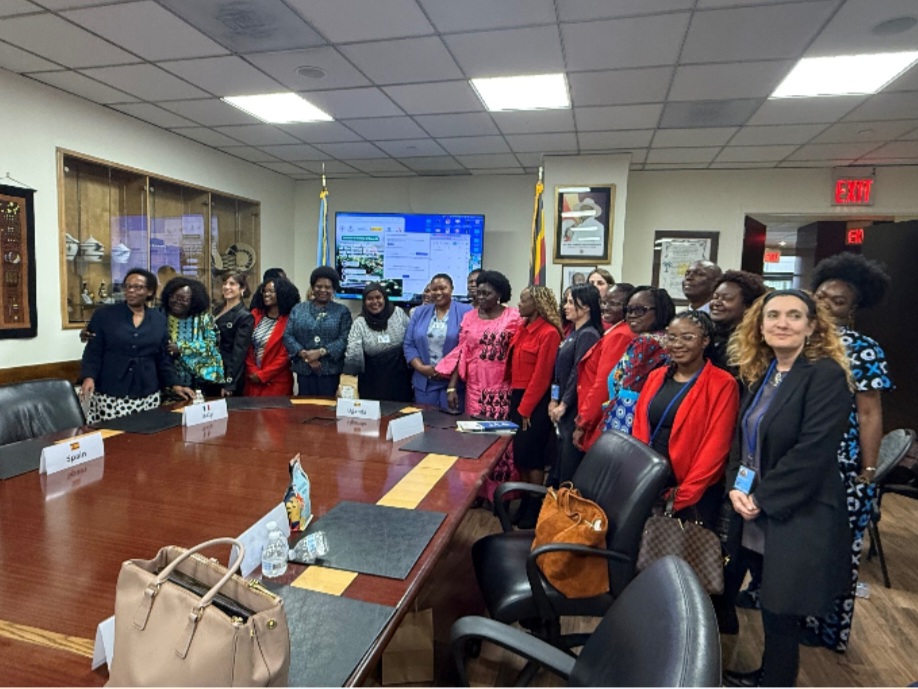
A high-level event at the sidelines of the 70th session of the Commission on the Status of Women, was convened on March 11, 2026, at the Permanent Mission of the Republic of Uganda to the United Nations in New York, United States of America.
The event which ran under the theme: “Women and Youth at the Center of Sustainable and Inclusive Coffee Value Chains, with a Focus on Africa”, brought together policymakers, development partners and private investors to explore the role of women and youth in the sustainable and inclusive coffee value chains, particularly across Africa.
The discussion highlighted the central role that women and young people continuously play across the coffee sector from cultivation and processing to trade, innovation and entrepreneurship.
Despite women and youth forming the backbone of the sector, persistent structural barriers continue to limit their full participation and economic potential.
The Ugandan delegation comprised Rt. Hon. Rukia Isanga Nakadama-Third Deputy Prime Minister and Minister without Portfolio; Hon. Betty Amongi- Minister of Gender, Labour and Social Development, Hon. Babirye Milly Babalanda- Minister for the Presidency, Hon. Sarah Opendi, Hajjati Zaminah Malole- Secretary of the Presidential Awards Committee, the Ms. Celia Nabeta-Minister Counsellor- Ms. Catherine Nassuna- Under Secretary at the Ministry of Water and Environment and Ms. Angella Nakafeero, Commissioner at the Ministry of Gender, Labour and Social Development, among other senior government officials and civil society representatives.
The event also featured a panel of experts and representatives from international organizations, including UN Women, as well as partner governments from Kenya, Ethiopia, Italy, Austria and Spain.
Panelists shared perspectives on the policy, social and economic reforms needed to strengthen women’s leadership and youth participation within agricultural value chains.
Rt. Hon. Nakadama, in her closing remarks commended the panelists and participants for the rich and forward-looking discussion.
She reaffirmed that empowering women and youth within coffee value chains is not only a matter of equity, but also a strategic pathway to sustainable economic transformation.
The Third Deputy Prime Minister further reflected on the global commitments under the Beijing Declaration and Platform for Action and emphasised the need to advance women’s economic empowerment and participation in decision-making through strengthening collaboration among governments, coffee industry, development partners and local communities which is essential in ensuring that the coffee sector delivers inclusive growth and resilient livelihoods across Africa.
Central to the discussion was the need for deliberate policy and institutional reforms that translate commitments on gender equality into concrete opportunities for producers and entrepreneurs at the local level.
Participants underscored the importance of strengthening gender-responsive laws and policies in agricultural and trade sectors, particularly those relating to land ownership and access to productive resources.
Social norms and structural inequalities continue to limit women’s access to finance, markets, and decision-making roles. The youth face barriers in accessing capital, technology and training required to build viable enterprises within the coffee industry as well.
The conversation also underscored the growing urgency of addressing the intersection between gender equality, climate change and agricultural sustainability.
Representatives from the United Nations Industrial Development Organization(UNIDO) highlighted the gender climate nexus and the disproportionate impact of climate variability on women farmers who are heavily engaged in production and post-harvest processes.
Expanding access to climate-smart technologies, financial tools and targeted skills development programs was identified as critical to strengthening resilience across coffee-producing communities.
According to insights shared by the International Coffee Organization (ICO), the average age of a farmer in Africa is approximately 54 years signalling an urgent need to attract younger generations to agriculture.
Investments in youth entrepreneurship, digital innovation, and agricultural skills development were highlighted as key drivers of sector renewal. Panelists also emphasized the importance of improved data systems that capture and make visible contributions of women across the coffee value chain, enabling more evidence-based policymaking and investment decisions.
The importance of coffee to the national economy of Uganda was also highlighted.
Coffee remains one of Uganda’s leading export commodities and a major source of income for millions of smallholder farmers, supporting rural livelihoods and contributing significantly to foreign exchange earnings, thus a need for ensuring meaningful exclusivity and participation of women and youth.
Initiatives such as the Presidential Advisory Committee on Exports and Industrial Development (PACEID), operating under the Office of the President, are actively boosting Uganda’s coffee sector by promoting value addition and direct exportation of coffee to international markets. PACEID’s work aims to enhance Uganda’s export capacity by supporting agro-industrialization and expanding opportunities for all in strategic sectors.
The discussions concluded with a shared commitment among participants to advancing sustainable and inclusive coffee sectors that contribute to economic empowerment, gender equality and resilient rural livelihoods across Africa.
The post NEW YORK: Uganda government officials, development partners commit to advance sustainable and inclusive coffee sector appeared first on Watchdog Uganda.