NATO’s generals warn of war by 2029. Europe won’t be ready until 2035.
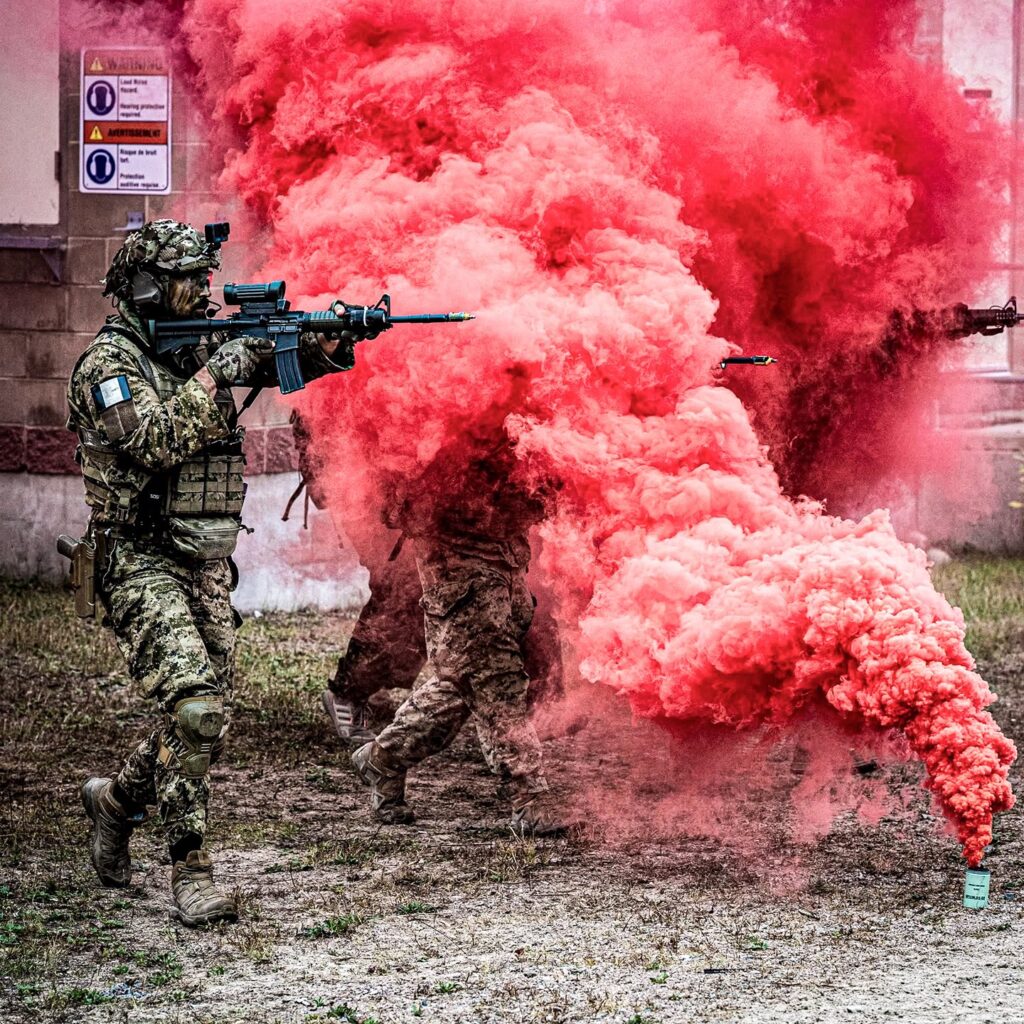

Europe's security chiefs now warn, with growing urgency, that Russia may move against NATO territory as early as 2027–2030. Europe's rearmament plans, however, will not close critical capability gaps until 2035. That five-to-seven-year gap is not an accident of planning. It is a window—and Russia has demonstrated, repeatedly, that it uses them.
European intelligence is far more explicit than its American counterpart. Northern and Eastern European services have a clearer understanding of the scale, scope, and timeline of the confrontation ahead. In contrast to Washington, Europe sees the threat as existential. More importantly, Europe is slowly starting to realize that it is part of the battlefield, exposed to great power rivalry.
The 2026 Annual Threat Assessment of the US Intelligence Community describes Russia as seeking to restore its sphere of influence and prevent further NATO expansion in the former Soviet space, especially Ukraine.
Its 2021 assessment—published before Russia's full-scale invasion of Ukraine—made a similar appraisal. On 22 December 2025, Reuters reported that "US intelligence reports continue to warn that Russian President Vladimir Putin has not abandoned his aims of capturing all of Ukraine and reclaiming parts of Europe that belonged to the former Soviet empire."
The warnings have avalanched
In November 2024, Bruno Kahl, then-head of the German Federal Intelligence Service (BND), warned that Russia may launch an attack on NATO territory "by the end of the decade"—assessing that the Kremlin would conduct a limited operation, such as an invasion of the Norwegian island of Spitsbergen or of the Baltic states, designed to demonstrate the inefficiency of the collective defense clause under the Washington Treaty and undermine NATO altogether. According to German intelligence, the Kremlin doubts there is any political will to invoke Article 5.
Since then, the warnings have avalanched.
On 11 February 2025, the Danish Defense Intelligence Service (FE) published three scenarios of Russia's belligerence, ranging from a local war against a bordering state within six months of a Ukraine ceasefire to readiness for a large-scale European war within five years.
On 1 June 2025, Carsten Breuer, General Inspector of the German Bundeswehr, stated that NATO should prepare for a possible Russian attack by 2029. He said NATO was facing the most serious threat from Russia since 1985—the height of the Cold War.
"There's an intent and there's a build-up of the stocks for a possible future attack on NATO's Baltic state members," he said. "So we have to be ready by 2029… If you ask me now, is this a guarantee that's not earlier than 2029? I would say no, it's not. So we must be able to fight tonight."
Breuer stressed that Russia's view of the war differed fundamentally from the West's—Moscow sees it as a "continuum" in a larger conflict with NATO and is therefore "trying to find ways into our defence lines and it's testing it." He argued that "it will take years for Europe's military industrial base to crank up to speed to match anywhere near the scale of weaponry that Russia is churning out."
On 18 June 2025, EU Foreign Policy Chief Kaja Kallas warned that "if we don't help Ukraine further, we should all start learning Russian"—implicitly acknowledging that Russia shows no sign of stopping in Ukraine, and that Ukraine remains the last bulwark between Russia and the EU.
Kahl's successor Martin Jaeger told German lawmakers on 13 October 2025 that Russia is ready to test European borders and escalate current tensions into open confrontation "at any moment."
On 17 November 2025, Poland's General Staff chief, General Wiesław Kukuła, warned that "the enemy has begun the period of preparing for war" and is creating conditions favorable for aggression on Polish territory. His comments came hours before Prime Minister Donald Tusk announced that a railway line between Warsaw and Lublin had been blown up in what he called an "unprecedented act of sabotage."
On 11 December 2025, NATO Secretary General Mark Rutte warned that Russia could attack a NATO country within the next five years. "Russia is already escalating its covert campaign against our societies," he said. "We must be prepared for the scale of war our grandparents or great-grandparents endured"—signaling the prospect of a full-scale war on NATO territory for the first time since World War II.
On 16 February 2026, Germany's Chief of Defense Gen. Carsten Breuer and the UK's Chief of Defense Staff Air Marshal Sir Richard Knighton issued the most acute warning to date, signaling frustration over the lack of European urgency despite repeated alarms. They warned that European nations "must now confront uncomfortable truths" about their security and make "hard choices" about spending.
In a rare public plea, they called on people across Europe to support major boosts in defense spending to deter a possible war with an increasingly westward-looking Russia. "Moscow's military buildup, combined with its willingness to wage war on our continent, as painfully evidenced in Ukraine, represents an increased risk that demands our collective attention," they wrote. "Moscow's intentions range wider than the current conflict"—arguing that the public must get behind increased defense spending, even if it means the "peace dividend" from the end of the Cold War might suffer.
On 18 March 2026, Karel Řehka, chief of the Czech General Staff, said that most NATO military leaders do not rule out the possibility that Russia could attempt to attack Alliance territory by 2029. US intelligence, he noted, believes that Russia intends to seize all of Ukraine and ultimately restore control over parts of Europe that once belonged to the Soviet Union—among them the three Baltic states, Poland, Hungary, the Czech Republic, Bulgaria, Romania, Moldova, Albania, and Slovakia.
"Most of us in defense leadership share a similar view," the general said. Řehka emphasized that war is not inevitable, but warned that to prevent it, NATO must remain strong and maintain credible deterrence. "For reliable deterrence, you need real defensive capabilities and power, as well as the will to use them. The adversary must understand that you possess both."
On 31 March 2026, Gen. Dominique Tardif, deputy commander of the French Air Force, told Politico: "It is possible that Russia will test NATO's strength in the period from 2028 to 2029." The warning marked one of the first public statements at that rank from a French officer, aligning Paris with the chorus from Berlin, Warsaw, and London.

Russia no longer fears the Alliance
The assessment has merits. As I have repeatedly argued, Russia's full-scale war in Ukraine, its ever-escalating hybrid war against EU and NATO member states, and its preparation for war with Europe prove that Russia is no longer deterred by NATO. NATO's credibility is further undermined by Europe's lack of investment in security and defense, internal discord, and the aggressive foreign policy of the United States toward its former allies in Europe.
BND's assessment of the future nature of the war reflects Russian thinking. NATO is the only party that still believes in the idea that an attack on one constitutes an attack on all. Russia does not—and will act accordingly.
The problem is that NATO—or rather, Europe—faces an uphill battle trying to change the Kremlin's perception of Western weakness.
Before deciding to start a full-scale war in Ukraine and an ever-escalating hybrid war against Europe, Russia tested Western resolve and readiness for 15 years. The Alliance failed on every account.
It failed in Georgia in 2008. It failed in Ukraine in 2014. It failed to support Ukraine when it tried to strengthen its armed forces and establish deterrence during the first eight years of the war. It failed to rearm and reestablish NATO deterrence when Russia started the war on the European continent more than twelve years ago.
It failed to install a sense of urgency when the full-scale war started on 24 February 2022. It failed to acknowledge that the war was part of a broader confrontation, instead belittling it as a "Russia-Ukraine war." It has failed to mobilize its defense industrial base. It failed to provide Ukraine with the military capabilities it needed when Russia failed militarily in 2022.
It has failed to respond to the ever-escalating hybrid war, demonstrating its inherent spinelessness. Most importantly, the Alliance has repeatedly demonstrated that it fears a confrontation with Russia. It has fallen victim to Russian nuclear blackmail.
The main challenges
Europe is facing several fundamental challenges that it no longer controls.
Firstly, the US is no longer a trustworthy ally. Its commitment to NATO is very much in doubt, the implication being that Europe must ensure its own security.
Secondly, the timelines do not match. Europe sees a risk of open confrontation with Russia by 2027–2030. The EU Roadmap, however, aims to establish deterrence by 2030. NATO member states have only committed to reach 3.5% of GDP for defense by 2035—five to seven years after the anticipated Russian assault. While the timeline might be "acceptable" for most of the Alliance, NATO's frontline states—Norway, Finland, Estonia, Latvia, Lithuania, and Poland—will remain very vulnerable to Russian aggression.
To understand why the gap matters, the production figures are unambiguous. According to NATO Secretary General Mark Rutte, Russia is "now producing three times as much ammunition in three months as the whole of NATO is doing in a year."
Russia's annual artillery shell production is estimated at 4 to 5 million rounds. Its yearly production of ballistic missiles, land-attack cruise missiles, and long-range strike drones stands at approximately 900, 1,200, and 60,000, respectively.
Europe has been forced to procure missiles and ammunition on the global market to support Ukraine's critical needs. It still cannot fully provide what Ukraine requires.
The spending numbers tell the same story. According to the International Institute for Strategic Studies' Military Balance report released in February 2025, Europe's combined 2024 defense spending reached $457 billion—more than 50% higher in nominal terms than 2014. Calculated in purchasing power parity terms, however, Russia's military expenditure comes to $461.6 billion. Russia's military expenditure now outperforms all European countries combined.
As Poland's Prime Minister Donald Tusk observed, "500 million Europeans are asking 300 million Americans to defend them against 140 million Russians."
In a testimony before the Senate Armed Services Committee on 12 March 2026, US European Command's Gen. Alexus Grynkewich said that increased spending by NATO member countries—who have agreed to elevate their respective defense budgets to 5% of GDP—"should set them on a path to play the dominant role in the defense of Europe." By the end of the decade, "they won't be all the way there, but certainly by 2035," Grynkewich said when asked when Europe would be positioned to lead its own conventional defense.
Thirdly, existing capability gaps—including a lack of Defense Industrial Base (DIB) capacity—and the intention to strengthen deterrence create a Russian window of opportunity that cannot be closed before 2035. This raises the likelihood of a confrontation with Russia by 2030.
If the European rearmament process is allowed to succeed, Russia's great-power ambitions collapse.
NATO is not ready
According to the 2026 Annual Threat Assessment of the US Intelligence Community,
"Even with wartime attrition, Russia's ground forces have grown, and its air and naval forces are intact and arguably more capable than before the full-scale invasion. Russia has advanced systems, including counterspace weapons, hypersonic missiles, and undersea capabilities designed to negate US military advantages. Russia is also building novel nuclear weapons platforms to supplement its already formidable nuclear air, land, and sea-based triad, complicating US nuclear deterrence calculus."
The fact that Ukraine has successfully stopped and defeated Russia does not mean that NATO is qualified to do the same. While the Alliance might win the first two to three weeks of a war with Russia—provided Russia does not achieve strategic surprise—it will most likely lose its continuation for lack of sustainability, logistical depth, resolve, and resilience.
Russia's armed forces are battle-hardened after more than four years of high-intensity warfighting. They are fighting a war NATO has never fought and have, consequently, established unique military capabilities. Russia has suffered numerous costly losses, but it has drawn invaluable lessons. It is a far more capable military power today than in 2022. NATO is not.
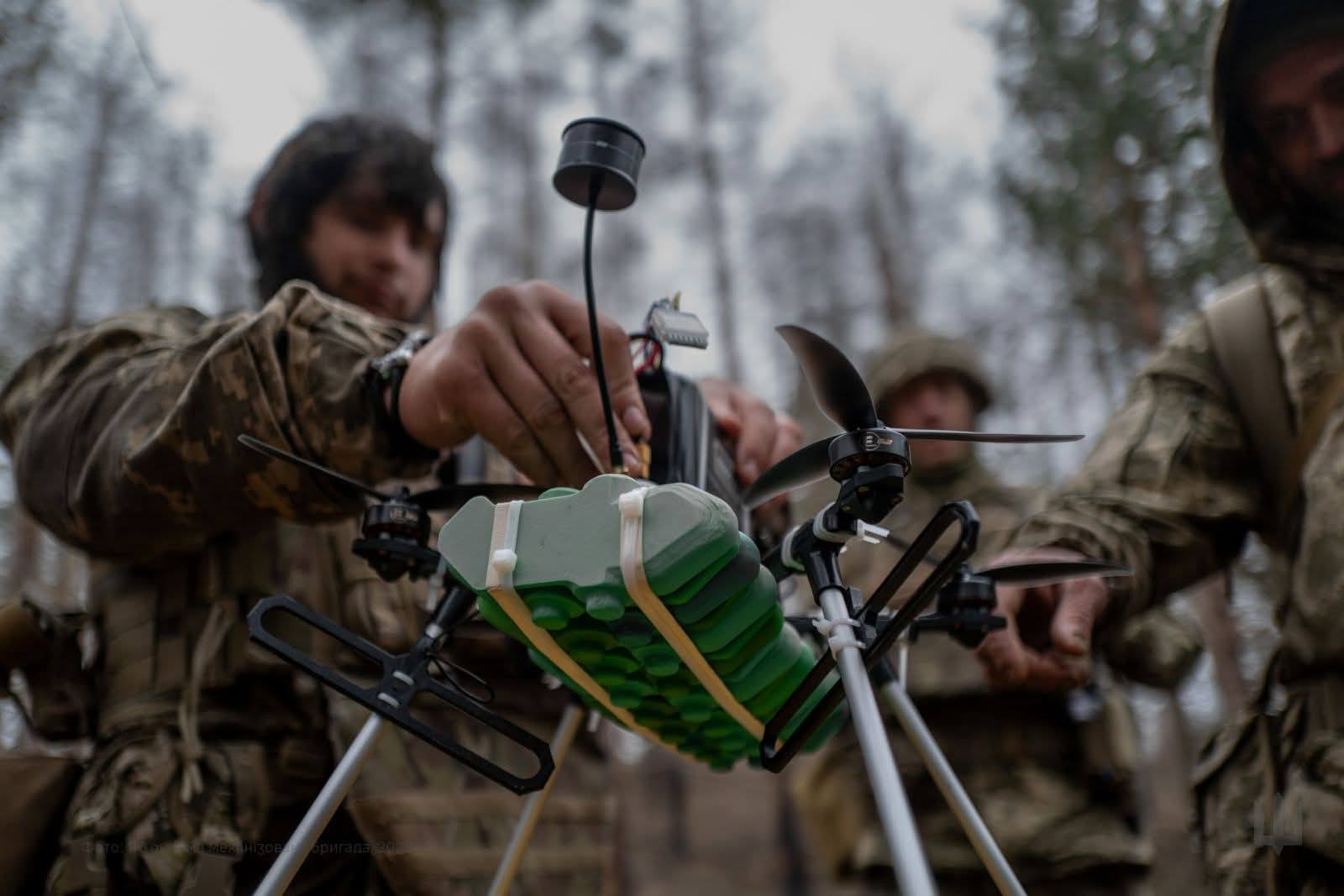
Russia has put its Defense Industrial Base on a war footing. NATO has not. On the contrary, the Alliance is planning to gradually ramp up its procurement process by 2035.
Are the authorities acting on the threat?
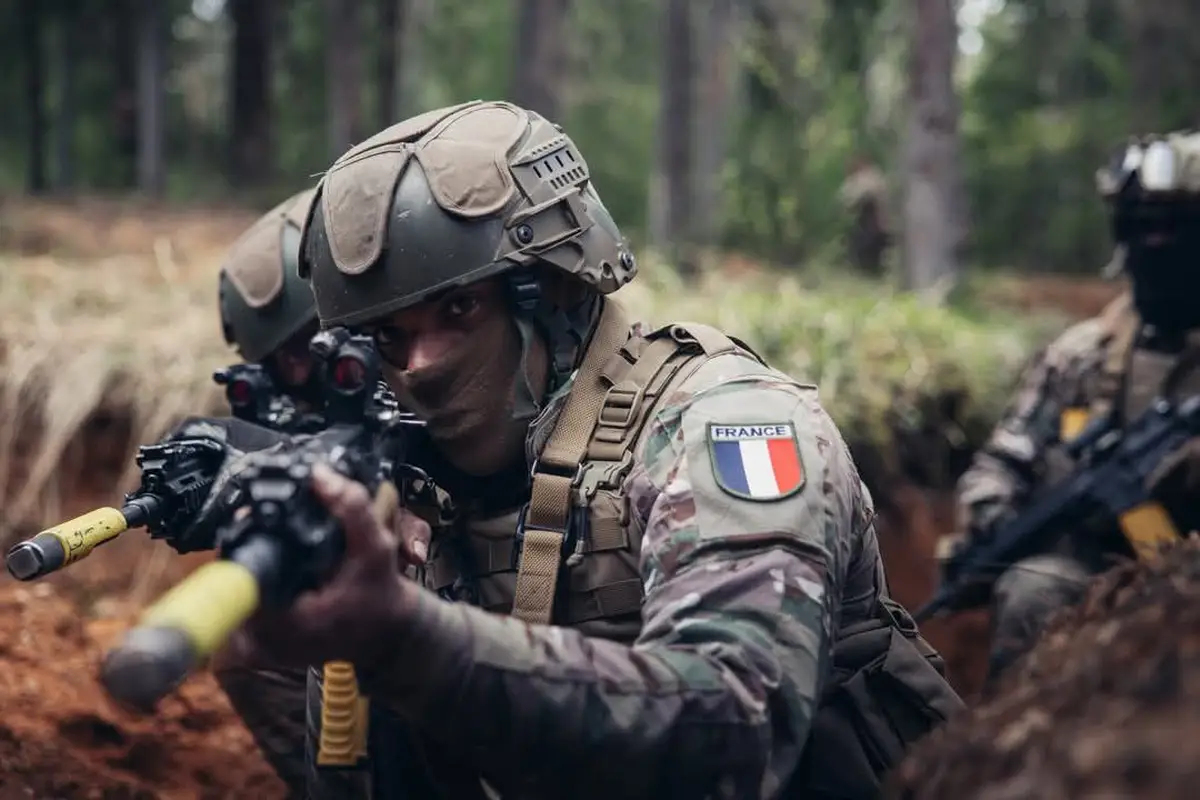
When European heads of state, defense ministers, and chiefs of defense argue that Russia will not stop at Ukraine's western borders and warn about an increasing risk of military conflict between NATO and Russia in two to five years—stressing that the continent has entered a "pre-war era" for the first time since World War II—one must ask whether they are also doing everything in their power to deter it, and, failing that, building the resolve and resilience needed to survive a prolonged war.
The European Commission's recent Defense Roadmap acknowledges critical gaps in air and missile defense, strategic enablers, mobility, artillery, cyber capabilities, electronic warfare, missiles and ammunition, drones, and maritime systems—essentially every domain of modern warfare. Unfortunately, Europe is unable to close all of its critical vulnerabilities by 2030. It must, therefore, also build resilience.
That raises the questions European governments have not answered publicly. Are they closing existing gaps in air defense? Building bomb shelters and alternative energy solutions? Establishing support systems for mass evacuation of the civilian population? Training territorial defense forces?
Most importantly: have national authorities started explaining to their citizens why the nation urgently needs to shift from peacetime priorities to wartime ones—and are they motivating people to support that effort? Recognizing that a nation cannot simultaneously prepare for war and maintain peacetime priorities, the choice is existential: your standard of living, or your freedom?
The public has not been told the trade-off
Due to strategic ambiguity—politicians on one hand claiming that NATO is stronger than ever and on the other warning of an increasing Russian threat and risk of future war—many Europeans do not support an increase in defense spending if it comes at the cost of other sectors.
According to an EP survey, "Europeans want the European Parliament to prioritize tackling inflation, rising prices and the cost of living (41%), followed by the economy and job creation (35%), and the EU's defence and security (34%). The share of respondents calling for a focus on economy and job creation has increased by five points since May 2025."
Only about 25% of Britons favor higher taxes to fund defense spending or cuts to public services to direct more money to arms, according to a January poll by YouGov. Only 24% of the German public favors increased defense spending if other programs would suffer, according to a recent Politico poll.
Most European countries failed to rearm when the war started. They wasted twelve years. They cannot afford to waste the next two to four years failing to invest in national resilience.
Having failed to rebuild deterrence, Europe must now either prepare for the destruction and suffering that strategic failure entails, or urgently adjust its strategy for supporting Ukraine.
We can no longer afford to remain at "safe distance"—because that distance exists only in our minds. Not on the battlefield. And Europe is already part of the Russian battlefield.