
MTN Eswatini–Kiira Motors Pact Signals a New Era of Homegrown Green Mobility in Africa
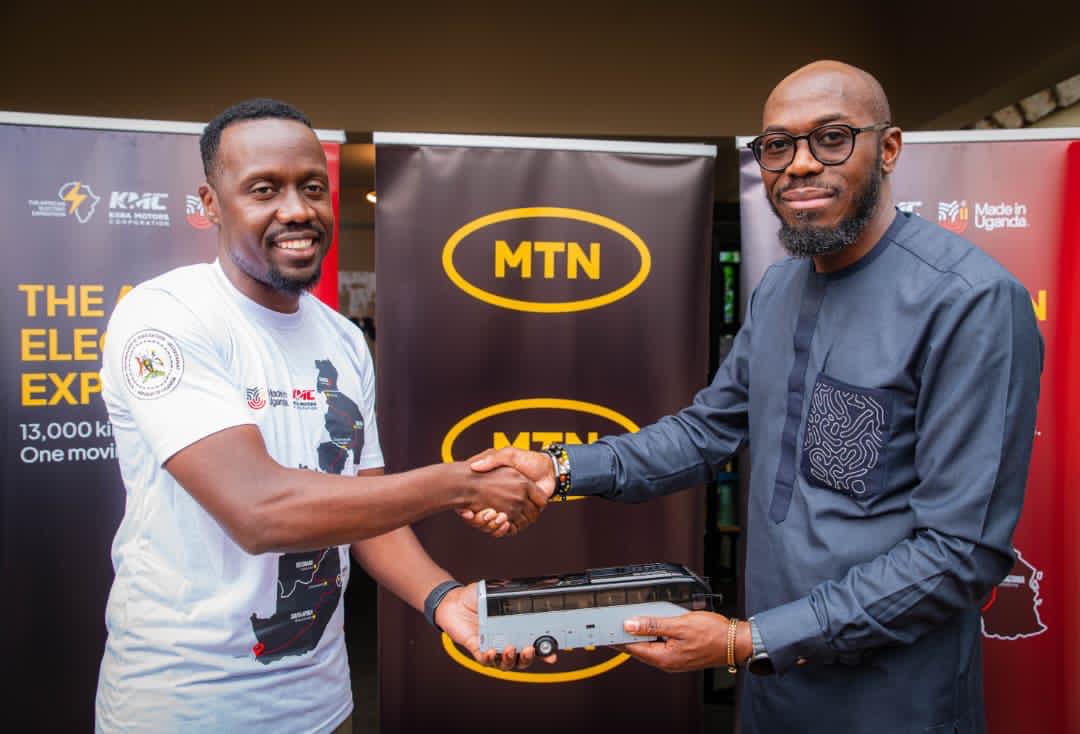
MTN Eswatini’s announcement of a strategic partnership with Uganda’s Kiira Motors Corporation marks a significant moment in Africa’s shifting technological landscape—one where African enterprises are no longer passive consumers of imported innovation but active creators of homegrown transformative solutions. The high-level engagement held at Happy Valley Hotel in Lobamba signalled Eswatini’s readiness to fuse digital connectivity with sustainable mobility, a move that fits squarely within the continent’s push toward green transport and indigenous technological development.
During the engagement, Acting MTN Eswatini CEO Jerry J. Soko underscored the symbolic and practical weight of this collaboration, describing it as an affirmation that Africa is taking the lead in crafting its own solutions. His remarks echo a broader continental trend: African countries are accelerating investments in electric mobility, with the African e-mobility market projected to grow by over 27% annually through 2030, according to industry estimates. Yet adoption remains uneven—only about 1% of vehicles in Africa are electric, compared to over 14% globally. Partnerships like MTN–KMC therefore carry the potential to help close this gap by blending advanced connectivity with locally engineered electric transport.
MTN Eswatini’s pledge to provide digital solutions for every Kayoola EV Coach sold in the country places connectivity at the centre of the e-mobility evolution. Internet of Things (IoT) integration—spanning fleet management, battery monitoring, and predictive maintenance—aligns with Africa’s technological trajectory. The continent now hosts over 45% of the world’s mobile money accounts and is projected to reach 1 billion mobile broadband connections by 2026, reflecting a population increasingly reliant on digital infrastructure to power new industries, including green transport.
The Eswatini government’s endorsement, delivered through Principal Secretary Tholani Mkhaliphi on behalf of King Mswati III, further demonstrates political will behind the initiative. The validation follows the King’s earlier visit to Uganda, where he expressed admiration for KMC’s innovation. This political blessing is vital, given that inadequate policy frameworks across Africa have slowed e-mobility scale-up. Currently, only 12 African countries have clear national e-mobility policies, making Eswatini’s proactive posture notable.
For the Ugandan delegation, led by Ambassador Paul Amoru, the engagement also reflects Uganda’s growing regional influence in high-tech manufacturing. Kiira Motors’ Kayoola EV Coach has become emblematic of African engineering capability, and as KMC’s legal head Elias Bwambale emphasized, its presence in Eswatini showcases how African nations can adopt and adapt each other’s innovations to jointly drive environmental and economic transformation.
This partnership also builds on the momentum generated by MTN Uganda and the Science, Technology and Innovation Secretariat under the Office of the President (STI-OP), whose 13,000-kilometre electric expedition continues to draw continental attention. Throughout the journey, MTN’s connectivity ensures real-time monitoring, safety, communication, and media coordination—a demonstration of how telecommunications can extend beyond network provision into powering entire mobility ecosystems. As MTN Uganda’s Enterprise Business Unit GM Ibrahim Senyonga put it, the company is enabling the mission with the same reliability it provides millions of customers and thousands of businesses daily.
Africans are increasingly demanding cleaner, smarter mobility options. Urban centres across the continent lose over $35 billion annually to traffic congestion and air pollution, while cities like Kampala, Nairobi, and Johannesburg record some of the fastest-growing emissions from transport. Electric buses—particularly locally manufactured ones—offer a path to reducing these losses. The Kayoola EV Coach, for example, emits zero tailpipe emissions and significantly lowers operational costs for transport providers, a crucial factor for countries where fuel accounts for up to 40% of transport expenses.
By aligning Eswatini’s digital capabilities with Uganda’s electric manufacturing expertise, the MTN–KMC partnership sets a precedent for cross-border African innovation built on shared priorities: sustainability, affordability, and technological independence. It illustrates a model in which telecommunications and transport converge to address climate challenges while stimulating industrial growth.
The call by MTN Eswatini for broader stakeholder support underscores that sustainable mobility cannot be achieved by government or industry alone. But with strategic partnerships such as this, Africa is positioning itself not as a passive spectator but as an active architect of its green and digital future.
The post MTN Eswatini–Kiira Motors Pact Signals a New Era of Homegrown Green Mobility in Africa appeared first on Watchdog Uganda.


