Moscow’s Victory Day ceasefire reduced combat but became Russia’s stockpile window, ISW finds
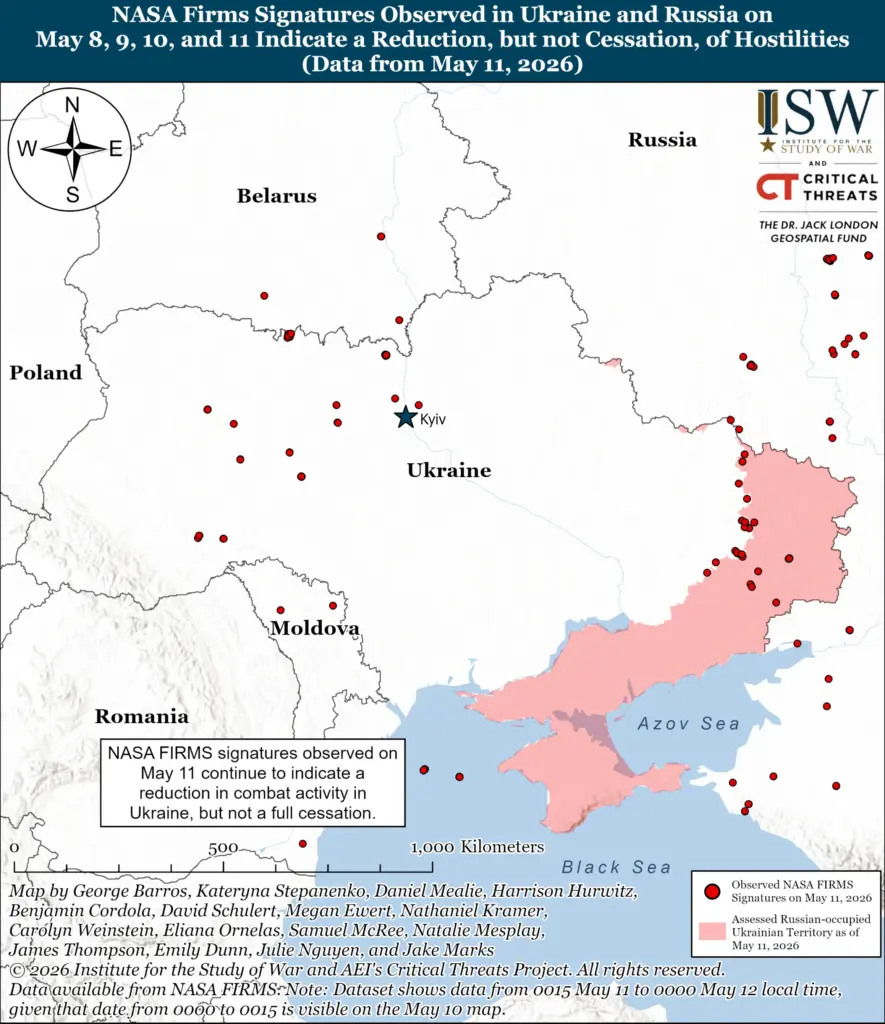

Russia used its own Victory Day ceasefire to pull forward reserves and increase drone strikes in eastern Ukraine, according to ISW. The Institute's 11 May assessment cited Ukrainian brigade reports and NASA satellite fire data. Both sides traded accusations of violations on the final day of the 9-11 May truce.
On 11 May, Ukraine's General Staff reported Russian violations across multiple frontline sectors, including 38 attacks on Ukrainian positions as of 16:00. Russia's Defense Ministry claimed Ukrainian breaches and later issued more unconfirmed allegations.
Russia used the ceasefire to bring up forces near Lyman, and Molniya drone strikes intensified during the truce
A Ukrainian brigade spokesperson in the Lyman direction in Donetsk Oblast reported that Russian forces used the pause to bring up reserves and accumulate personnel. The spokesperson said Russian artillery and first-person view (FPV) drone strikes continued throughout the truce. ISW cited the brigade's account in its review of the ceasefire's final day.
The same brigade said Russian Molniya fixed-wing drone strikes rose during the truce compared to the period before it. The spokesperson speculated that Russian forces may have stockpiled the drones ahead of the ceasefire to use them once the lull began.
No long-range strikes overnight
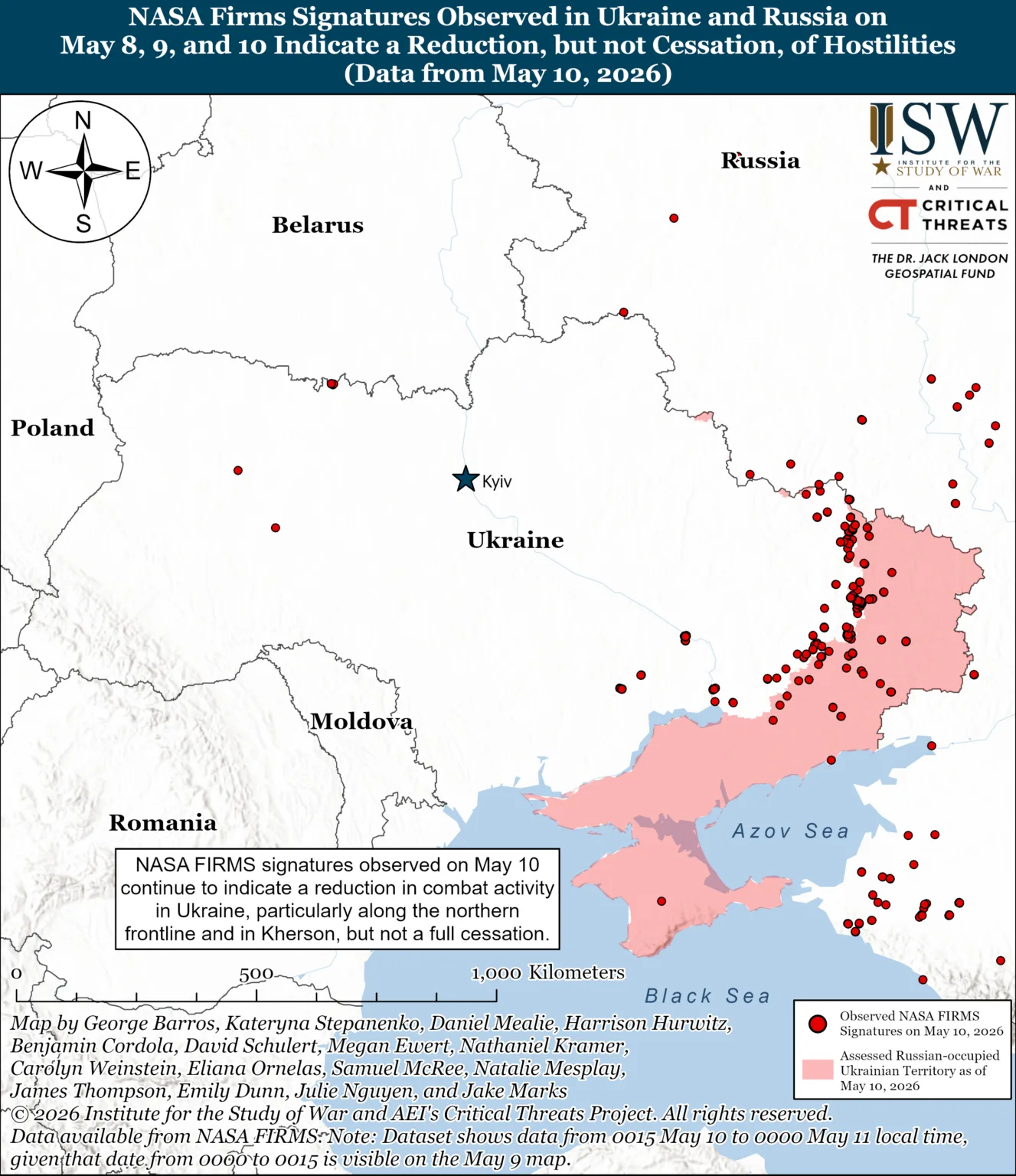
Ukraine's Center for Countering Disinformation head Andrii Kovalenko said that Russian forces conducted no long-range strikes against Ukraine on the night of 10-11 May. ISW used NASA Fire Information for Resources Management System (FIRMS) satellite data to verify that combat-related fires decreased on 11 May but never reached zero across the theater.
ISW concluded that ceasefires without "explicit enforcement mechanisms, credible monitoring, and defined dispute resolution processes" are unlikely to hold. Ukrainian public broadcaster Suspilne tracked the day-long exchange of accusations, including artillery, air, and drone strikes alongside limited ground operations.