Mao Clashes With Among At Kyankwanzi: Justice Minister Blasts Speaker Over “Bad Manners” As Speakership Battle Heats Up
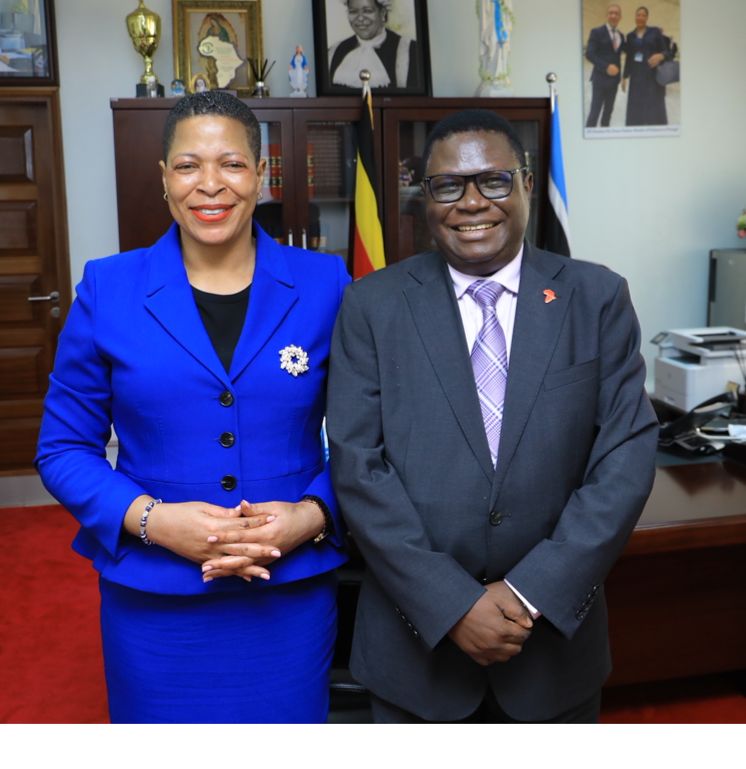
Kyankwanzi – Tensions flared at the ongoing National Resistance Movement (NRM) Parliamentary Caucus retreat at the National Leadership Institute in Kyankwanzi after Justice and Constitutional Affairs Minister Norbert Mao openly confronted Speaker Anita Annet Among over what he described as a serious breach of political decorum.
The confrontation, which unfolded on Wednesday during the week-long retreat running from April 7 to 15, has not only disrupted the usually controlled tone of Kyankwanzi meetings but also thrust the 2026 Speakership race into sharp national focus—exposing growing tensions within the NRM-DP cooperation framework.
A Metaphor That Sparked a Political Firestorm
Addressing NRM legislators, Speaker Among employed a striking household analogy to define the limits of political cooperation, a remark widely interpreted as targeting Mao, leader of the Democratic Party (DP), who is attending the retreat as a guest.
“We do cooperate with other political parties, but it does not mean that if we are cooperating you come up to my bedroom; you remain in the compound. The bedroom this time round is the Speakership,” Among said.
“You cannot cooperate to the tune of Speakership.”
The metaphor—drawing a line between cooperation and power-sharing at the highest level—was immediately read as a warning against Mao’s perceived ambitions for the Speakership.
Mao Fires Back: “This Is Bad Manners”
Mao responded with a composed but pointed rebuttal, firmly defending his presence at the retreat and calling out what he saw as disrespectful political messaging.
“I was invited as Minister and Leader of the DP. I am a guest of the National Chairman of the NRM,” Mao stated.
“This is not just bad politics. It is bad manners.”
In a sharp escalation, Mao extended the same household analogy to turn the argument back on the Speaker:
“Only the head of the family has the final word on who accesses which room. He doesn’t need lectures from a recently adopted child. When you insult your father’s visitors, you’ve insulted your father.”
The remarks, widely circulated on social media, underscored Mao’s insistence that his attendance was sanctioned at the highest level—by President Yoweri Museveni—under the formal NRM-DP cooperation agreement.
A Retreat That Was Never Meant To Be Quiet
Traditionally, the Kyankwanzi retreat is an internal strategy forum for ruling party legislators. However, Mao’s presence—both symbolic and political—has transformed it into a battleground for influence ahead of the 12th Parliament.
While the NRM’s Central Executive Committee (CEC) had earlier endorsed Among and her deputy Thomas Tayebwa for re-election, President Museveni’s recent signals that “no position is cast in stone” appear to have reopened the contest.
Mao is now using the platform to quietly build support among NRM MPs, presenting himself as a cross-party candidate capable of bridging political divides.
The Emerging Speakership Contest
The public clash has effectively drawn the battle lines.
- Among, a dominant force within the current Parliament, is seeking to consolidate her grip on the Speakership and fend off internal and external challengers.
- Mao, a veteran opposition figure now working within government, is positioning himself as a unifying alternative backed by experience, oratory strength, and proximity to the presidency.
Political analysts say the confrontation was inevitable.
Among’s remarks signaled an attempt to ring-fence the Speakership as an NRM preserve, while Mao’s response asserted the legitimacy—and limits—of coalition politics under the current arrangement.
Divided Reactions And Deeper Questions
The fallout has triggered sharp reactions across political and public spaces:
- Supporters of Mao argue his response was measured and necessary, framing it as a defense of respect within coalition politics.
- Among’s backers accuse Mao of overreaching, insisting the Speakership remains a core NRM position not open to negotiation.
The exchange has also revived broader concerns about the sustainability of the NRM-DP cooperation agreement. Critics within the opposition continue to question Mao’s alignment with government, while some NRM hardliners worry that accommodating external actors risks weakening internal cohesion.
Museveni Factor
As the retreat continues, attention has shifted to President Museveni—the central figure in both the NRM hierarchy and the cooperation pact.
Mao himself framed the President as the “head of the family,” implicitly placing the final decision on political boundaries and leadership direction in his hands.
Whether the Mao-Among rivalry escalates into a full-blown contest or is quietly managed behind the scenes will largely depend on how Museveni chooses to navigate the unfolding tensions.
Bottom line: What began as a metaphor has evolved into a defining political moment. The Kyankwanzi retreat has laid bare a high-stakes struggle over power, protocol, and political identity—and the race for the Speakership of the 12th Parliament is now fully underway.
The post Mao Clashes With Among At Kyankwanzi: Justice Minister Blasts Speaker Over “Bad Manners” As Speakership Battle Heats Up appeared first on Watchdog Uganda.