
Lotus Esprit is back as a £430k carbon fibre restomod
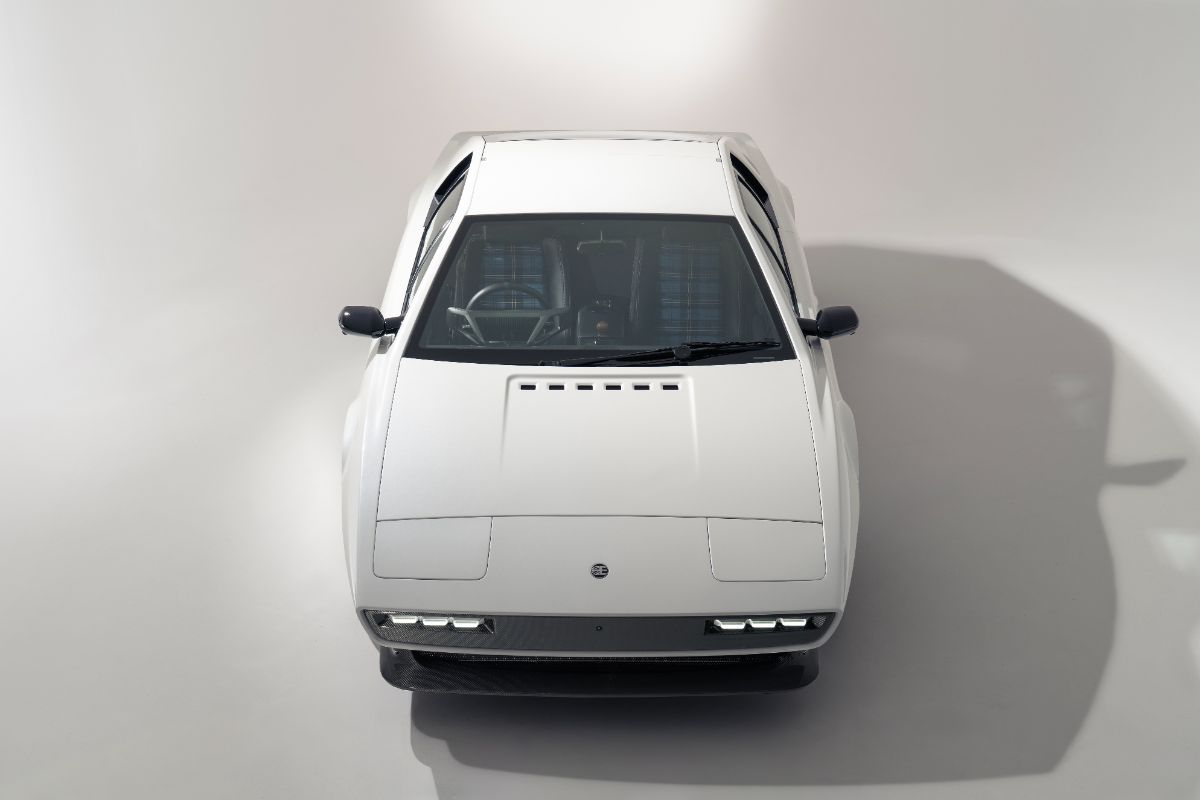
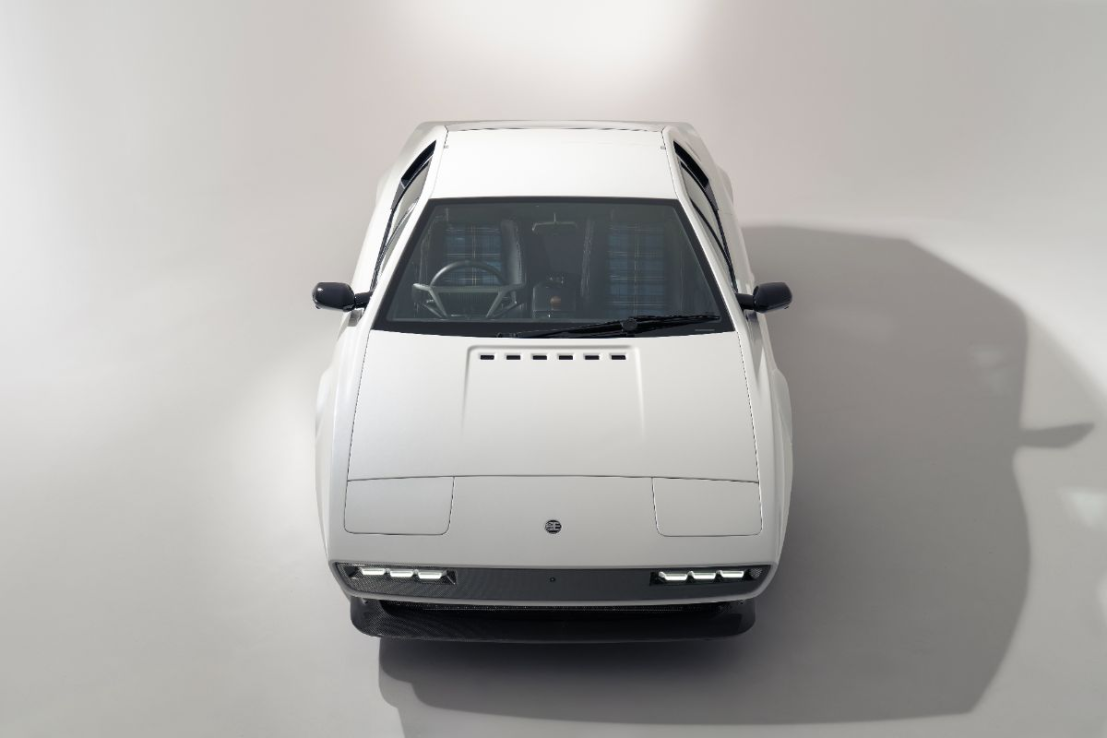
This is the Lotus Esprit as you’ve never seen it before. Fifty years after its debut at the Paris Motor Show, the classic British sports car has been resurrected for the 21st century. Forget Noel and Liam, this is the biggest comeback we’ve witnessed all year.
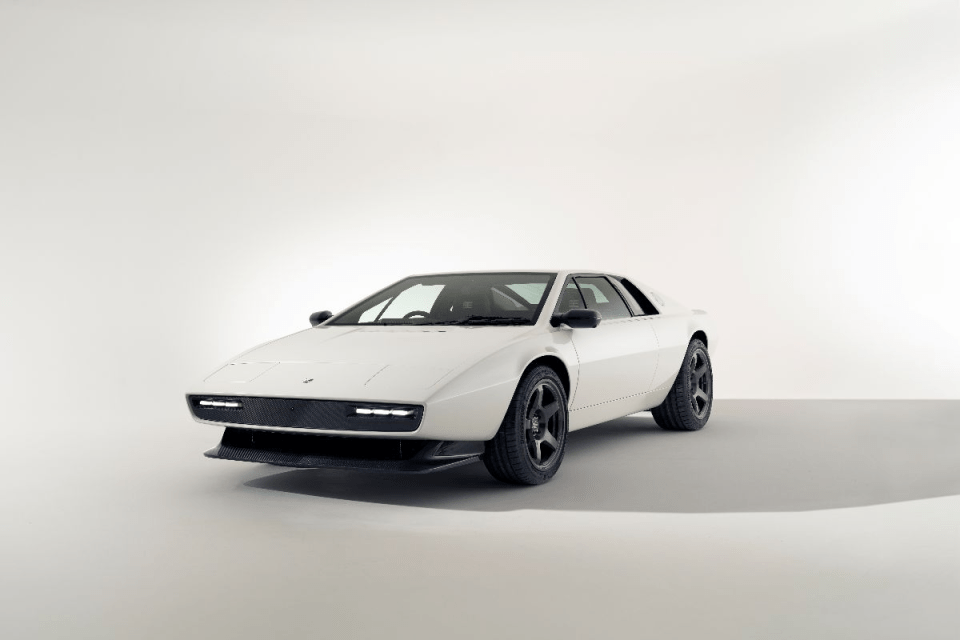
Encor’s stated aim with its new Series 1 restomod was ‘respectful enhancement – to approach the Esprit not as a blank canvas, but as a piece of cultural heritage’. To that end, the car combines a carbon fibre body that evokes the 1975 original with the chassis and powertrain from a late-model Esprit V8. It’s unmistakably a Lotus Esprit, but almost every detail is different.
Encor plans to build 50 examples of the Series 1 to mark the 50th anniversary of the Esprit. I visited the company’s production facility in Chelmsford, Essex, to explore the car and meet the team behind it.
Driving a wedge

Some prefer the sumptuous curves of the 1960s, but nothing screams SUPERCAR like a 1970s wedge. The Lancia Stratos, Lamborghini Countach and DeTomaso Pantera were all prime examples of the breed, but the original Esprit was equally worthy of space on any bedroom wall.
Indeed, while the word ‘icon’ gets overused when talking about classic cars, a starring role in two James Bond films – including as the submarine ‘Wet Nellie’ in The Spy Who Loved Me – made the Lotus a genuine legend in its own lifetime.
‘Remastering’ the Esprit was thus a responsibility that Daniel Durrant, former lead designer for the Lotus Emira, took very seriously. “We’ve simplified the aesthetic and upped the quality”, he explains. “Every line we’ve refined, every decision we’ve made, is about honouring the original’s intent.”
Clothed in carbon fibre
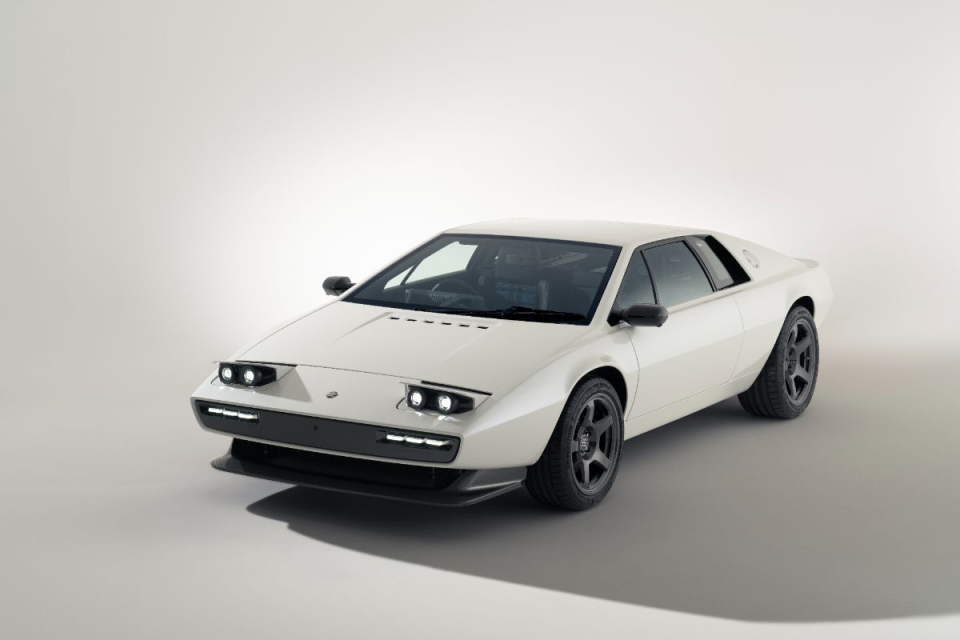
While the classic Esprit was made from fibreglass, the Encor is fully clothed in carbon fibre. That meant Durrant could remove the black line around the car’s midriff where the upper and lower moulds were joined. The result is a cleaner look that seems to accentuate the Esprit’s angularity.
Other aspects of Giorgetto Giugiaro’s original design have been modernised, too. All the glass now sits flush, the bumpers are integrated and the door handles – previously borrowed from the Morris Marina – are solenoid switches hidden inside the air intakes.
Thankfully, Encor hasn’t done away with the Esprit’s pop-up headlights, but they’re now much brighter LED projectors. Billet aluminium housings conduct heat away from each of the lamps. “We wanted to make function beautiful,” Durrant says.
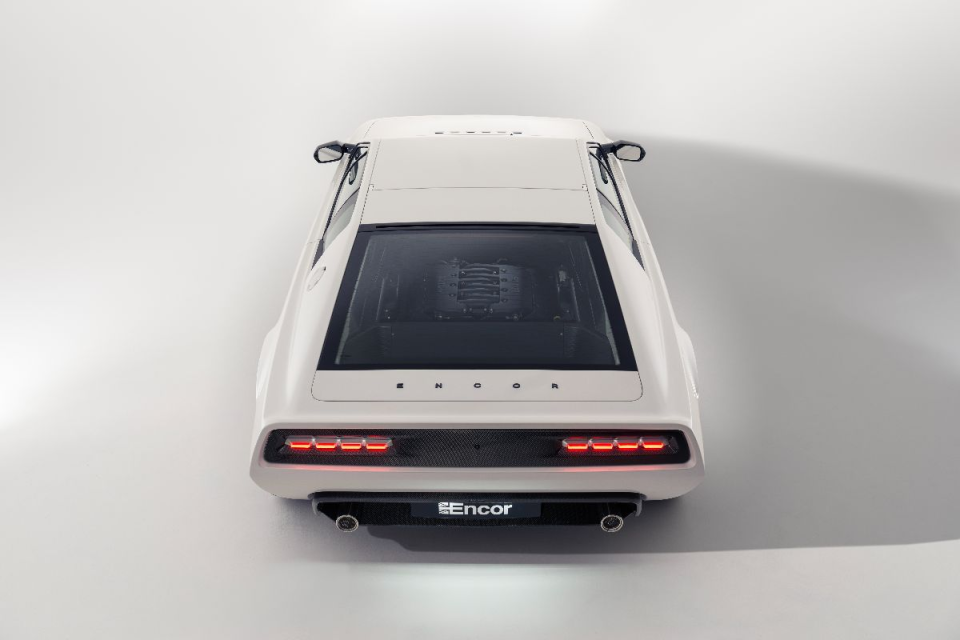
The Series 1 has a wider, more purposeful stance on 17-inch wheels forged and machined in-house by Encor. However, the biggest difference becomes apparent when you peer through the rear window…
Opting out of the arms race
Each Series 1 restomod begins life as a post-1998 Lotus Esprit V8. You can supply your own donor vehicle, or ask Encor to source one for you. Worried about original cars being wiped out? “Our 50 cars will represent about three percent of Esprit V8 production,” says Encor co-founder William Ives. “Many of them wouldn’t otherwise be cost-effective to restore.”
Ives owns a stunning Esprit Sport 350 (one of 50 final edition cars built in 1999) that is also parked in Encor’s workshop, along with an Evora GT430, so his love for Lotus clearly runs deep. “I can remember walking home from school in 1996 and seeing a red Esprit V8 parked on somebody’s driveway,” he recalls. “I was hooked straight away.”
The mid-mounted V8 in the Series 1 is rebuilt with forged pistons, bigger injectors, a new servo-controlled throttle body, improved cooling, a stainless steel exhaust and a modern ECU. It now produces around 400hp – 50hp more than Esprit in ultimate Sport 350 spec – and 350lb ft of torque. “We’re not chasing horsepower,” adds Ives. “We don’t want to join the supercar arms race.”
Drive goes to the rear wheels via a five-speed manual gearbox with all-new internals, a twin-plate clutch and a helical limited-slip differential. With a target kerb weight of less than 1,200kg (the Esprit V8 weighed in at 1,380kg), Encor predicts a 0-62mph time of four seconds and a top speed of 175mph.
Inside the Encor Series 1
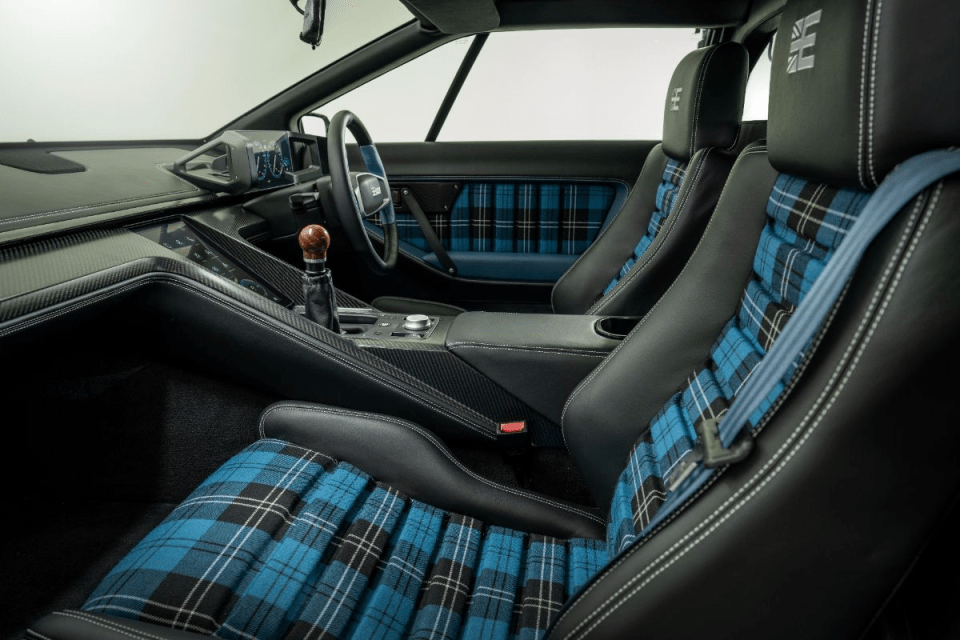
The Encor’s interior also riffs heavily on the classic Esprit, including a two-spoke steering wheel and tartan trim – although the ‘Ramsay Blue’ fabric seen here isn’t so eye-popping as the green and orange plaid used in the 1970s. The tartan isn’t compulsory, either. “Pretty much anything on the car can be bespoke,” says Encor co-founder Simon Lane, who previously led the Advanced Performance division at Lotus.
In place of British Leyland-derived switchgear, the Series 1 has a portrait-oriented touchscreen with Apple CarPlay phone connectivity. The software is supplied by Encor’s sister company, Skyships Automotive, which is an OEM supplier to Lotus and Pagani, among others. “We wanted to marry that wonderful 1990s analogue driving experience with modern convenience and technology,” Ives explains.
Further 21st-century touches include a 360-degree parking camera, two USB-C charging ports and a cupholder. Structural carbon fibre is visible on the door sills and rear bulkhead, which was made from plywood in the original Esprit.
Digital and analogue
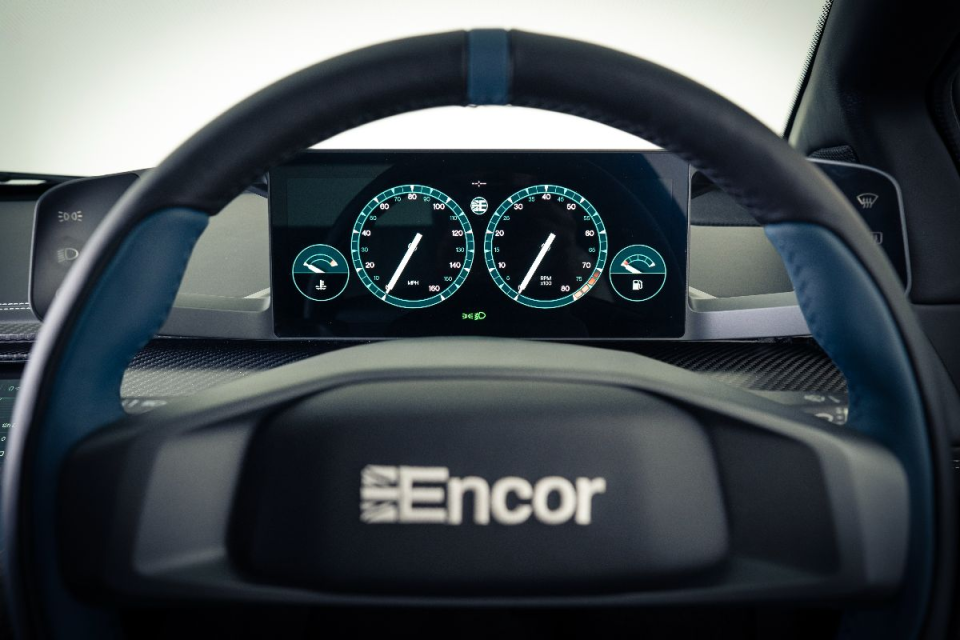
Perhaps the most striking element of the Encor’s cabin is the floating digital instrument cluster. Machined from a single billet of aluminium, it showcases the car’s lightweight, minimalist ethos. Touch-sensitive controls are located on the outer edges, within fingertip-reach from the steering wheel – including the button to pop up the headlights.
From behind the wheel, the Series 1 feels snug and low-slung, with good visibility for a mid-engined sports car. The seats are well-padded – no hard-shell carbon buckets here – and material quality is leagues ahead of any production Esprit. The V8 engine is visible in the rear-view mirror, too.
So how will it drive? Hydraulic power steering and suspension rebuilt to Sport 350 specification should ensure the Esprit’s Hethel-honed handling remains intact, albeit with the higher limits afforded by wider Bridgestone Potenza tyres and AP Racing brakes. We hope to find out for sure in spring 2026.
A blast from the past
No doubt, the Series 1 is expensive; that price of £430,000 excludes taxes, a donor car and any extras you decide to add. A quick play on the Encor configurator reveals the sheer number of options available.
Looking ahead to when the 50 cars are completed, William Ives and Simon Lane hope to produce more vehicles in the spirit of ‘British remastered’. Might that include other marques? “Lotus will be the backbone of what we do,” affirms Ives. “As a start-up, credibility is everything. That’s why we haven’t come to market with CGI renders, but with a fully functional prototype.”
In a market full of ever-more-extreme supercars, the Encor Series 1 could be a breath of fresh air. One thing is certain: the wedge is back. And it looks just as cool as it ever did.
Tim Pitt writes for Motoring Research