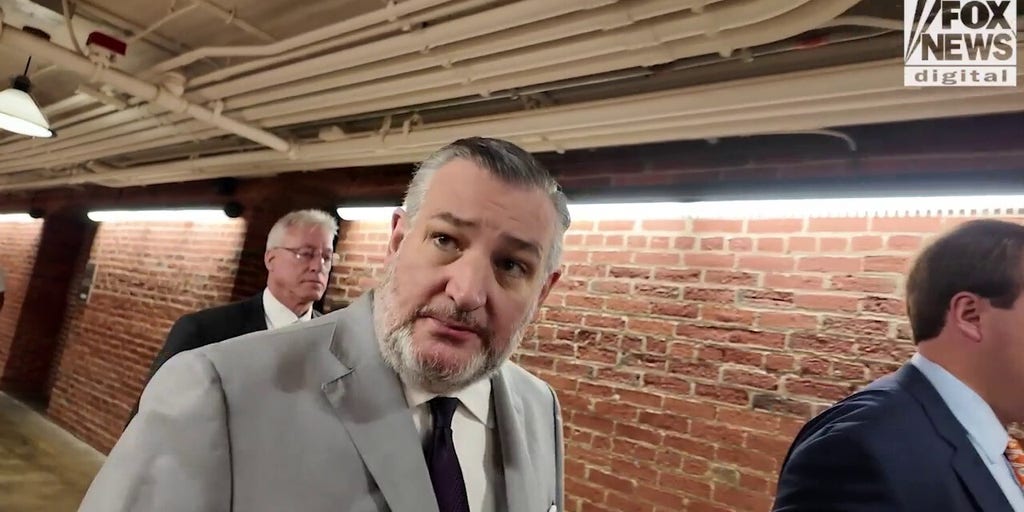
Karmelo Anthony trial consumed by race and self-defense, but hidden hurdle could be key: expert
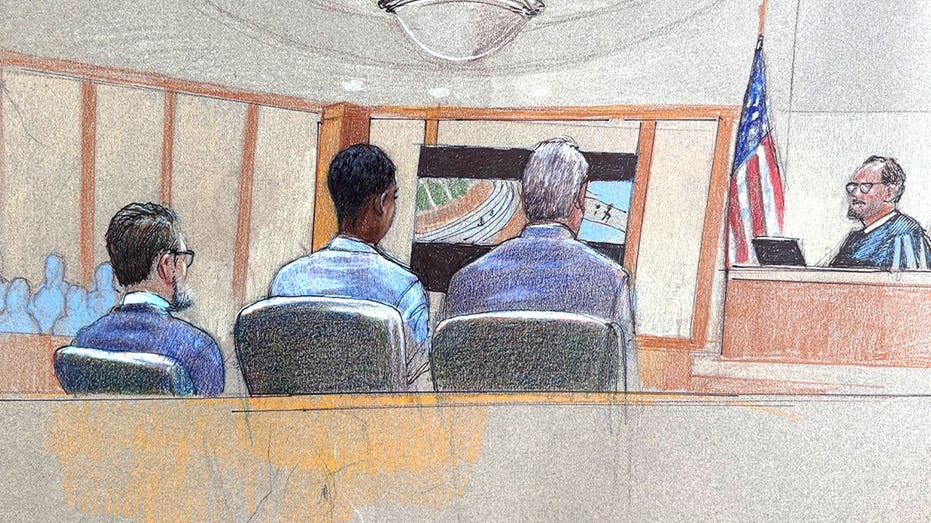
The murder trial of Karmelo Anthony entered its fourth day of testimony Monday as defense attorneys continued presenting witnesses after prosecutors rested their case over the weekend.
Anthony, who is accused of fatally stabbing fellow student Austin Metcalf during a confrontation at a Texas track meet last year, has pleaded not guilty and is arguing he acted in self-defense. The closely watched trial began last week amid intense public scrutiny and debate surrounding the case.
The closely watched trial resumed shortly after 9 a.m. Monday in Collin County. Prosecutors rested their case Saturday after calling 21 witnesses. Defense attorneys then began presenting their own witnesses after a judge denied a motion for a directed verdict.
Outside the courthouse, the Next Generation Action Network (NGAN), the activist organization that has publicly supported Anthony's family since shortly after the stabbing, announced plans to hold a news conference Monday afternoon.
WITNESSES IN KARMELO ANTHONY MURDER TRIAL CONFIRM AUSTIN METCALF'S WORDS IMMEDIATELY AFTER ATTACK
In a statement, NGAN called for supporters to remain peaceful and respect the judicial process, citing concerns about tensions and confrontations that have occurred outside the courthouse during the trial. The organization said demonstrations should remain focused on "justice, fairness, due process, and equal protection under the law" and condemned threats, intimidation and political violence directed at anyone connected to the case.
The announcement comes after several days of demonstrations outside the Collin County courthouse, where supporters of Anthony have gathered carrying signs reading "Justice for Karmelo Anthony."
Shortly after court convened Monday morning, Judge John Roach reminded spectators of courtroom rules and warned that anyone speaking during proceedings would be removed.
Defense attorneys then called their first witness of the day, a 17-year-old Centennial High School student who testified that he knew Anthony through football because the two played the same position, according to FOX 4 Dallas.
The witness told jurors Anthony appeared to be in a "normal mood" on the day of the stabbing and said he spent a "pretty decent" amount of time with him before the incident. He testified that no one anticipated what would happen later that day, adding that much of the team's attention had been focused on weather conditions.
? Know something we should investigate?
? Send story tips to stepheny.price@fox.com
? Share photos on Instagram: @fndstephprice
? Submit compelling video and breaking news footage on X: @Stephenyprice
?️ Your information could help uncover the next big story.
The defense later called Frisco police officer Beau Riley, who testified that he examined Anthony's cellphone at the scene, according to FOX 4.
During his testimony, Riley told jurors that knives with blades shorter than 5 inches are legal to carry in Texas. He testified that while carrying such a knife would violate school policy, possession of the knife itself was not illegal under state law.
The testimony appeared to support a key defense argument that Anthony's possession of the knife before the confrontation was lawful, even as attorneys continue to dispute whether his actions during the confrontation were justified.
Prosecutors declined to cross-examine the officer.
Defense attorney Mike Howard next called a 17-year-old Frisco ISD student who testified that interactions between athletes from different schools are common at track meets, according to NBC 5.
The witness, who told jurors he is entering his senior year and has committed to LSU, described track meets as "really social" events where students frequently visit friends and acquaintances from other schools.
He testified that athletes commonly "go see each other under other team tents," though he said he personally does not enter tents belonging to other schools.
The student, who attended the track meet where the stabbing occurred, told jurors that his attention was drawn to the Memorial High School tent when he noticed a crowd forming.
According to NBC 5, the witness testified that "everybody was standing up" and that he then saw "someone getting pushed or punched or something like that" under the tent.
The testimony appeared to support a defense argument that athletes from different schools regularly interact at track meets and that Anthony's presence under the Memorial tent may not have been unusual.
Larry Taylor, a former Texas prosecutor and longtime criminal defense attorney, told Fox News Digital that jurors will be tasked with evaluating far more than the physical evidence.
"When it comes down to an issue like this, I'm pretty sure the guys are looking at, OK, what was the situation? Was he really in danger? Was he really fearful? Why did he have a knife? Why didn't he just get up and leave?" Taylor said.
Taylor noted that Texas self-defense laws could become a critical factor at trial.
"Did Karmelo really have a duty or obligation to retreat if he was being attacked?" he said. "It's happening in Texas. Are we not a stand-your-ground state?"
The attorney also suggested race could become an unavoidable topic throughout the proceedings, particularly given the intense public debate surrounding the case.
"We would be fooling ourselves if we said that certain areas of our state or certain cities were not more prone to be reactive ... especially when you have the polarization of black and white," Taylor said.
Taylor further predicted that jury selection — which included no Black jurors — could face scrutiny if the defense believes Black jurors were improperly excluded from the panel, potentially setting up future appellate challenges.
AMERICA STILL CAN'T PUT DOWN THE RACE CARD. AND IT'S THE SHAME OF OUR NATION
Beyond the legal arguments, Taylor said jurors may need to be educated on something far more basic: how high school track meets actually work.
A longtime track coach who said he competed in the sport in college, Taylor pushed back on suggestions that athletes from rival schools would not know one another or interact regularly.
"I've been coaching track for 30 years. I ran track in college and it is extremely common for people to develop relationships with people from other schools that they compete against," he said.
According to Taylor, understanding those dynamics could become important if attorneys seek to establish whether Anthony and the Metcalf brothers had prior interactions before the fatal encounter. Taylor said track meets often last for hours, with athletes from different schools spending significant time around one another throughout the day.
SURVEILLANCE VIDEO SHOWS FATAL STABBING OF AUSTIN METCALF AT TEXAS TRACK MEET, OFFICIALS SAY
"I think probably four or five, if not more, of the jurors have no idea what happens at a track meet," Taylor said.
Taylor also pushed back on claims that athletes from competing schools would have had little reason to know one another, arguing that friendships and familiarity across teams are commonplace.
He further suggested that any potential prior interactions between Anthony and the Metcalf brothers could become relevant if introduced at trial.
Another question likely to be scrutinized by jurors is why Anthony allegedly had a knife at the track meet. Taylor said that issue cannot simply be assumed away and will require explanation from the defense.
"That is going to have to be explained for this jury," he said.
Taylor noted that athletes sometimes carry small knives or tools to cut athletic tape, work on equipment or manage track spikes, though he stressed that Anthony's specific reason for possessing the knife would need to be established through testimony and evidence.
The attorney also pushed back on criticism surrounding fundraising efforts for Anthony's legal defense, including a fund that has raised more than $624,000 for his defense. While the defendant's supporters have raised significant sums through online fundraising platforms, Taylor argued that mounting a vigorous defense in a serious felony case requires substantial resources.
"He is fighting literally for his life," Taylor said, noting that expert witnesses, investigators and trial preparation can quickly become costly.
As both sides prepare for another week of testimony, Taylor believes the case remains difficult to predict.
"It's a box of chocolates," he said. "You are absolutely not sure what you're going to get."