
How Gen Muhoozi Gave the Opposition Its Groove Back
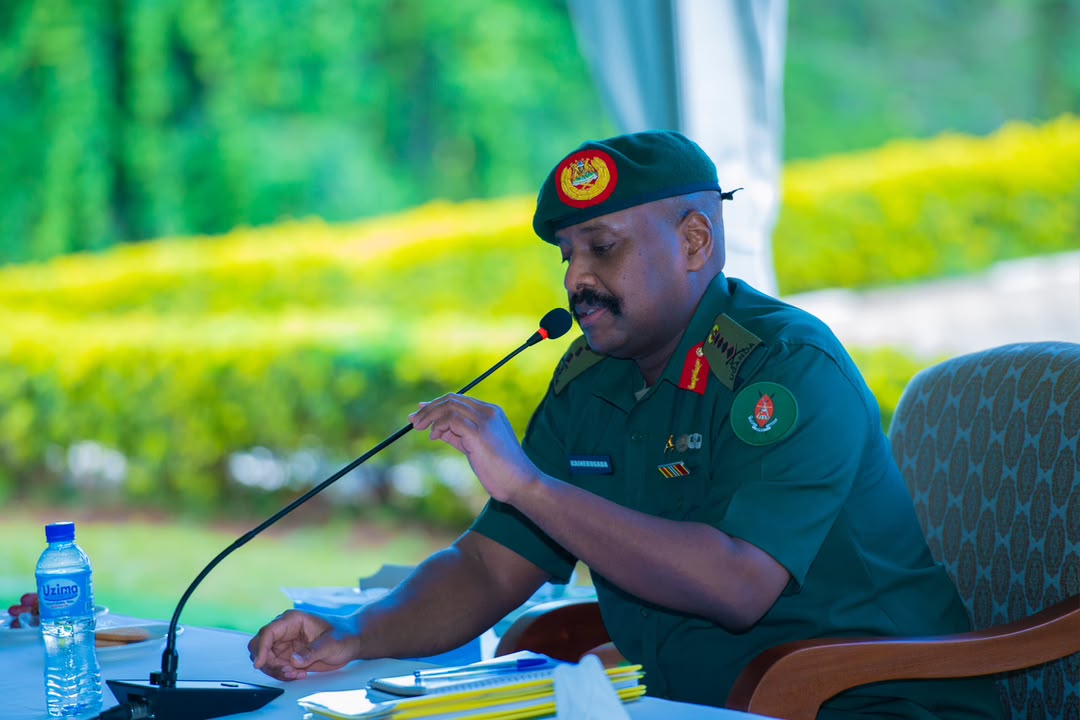
After the January 2026 general elections, where President Yoweri Museveni and the NRM coasted to what was presented as a decisive victory—about 71.65% of the presidential vote—the political mood in Kampala shifted quickly into the language of finality. The opposition appeared spent, scattered, and psychologically deflated. Bobi Wine, the main challenger, took time away in the United States after the bruising contest, while the ruling establishment settled into a familiar rhythm: managing the economy, tightening internal discipline, and projecting administrative control.
For a moment, the script looked complete. Even when Speaker Anita Among stepped aside amid intense scrutiny and corruption narratives, the political theatre still felt firmly in the hands of the ruling party. The sense within NRM circles was simple: the election had settled the question, and the rest was housekeeping.
But Ugandan politics rarely respects closure.
The disruption did not come through an election petition or a structured opposition comeback plan. It came, instead, through a confrontation involving the security establishment and a prominent opposition figure. Reports around attempts to serve court summons on the Chief of Defence Forces—Muhoozi Kainerugaba—and the subsequent arrest of Kampala’s former Lord Mayor, Erias Lukwago, jolted the political atmosphere.
Lukwago’s detention, in a context already charged by ongoing legal battles involving opposition leader Kizza Besigye and wider grievances against state handling of dissent, quickly became more than a legal or procedural matter. It became a symbol.
For a ruling system that had just emerged from a decisive electoral endorsement, the moment was politically paradoxical. The state appeared confident, even dominant. Yet the optics of a senior opposition voice being picked up in connection to military-linked tensions created a sharp emotional rupture in the public space.
Suddenly, the opposition—previously fragmented, fatigued, and politically improvising—found itself with something it had been missing for months: a unifying grievance.
This is not to romanticize arrests or normalize the militarization of civilian political disputes. Rights groups and legal commentators raised legitimate concerns about due process, institutional boundaries, and the risks of blurring lines between civilian justice and military authority. Those concerns remain central to Uganda’s democratic conversation.
But politics is not only about legality. It is also about momentum, symbolism, and emotional ignition points.
For weeks after the election, opposition politics had been drifting. Leaders were scattered, messaging was inconsistent, and morale among supporters had thinned. Then came a moment that reintroduced clarity—not of policy, but of confrontation. Lukwago’s arrest became a focal point through which broader frustrations could be reassembled into a narrative of resistance.
In that instant, silence turned into coordination. Opposition formations that had been operating in parallel began to converge rhetorically. Public discourse shifted from resignation to agitation. Social media timelines, radio talk shows, and street conversations regained their familiar heat. The political oxygen, which had seemed to drain out after the election, returned—abruptly and forcefully.
Ironically, this renewal of opposition energy did not come from a strategic reorganisation within their ranks. It was externally triggered. And that is where the paradox of power becomes evident.
Strong political systems often create their own counterweights. In this case, a state perceived as consolidating control inadvertently reopened the space for dissent through the very mechanisms meant to enforce order. Whether intended or not, the confrontation involving Muhoozi Kainerugaba became a catalytic moment.
The ruling party’s advantage after the election had been its ability to set the agenda: economic priorities, institutional discipline, and governance messaging. But politics is rarely linear. A single high-voltage incident can reset the emotional tone of a country faster than months of structured governance.
The effect was immediate. The opposition regained visibility. Not necessarily strength in organisational terms, but relevance in the public imagination. That shift matters in politics as much as numbers.
The deeper irony is that the ruling establishment had, in many ways, been attempting to stabilise governance narratives—emphasising development, anti-corruption efforts, and administrative coherence. Yet the re-emergence of confrontation disrupted that rhythm and restored the familiar antagonistic structure that Ugandan politics so often thrives on: protagonist versus antagonist, state versus resistance, order versus challenge.
This is the cycle Uganda knows too well. Moments of dominance are rarely stable. They are interrupted not only by elections, but by incidents that reframe power itself. And in such moments, both sides find reinforcement: the opposition gains a rallying point, while the state doubles down on authority.
The question now is not whether the opposition has regained its groove—it clearly has, at least in tone and visibility. The real question is whether it can translate reactive unity into something durable: organisational discipline, coherent messaging, and a broader political appeal beyond moments of outrage.
Temporary cohesion built on crisis rarely survives without deeper foundations.
For the ruling side, the lesson is equally sharp. Electoral victory and administrative control do not automatically translate into political calm. Every act of enforcement carries symbolic weight, and every confrontation risks becoming a recruitment tool for the opposition.
Uganda’s political arena has, once again, been reminded of an old truth: no victory is final, and no silence is permanent. Even in moments of apparent dominance, the system remains sensitive to disruption.
Gen Muhoozi, perhaps without intending it, has reinserted tension into a space that had briefly settled into certainty. The opposition has its rhythm back. Whether it turns that rhythm into structure—or loses it again to fragmentation—will define the next phase of Uganda’s unfolding political cycle.
For now, the stage is active again. And as always in Ugandan politics, the show continues.
The post How Gen Muhoozi Gave the Opposition Its Groove Back appeared first on Watchdog Uganda.


