Has Brexit been a success? It’s too early to tell
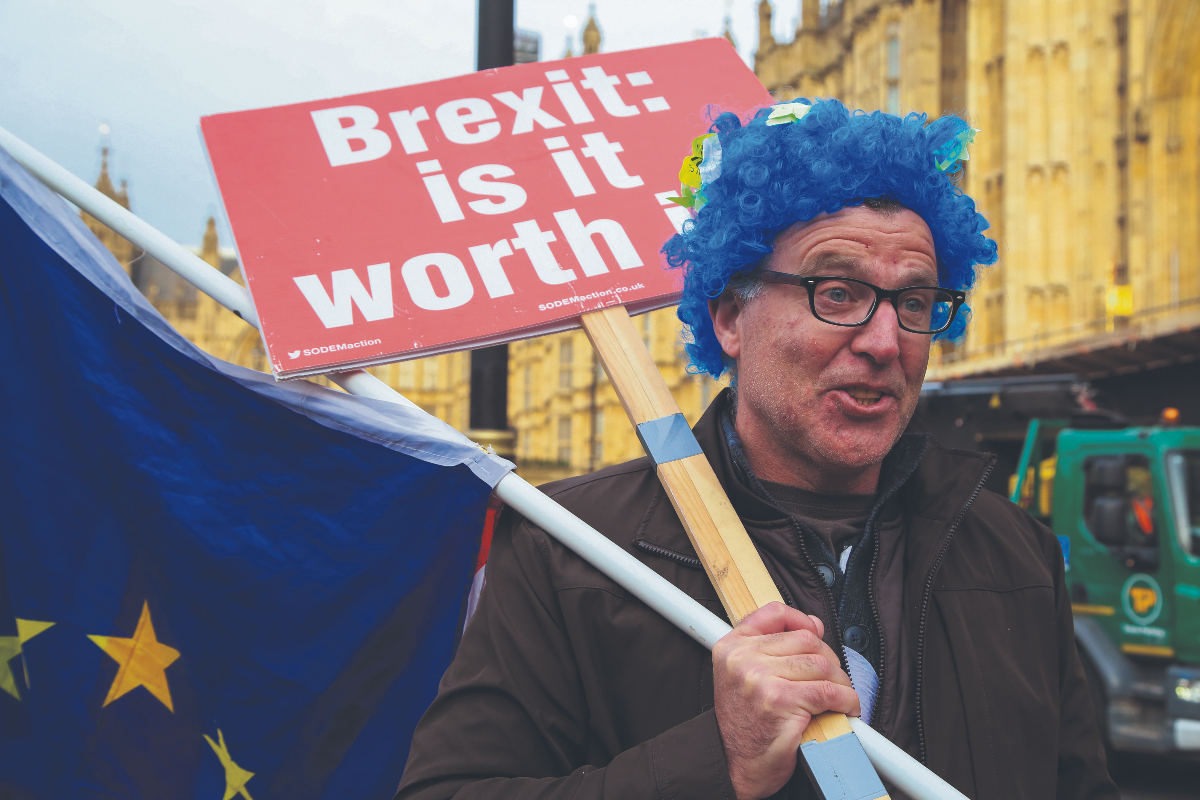

Ten years ago today the country woke to the news that the UK had voted to leave the European Union. Campaigners for Remain were horrified, pro-Brexit activists were jubilant, markets were panicked and in Westminster the Prime Minister, David Cameron, resigned.
The magnitude of the Leave campaign’s victory – of their achievement – was sinking in as its most high-profile figures, Michael Gove and Boris Johnson, prepared to deliver a press conference in the ground floor of their campaign HQ. These two men, who would later fall out in spectacular fashion, appeared stunned by what they’d helped bring about. The media seized on their restrained remarks as evidence that they were already feeling guilty, and scared. In reality, they had just been following the agreed plan to appear “sober, dignified and gracious.” As Matthew Elliott, Vote Leave’s CEO, says in his new book, Ten Years On, “the idea that they weren’t ecstatic about winning is nonsense…[but] In our attempt to avoid looking jubilant, our team ended up looking shell-shocked rather than statesmanlike, sowing the seed that ‘we didn’t have a plan’ into the minds of the public.”
‘We took back control…and lost it again’
Hours earlier, upon hearing the news that Leave had won, Elliott sent Dom Cummings – the notorious campaign director – a message saying “We did it.” Cummings replied: “We took back control.” Recalling this exchange, Elliott writes: “We couldn’t have imagined…how quickly we would lose it again.” Much of the book is devoted to the Game of Thrones drama that followed the vote: the emergence of new Tory tribes; deals and betrayal; egos and mistrust; legal rows and constitutional chaos. The resulting turbulence saw four different Tory PMs over the next eight years.
So, was it worth it? Elliott’s answer, when I interviewed him this week, was a resounding “yes.” He has no regrets and believes that Britain will be (and in many ways, has been) better off outside the EU since formally leaving in 2020. But it’s clear he views it as an unfinished project; a project that for him was a righteous cause based on a simple premise but which was mangled and frustrated by party politics and a lack of confidence in ourselves. “Tasked with mapping out a post-Brexit vision for Britain, our politicians failed, succumbing to choice overload,” he writes.
Some of you will agree with his analysis, others will claim that Brexit was doomed to fail. Perhaps the truth is that, ten years on from the vote but only six years on from leaving, it is too early to tell. Personally, I think the arguments that were made in favour in leaving have grown stronger with the passing of time while arguments in favour of rejoining grow weaker by the day. As Dr Gerard Lyons points out in a compelling new paper for the Centre for Policy Studies: “When we joined the EEC in 1973, its nine members – including the UK – accounted for around 27 per ent of global GDP. Now its 27 members account for around 18 per cent of global GDP and within a quarter of a century, its share of global GDP will probably be less than 10 per cent, smaller than India’s.” In other words, this ship has sailed.
In the final pages of his book, Elliott says “we need to have the self-confidence as a country to grasp the opportunity for prosperity that Brexit has given us.” That ought to be something that all sides can agree on.