Greedy Fifa rinsing fans over World Cup tickets – even Americans are baulking
Ed Warner finds that even Americans accustomed to paying through the nose for live sport are outraged at the prices Fifa is allowing to be set for tickets at the 2026 World Cup.
It was a bitterly cold evening in Boston, the temperature well below zero, and yet the Bruins fans still rolled up to the TD Garden for a routine mid-week hockey match.
The venue must have been 80 per cent full and the American event playbook delivered for the fans as per – from the elaborate rendition of the Star-Spangled Banner before the face-off, through to the copious close-ups of the whooping crowd on the Hub Vision screens overhanging the ice.
Forget the Super Bowl, it is a simple sporting night like this that demonstrates just why Fifa is going all-in on the USA for the monetisation of its flagship World Cup.
Maybe it was because I was a visiting Brit, assumed correctly to be a diehard football fan, but I was surprised to find that all the talk in the first interval (over an unfeasibly large slice of pepperoni pizza and a Sam Adams Winter White) was of World Cup ticket prices. Surprised in part because no ticket for frontline American sport is ever cheap by European standards.
I could have paid north of $500 for a rink-side seat and even my mid-tier billet matched the price of a day at a Test match next summer (although given England’s current showing Down Under, the ice hockey might well prove to have been far better value).
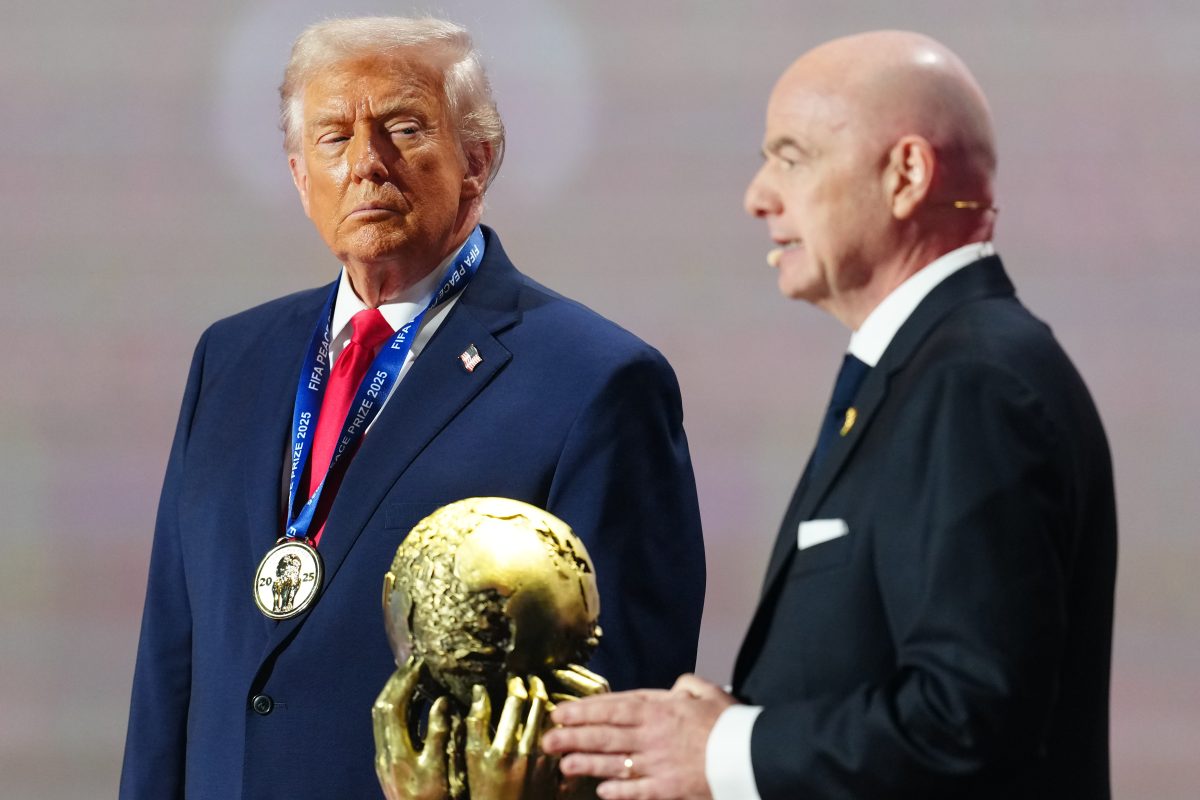
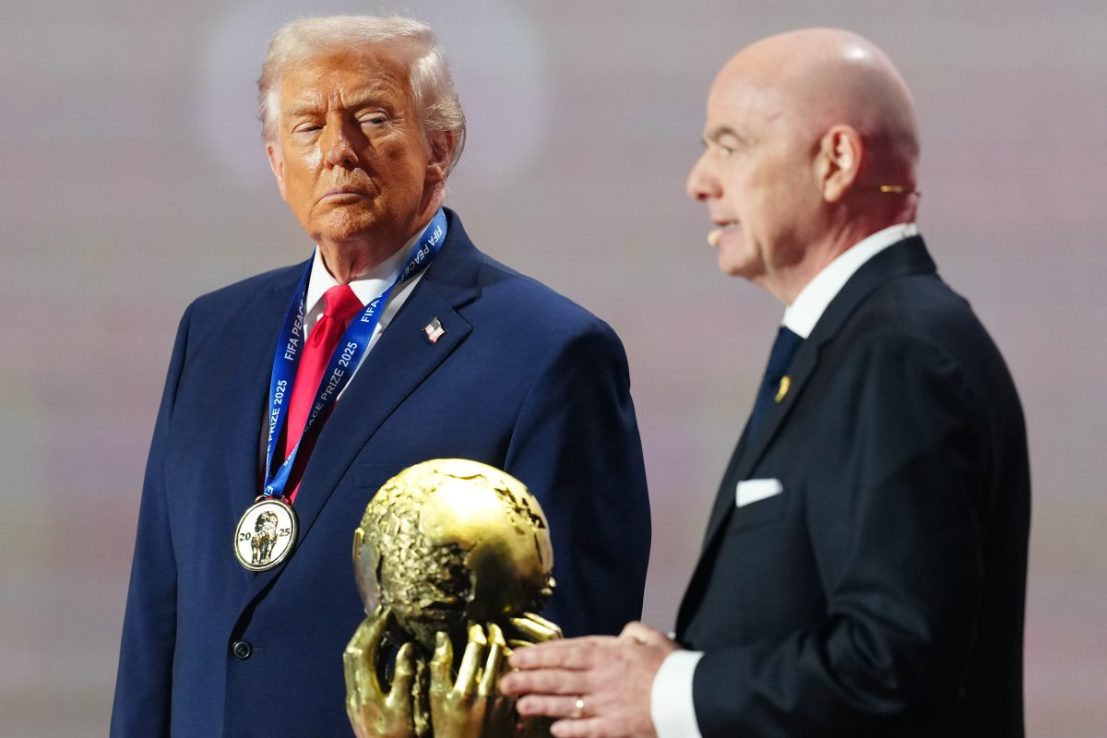
The run-up to every World Cup has its own particular media themes. For human rights, climate and interruption to the European domestic season three years ago in Qatar, read travel logistics, ticketing and the Trump-Infantino love-in for the 2026 edition.
Plus a rumbling undertone about the imbalance between the three hosts – Mexico and Canada effectively acting as bridesmaids to the United States which is hosting 73 per cent of the 104 matches, including all quarters, semis and the final itself.
Those games, compressed into five and a half weeks, represent just over a quarter of an entire nine-month Premier League season. While it is impossible to begrudge Curaçao, Cape Verde, Uzbekistan and Jordan their World Cup finals debuts, Fifa‘s decision to move to a 48-team tournament is a gamble on a handful of group-stage upsets and fiercely competitive games at the sharp end of the competition shaping the memories of fans while the mass of early contests disappear from mind under the sheer weight of their number.
If you have 104 events to sell out, in sizeable stadia, there can be no better place to do it than in the US. Punchy initial prices boosted by dynamic pricing systems and the widespread acceptance of secondary ticketing platforms constitute a propitious environment in which to maximise revenues.
Doesn’t matter if you are a French, German or Dutch supporter seeking to preserve a long streak of matches home and away, or a Scotland fan who feels you simply cannot miss your nation’s first World Cup appearance since 1998, for Fifa the correct ticket price is the one that the ultimate buyer is willing to pay and which clears the market. It needs to put more than 6m bums on seats in the process – quite the financial challenge.
Gianni Infantino may have gushed at last week’s World Cup draw about the happiness he believes his organisation spreads, but the reality is that Fifa is relying on a combination of Americans’ love of big sporting events and the world’s addiction to football to overcome fans’ understanding that their sport is lovable in spite of rather than because of a ruling body that has become synonymous with greed.
“You should know that Fifa is the official happiness provider for humanity.” Gianni Infantino, Fifa president
For casual US sports fans at a hockey game to be exercised by football ticket prices tells you all you need to know about latent demand to experience the tournament in the flesh, and just how blatantly Fifa is rinsing the buying public.
While Fifa’s hierarchy will not be entirely deaf to the criticism rumbling on social media and stoked by journalists, they will take comfort from the success of Qatar 2022. The world’s footballers delivered and so, simply, the tournament confounded prior sceptics.
Claims of a really meaningful footballing legacy for the region have, unsurprisingly, proven baseless, but that was last time and this time – of course – it will be different. Won’t it?
I’d happily bet that there will be sufficient matches of quality to fill my own memory bank, even if only watching highlight clips on catch-up over breakfast rather than live in the wee small hours.
Yes, expect a pedestrian pace by Premier League standards, but isn’t that usually the case in international football? Player fatigue may be evident in the subsequent domestic seasons, but the World Cup represents the highest stakes and there are more than enough stars globally to make up for the odd absentee through injury. No tournament is remembered for who wasn’t there (aside maybe from Gazza being left out of England’s squad for France ‘98).
A legacy for men’s football in the US is another matter entirely, though. Its previous hosting in 1994 failed to achieve the sport’s targeted breakthrough. Talk to any committed football fan in the States and they will tell you that, two decades on, the standard of play in Major League Soccer still languishes well below leading leagues around the globe.
As my host at the ice hockey asked pointedly over the Sam Adams: “How many Americans currently play in the Premier League?” The answer: only five.
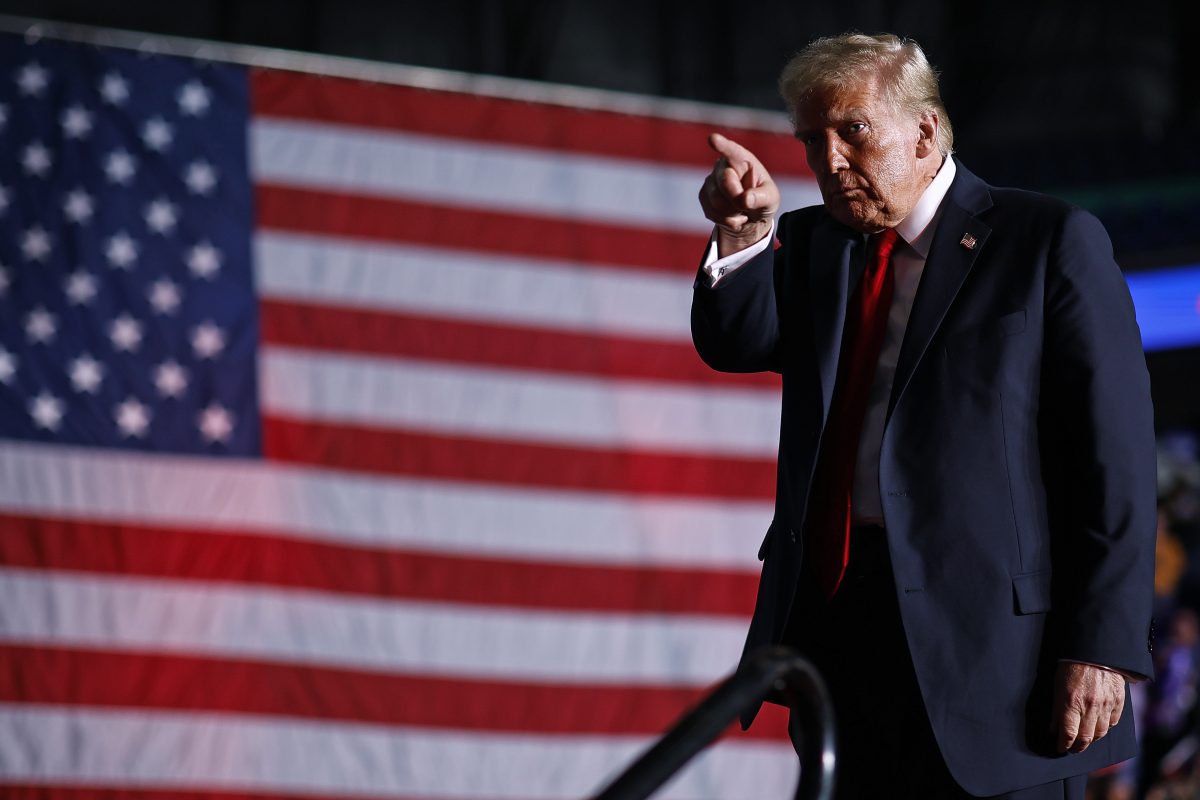
“When you think about it, shouldn’t [soccer] really be called… this is football, there’s no question about it. We have to come up with another name for the NFL.” Donald Trump, US president
The 2030 World Cup will be played across six countries, such is the financial and logistical challenge posed by the new 48-team format (Spain, Portugal, Morocco, Argentina, Paraguay and Uruguay, in case you’d forgotten). Then in 2034 on to Saudi Arabia with its seemingly bottomless pockets.
Whatever the football legacy in the US from hosting the 2026 tournament, I’d like to bet that the men’s World Cup will be back there again in far less than 22 years, so great are the requirements. And so long as a hefty profit is banked, Fifa can afford its legacy talk to be so much hot air.
Happy v happier
The International Olympic Committee may take issue with Infantino’s claim and argue its Summer Games scores higher on the happy-meter. Along with the local organisers, it will though look at the World Cup, learn and rub hands together ahead of Los Angeles 2028.
Reports suggest the IOC won’t go down the dynamic pricing route. Expect punchy Olympics prices nonetheless.
Meanwhile, latest indications are that tickets for the IOC’s upcoming Milano-Cortina Winter Olympics are only 60 per cent sold with under two months to go until the opening ceremony. Locals are being shown discounted ticket offers.
Note that the Winter Games will be staged in the US in 2034. Perhaps Trump will have engineered a fourth term of office by then.
Ed Warner is chair of GB Wheelchair Rugby and writes his sport column at sportinc.substack.com