
Global trade resilient but uncertainty persists, IMF director warns

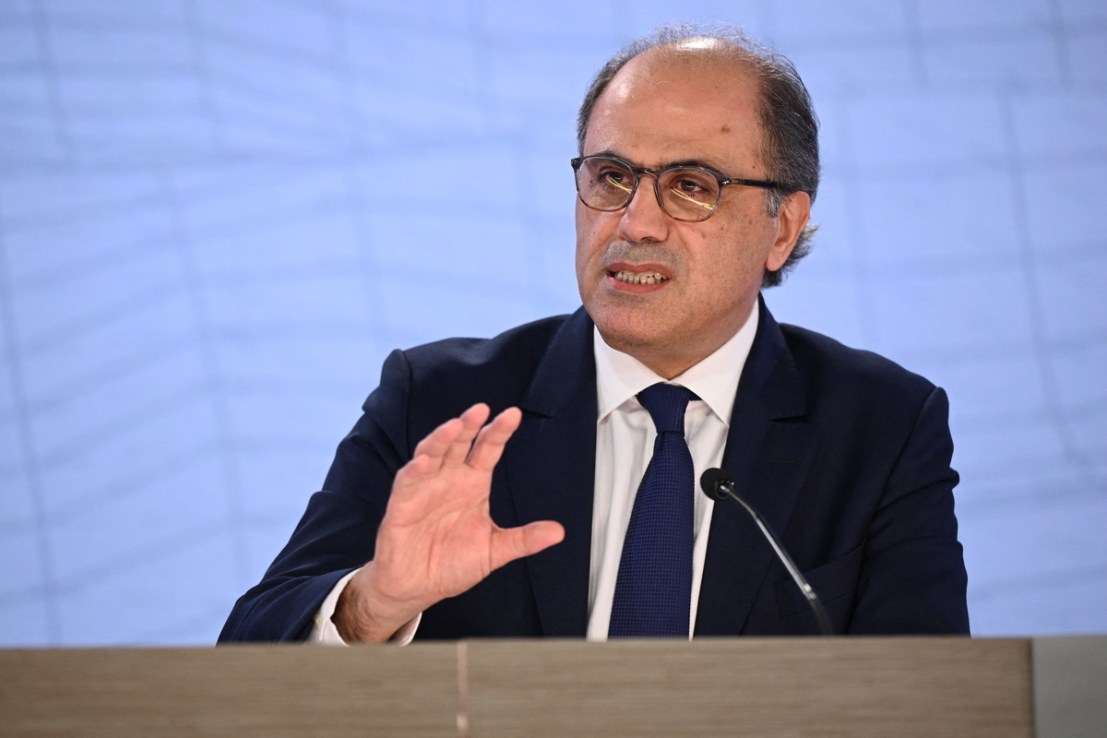
Trade is expected to stabilise over 2026 but global uncertainty may potentially impact economies by up to two per cent of their GDP, an International Monetary Fund (IMF) director has warned.
Jihad Azour, who oversees the MENA, North Africa, Central Asia, and the Caucasus Region, said 2025 was a year “of two cities,” with shocks and incentives.
Speaking at Abu Dhabi Finance Week, Azour said: “It was a year of shocks, but also a year of incentives, a year of uncertainty, and also a year of bullishness in terms of investment.”
He stated that the inflationary impact of higher tariffs was relatively limited, and the global economy showed strength due to increased investment in AI, especially in the US.
Azour, who was the former minister of finance of Lebanon, also added that in 2025 “we saw a strong appetite for capital flow moving to emerging economies, in particular to the MENA region, where the number of transactions…was twice higher than what we saw in 2024 and the amount of flow that came to the region was strong”.
Global risks for 2026
Going into the new year, he said the IMF “expect that trade will stabilise, [as it] will slow down but will remain strong”.
However, he warned that the IMF projects that global uncertainty “will still be with us”, adding it could impact economies over the next two years.
The economist stated that this uncertainty could drag economies lower by up to two per cent of GDP, leading him to emphasise the need for vigilance and careful monitoring.
Looking at 2026, he also questioned the AI boom, noting that the surge in AI investment and the resulting heightened risks to asset valuations are areas of concern.
“We are all witnessing the increase in investment in AI… and the rise in valuation, yet we see that the level of risks in terms of assets is reaching one of the highest over the last three decades, and we see decoupling between the valuation and the price of assets in the technology arena and the rest of SMB.”
“Therefore, it’s an area where we see a lot of promises, but we have to be extremely careful,” he added.
Going into the new year, the IMF director also told a room of business leaders that “what we need to watch in 2026 is debt”.
“Debt is getting more costly because spreads are increasing, especially on the high end, and the gross financing needs for advanced economies are ballooning in 2026; any adjustment on that front will have an impact on emerging economies,” he warned.


