Giant Leap As Uganda Police Champions Gender Equality, Creates Inclusive Work Environment
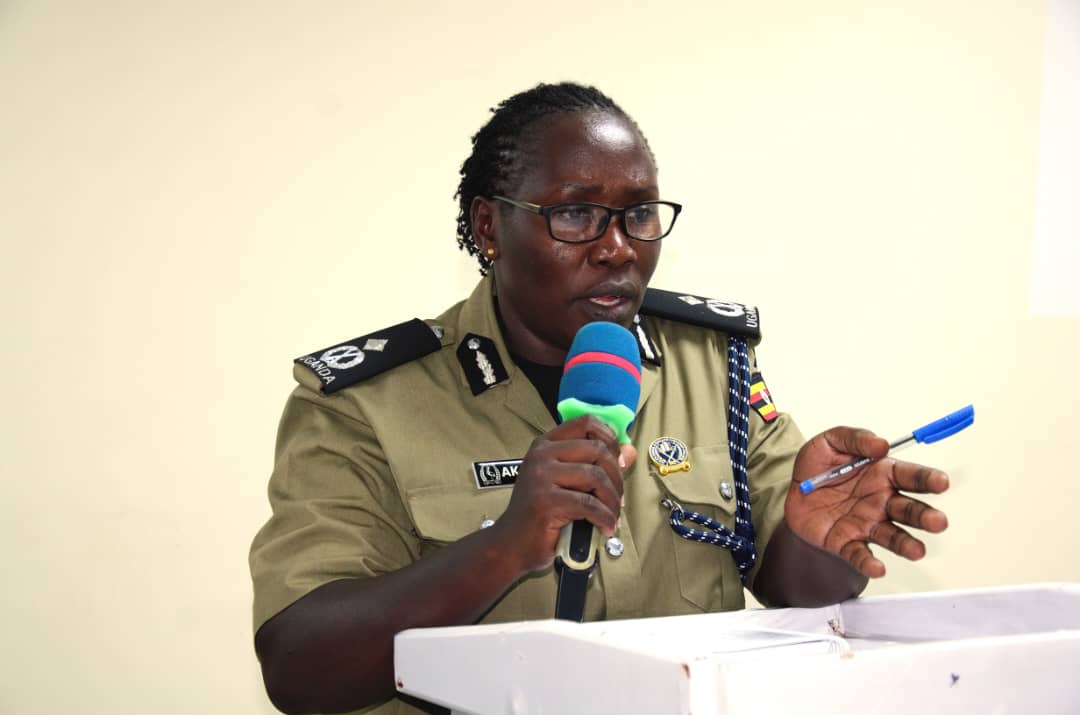
Like the former 8th Secretary General of the United Nations (UN) Ban Ki-moon (2007-2016) once said that “when men and women work together, leveraging their unique strengths and perspectives, they can achieve far more than they ever could alone’, the Acting Commissioner of Police of the Department of Women Affairs at Police Headquarters, ACP Caroline Akoth, has emphasized the crucial role male police officers can play in promoting gender equality in policing.
Speaking at a workshop held on December 2 at the Uganda Manufacturers Association (UMA) show grounds in Kampala, ACP Akoth noted that male officers can be powerful allies in championing gender equality, provided they are equipped with the necessary professional knowledge and leadership skills.
ACP Akoth highlighted the department’s efforts to eliminate gender imbalances and ensure adherence to gender policy, particularly in regards to zero tolerance for sexual harassment, exploitation, and abuse.
She emphasized the importance of male officers understanding the impact of patriarchal norms on their female colleagues and the community at large.
The department, established and became functional in 2014, aims to promote gender equality and women’s empowerment within the Uganda Police Force.
The primary objective is to build a strong force of women officers dedicated to transforming the UPF through the elimination of gender imbalances and improvement of service delivery.
ASP Jane Auma, a facilitator at the workshop, discussed common stereotypes that undermine the status of women, such as assuming men are more capable in operational roles while women excel in administrative tasks.
Stereotypes Against Women.
For starters, a stereotype is a widely held but oversimplified and often inaccurate assumption or expectation about a group of people, based on their characteristics such as gender, race, ethnicity, nationality, age, occupation and religion.
Stereotypes can be positive, negative or limiting.
Stereotypes can lead to prejudice, discrimination, misunderstandings and unfair treatment. They often do not reflect individual differences and can be hurtful or damaging.
Some of the stereotypes that undermine the status of women are: women are emotional and irrational, making them less capable of making objective decisions, that women are nurturing and caregiving by nature, limiting their potential in leadership roles and that women are less intelligent or competent than men in certain fields such as STEM (Science, Technology, Engineering and Mathematics).
Also, that women are expected to prioritize family and domestic responsibilities over their careers. The other stereotype is that women are seen as weak and in need of protection, rather than being capable of self0defense.
In security circles especially the police there are stereotypes that women are not suited for operational or tactical roles and are better suited for administrative or support tasks.
Its also assumed that women are not as physically capable as men, making them less effective in law enforcement. That women are more likely to be emotional and less able to handle high-pressure situations, such as in combat or when dealing with violent suspects.
It’s also believed that women may face skepticism or dismissal when reporting incidents of sexual harassment or assault.
These stereotypes can lead to unequal opportunities, biased treatment and a lack of support for women in the police force, ultimately affecting their career advancement and over-all well-being.
The Importance of social norms and expectations for men and women to promote gender equality and women’s empowerment.
The Importance of Male Support
Emmanuel Kodwo Mensah, a Ghanaian national and facilitator, emphasized the need to tackle toxic masculinity and promote positive masculinity.
He encouraged men to form support networks to fight harmful social norms and expectations, such as the assumption that men do not cry or show emotions.
Recent American research indicates that men facing financial instability are 16.3 times more likely to experience suicidal thoughts, highlighting the importance of mutual support and respect in relationships.
According to the Centre for Disease Control and Prevention (CDC), suicide is the 11th leading cause of death in the United States with 49,316 Americans dying by suicide in 2023.The national average suicide rate is 14.7 per 100,000 people with varying rates across states.
Addressing Sexual Harassment in the Workplace
SP Isabella Ameja presented on the topic of sexual harassment, exploitation, and abuse in the workplace, cautioning both male and female officers against such behavior.
She emphasized that the police force has zero tolerance for sexual harassment and encouraged male officers to report cases without fear.
According to SP Ameja, sexual harassment can have far-reaching effects on an officer’s career and lead to severe consequences, including dismissal and reduction in rank.
Kiira Region Representative’s Insights
James Mubi, SP PRO Kiira Region/Jinja, who attended the workshop, said, “I was selected by RPC Kiira SSP Charles Nsaba to represent Kiira region.
With much honor, I thank my boss for trusting me with the privilege to represent Kiira region. I promise to share what we learn widely amongst officers and ensure successful implementation of the gender policy generally.”
Mubi added, “…the workshop had facilitators with professional knowledge, experience, and skills in championing gender equality…”.
Notably, there is a difference between the Department of Women Affairs and the Department of Child and Family Protection Unit (CFPU).
People tend to confuse the two. However, the difference is the Department of Women Affairs is strictly handling police officers, while the Department of Child and Family Protection Unit handles both police officers and the public.
The workshop, attended by officers from 32 policing regions and specialized units, aimed to equip officers with the knowledge and skills necessary to promote gender equality and address gender-based issues.
ACP Akoth’s call for male officers to champion gender equality highlights the importance of collaboration and support in creating a more inclusive and equitable work environment.
ACP Akoth’s call for male officers to champion gender equality highlights the importance of collaboration and support in creating a more inclusive and equitable work environment.
The post Giant Leap As Uganda Police Champions Gender Equality, Creates Inclusive Work Environment appeared first on Watchdog Uganda.