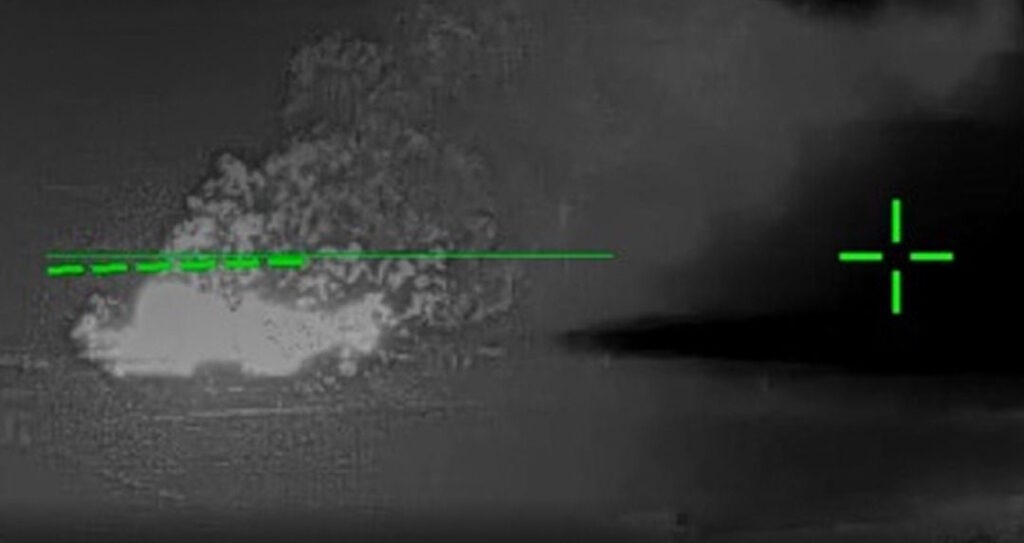
Fire struck Russia’s strategic rear. On the night of 11 April, the Ukrainian Defense Forces carried out coordinated strikes against Russian logistics, fuel, and military targets both in temporarily occupied territories and deep inside Russia, according to the General Staff.
Recently, a series of strikes on key Russian oil terminals
has caused nearly
$1 billion in losses, counting only lost export revenue. Five strikes on the ports of Primorsk and Ust-Luga have already damaged terminals handling over 40% of Russia’s seaborne oil exports. In
Primorsk alone, oil worth approximately
$200 million was destroyed. At the same time, Kremlin spokesperson
Dmitry Peskov stated that Russia
cannot guarantee “100% protection” of its energy infrastructure.
Russian army running low on fuel
Ukrainian forces hit the “Krymskaya” oil pumping station in Russia’s Krasnodar region and the “Hvardiiska” fuel depot in occupied Crimea.
These facilities supplied fuel to the occupying forces and played a critical role in the enemy’s military logistics.
Is the ammunition supply system cracking?
Ammo depots were also struck in the areas of Makedenivka, Donetsk, and Osypenko. Explosions at these sites directly affect Russian units' ability to sustain the intensity of combat operations at the front.
Gradual breakdown of war command structures
Drone command and control points were hit in the Kherson and Zaporizhzhia oblasts, as well as the Russian troop concentration areas near the front line.
This is creating additional disruption in the coordination of Russian units.
Earlier, Ukrainian President Volodymyr Zelenskyy claimed that Russia earned around $10 billion in the first two weeks of the Middle East war—partially reversing months of Western sanctions pressure.
Before the US and Israeli strikes on Iran on 28 February, Russia’s finances were under more pressure than at any point since the invasion began. But now, the Hormuz disruption is delivering up to $150 million in additional daily revenue to Russia’s federal budget. In the first 12 days of the conflict, Russia collected an additional $1.3–1.9 billion.