EU urgency to dump Rosatom is growing but Russia will use every lever to prevent it
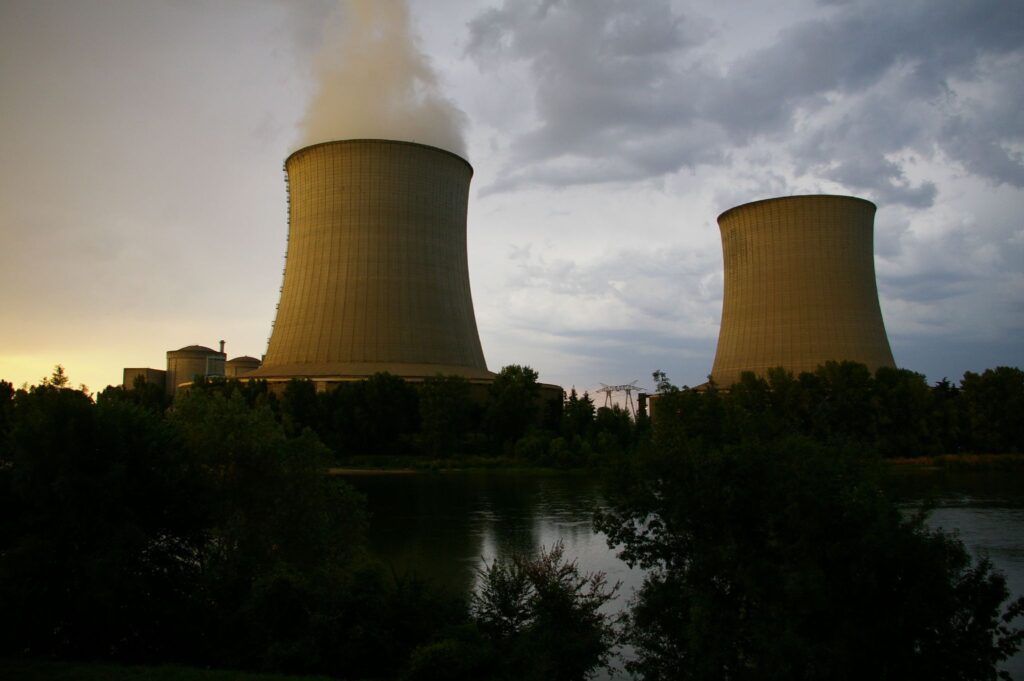

As we previously reported, the next five years will be a critical turning point for how much Western allies can decouple from Russian nuclear giant Rosatom. Energy and international relations analysts expect Moscow to use every soft power lever to keep that from happening.
Analysts believe demand will outstrip non-Russian supply over the next few years, forcing Western powers to tap into strategic reserves. This presents a window of opportunity for Russia to lock in dependencies.
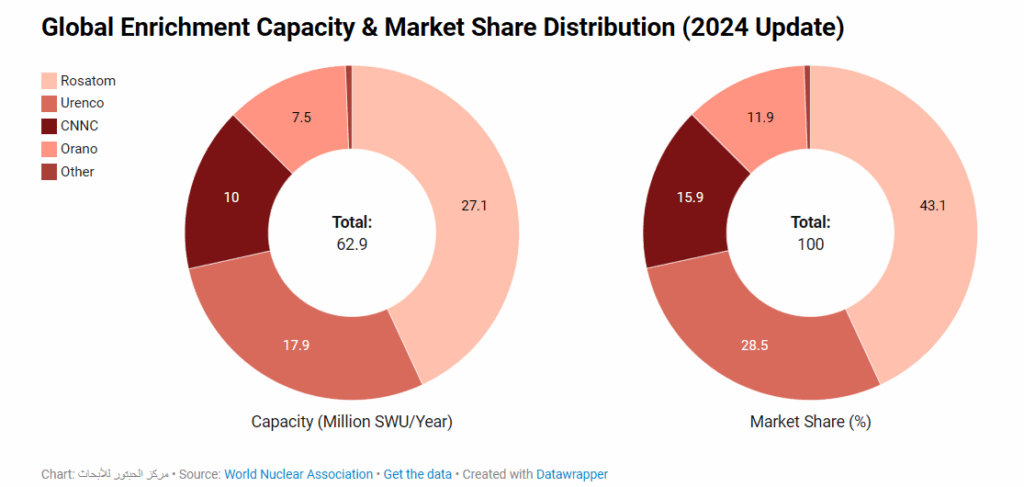
On the other hand, the US and Europe are more committed to rebuilding domestic fuel cycles as geopolitical security enters the nuclear energy sector for good, Al Habtoor Research Institute wrote. National security premiums on fuel are coming; the US bans Russian uranium starting in 2028, and Rosatom competitors Urenco and Orano are building more capacity.
The REPower EU roadmap issued last month explicitly stated a goal to depart from Russian nuclear dependence. A source close to EU decisionmakers, speaking on condition of anonymity, said there are explicit growing calls to target “the untouchables” like Rosatom in closed-door meetings.
However, Moscow is not an actor that likes to play by the rules. Rosatom isn’t just the state nuclear company. It’s a major extension of Russia’s foreign influence, one of the country’s biggest exporters of technologically intensive goods, an importer of dual-use tech, and a big contributor to Moscow’s military-industrial complex.
As such, it’s in Rosatom’s and Moscow's best interest to lobby, make deals, entrench dependencies, and disrupt unity at every turn to prevent the Europeans from rejecting it.
"Russia has been very successful at pulling these strings,” said Elina Ribakova, an economist with the Kyiv School of Economics. “Whenever the Rosatom conversation pops up in European sanctions, there is little appetite for that because certain countries are just very very resistant to it.”
More to lose
While many Rosatom subsidiaries were sanctioned by the EU countries and others, Rosatom itself has escaped sanctions. Analysts said that around the start of the full-scale invasion enough people in power thought that the war would be relatively brief and not the harbinger that unmakes the post-Cold War order in Europe.
However as time wore on, another reason began to be cited: the amount Russia makes on selling enriched uranium to European countries is a drop in the bucket compared to its oil and gas revenues.
In 2024, European imports of enriched uranium were close to 700 million euros, Eurostat data shows. According to Russia Fossil Tracker, since the beginning of the full-scale invasion, EU countries have bought more than 230 billion worth of Russian fossil fuels.
“From representatives of the European Commission we’ve heard the problem that if we sanction Rosatom, it will hurt the European energy sector more than it would actually hurt Rosatom,” said Truth Hounds investigator Denys Sultanhaliiev. “The funding which Rosatom receives from Europe is not that crucial for the Russian economy.”
He added that this is no reason not to sanction Moscow’s nuclear giant, which according to the NGO Truth Hounds’ investigation, was involved in war crimes and crimes against humanity in Ukraine.
More investigations by Ukrainian think tank DiXi Group and others found that Rosatom not only helps develop weapons and other war materiel, it also imports high technology assets that would otherwise be harder for Russia to get.

When asked what EU governments are afraid of, Sultanhaliiev said “first of all, that they will lose access to enrichment capability, that’s the argument of the French government.” Secondly, there are technology services that Rosatom provides to the European nuclear energy sector, which are important for the operation of some of the plants.
He added that these are used politically as a reason not to sanction Rosatom, even though these services could be diversified away from Russia.
Russian influence methods
Russian lobbying and influence on this issue exists but is difficult to prove, as much of it happens behind closed doors, multiple sources said.
Ribakova said that Russia will often have experts in certain Western think tanks, who are paid to promote its worldview. Russia also has relationships with various politicians. These connections can be activated whenever a certain subject needs lobbying, whether it concerns Rosatom or fossil fuels, as state gas company Gazprom showed.
“For example, Gazprom paid people permanently in some countries, even when they did nothing,” she said. “The person could be getting a full-time salary, doing nothing, until they’re necessary… And then the person will pop up, go around, and do some work.”
While Russia's influence rarely gets far out into the open, there is diplomatic pressure constantly being applied to push a variety of issues, Vlasyuk said. She said Moscow often threatens to do things like expropriate the assets of Western investors in Russia, which it did in response to Russia's immobilized bank reserves.
Russia often holds companies “hostage” in this way, thus turning them into assets to lobby their own government as a way to preserve their assets.
The Russians also like to file lawsuits as they did when they sued Euroclear in Moscow for 300 billion euros and won. "Everyone in Europe is afraid that they're going to go to other jurisdictions and enforce it there," Vlasyuk said. While she thinks these actions are not enforceable, Europeans are sufficiently risk-averse to be swayed.
Sanctions work when there is a united front between countries applying and enforcing them. But there are cracks and reluctance among allied states about how far to go to penalize Russia—which Moscow tries to exploit.
Experts said that while Russia acts all over the place, key focus is likely to fall on states with the strongest anti-EU attitudes. After all, EU decisions require unanimity and even one dissenter can spoil the consensus.

The China factor
Besides Rosatom, Urenco and Orano, China is rapidly growing as a major player in the nuclear enrichment space. The China National Nuclear Corporation (CNNC) is transitioning from a focus on domestic self-sufficiency to a growing role in global enrichment trade.
According to Al-Habtoor analyst Mohammed Shadi, Beijing’s maneuvers have generated strategic concern in Western capitals, where they are viewed as a potential conduit for the indirect re-entry of Russian enriched uranium into Western markets.
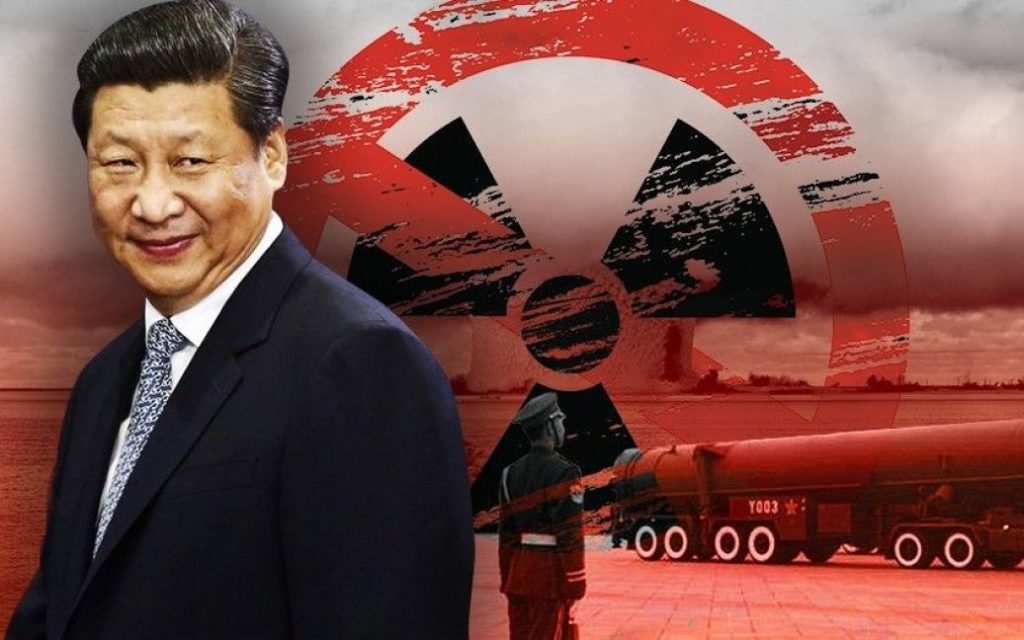
Under this dynamic, China imports Russian-enriched material for use in its domestic reactor fleet while exporting its own enrichment output abroad.
The result is a complex substitution mechanism that may allow Russian-origin supply to continue reaching Western markets indirectly through layered commercial exchanges.
Pending global shift
In spite of all of the above, Shadi and others believe that eventually, a full decoupling from Russian enrichment is possible if Western countries stick with the program.
Urenco’s expansion of its facilities at Almelo and Orano’s at Georges Besse II and Oak Ridge, “creates a trajectory toward genuine strategic autonomy in the standard low-enriched uranium market. The hard US import ban taking full effect in 2028 functions as a forcing mechanism that makes these investments commercially certain rather than speculative.”
He added that the period between now and post-2030 will require a “structured acceptance of transitional pain: inventory drawdowns, inefficient overfeeding practices that amplify demand pressure on upstream mining and conversion markets, and a permanent repricing of nuclear fuel that reflects what I would call a national security premium.”
On the other hand, even as Rosatom’s position in Western markets diminishes, Russia will compensate by consolidating its dominance across the Global South. Russia provides an unparalleled package of tech, fuel, experts, waste disposal, and financing loans.
Russia is also happy to work with autocratic leaders or take advantage of those who want to give a middle finger to the West.
"Russia sometimes gets into this relationship with governments that are maybe not the most transparent or corruption-free and the country will have to live with that project, even if the government changes later on," Ribakova said.
"It's like kidnapping. Once you get into this relationship, you rely on Russian technological services and enriched uranium and all that."
"And that gives the Kremlin the ability to say 'let's talk about some of these other things we want.'"
This is part three of a series of three articles that explore Russian state nuclear conglomerate Rosatom, its role in the war in Ukraine, and Moscow’s international influence.