Don’t panic: What’s behind markets’ Iran-Israel indifference?
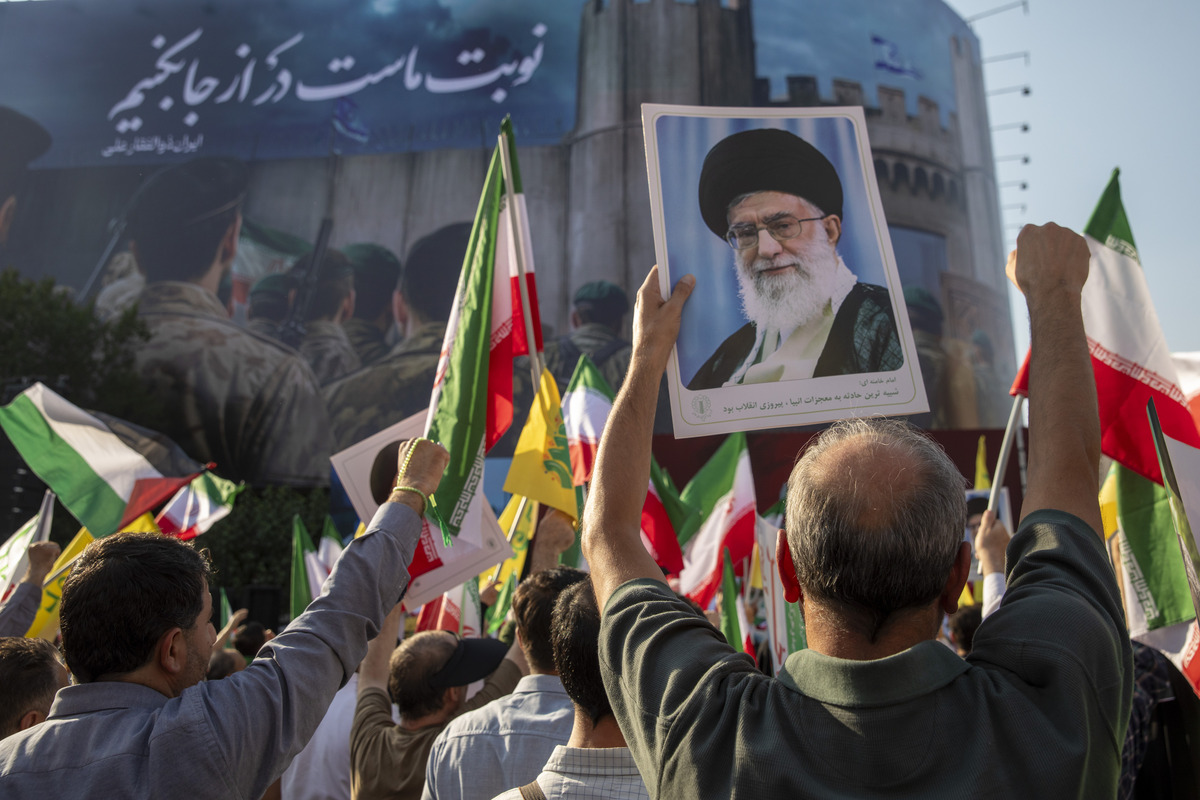

Commentators have warned that an escalation in the Iran-Israel conflict could set off a chain of events that sparked World War 3. But markets have reacted as if the air strikes barely happened at all. Ali Lyon digs into a puzzling few days of equities and oil trading.
With 130,000 Russian troops gradually amassing on the country’s border with Ukraine, Ben Wallace picked up the phone to The Sunday Times to tell the world that everything was about to change.
There was, the respected defence secretary said in early February 2022, a “whiff of Munich in the air” about the West’s response to the flagrant show of force from Vladimir Putin. A war between Russia and Ukraine was therefore “highly likely, he warned the UK’s allies.
City AM readers do not need to be told what happened in the fortnight that followed, but Wallace’s colourful rhetoric was proceeded by dozens of similar prophesies of a “new world order” and the post-World War 2 consensus breaking down.
Even before war officially broke out 13 days later, the mere threat of it had already sparked major ructions in global markets.
Over the month from 11th February the FTSE 100 and Dow Jones both fell over five per cent as investors priced in the supply shocks that a ground war in eastern Europe would entail. Germany’s blue-chip Dax index – especially exposed to the war given its domestic economy’s reliance on Russian gas – plunged over 15 per cent in a month.
Three years on, and a different oil-rich autocracy has begun trading blows with one of its sworn enemies. And the surrounding commentary – from historians to politicians – has been no less hyperbolic. Niall Ferguson on Thursday warned the situation risked causing an economic shock on a scale not “seen since the 1970s”, while the Kremlin – hardly a paragon of peacekeeping – has said the world was witnessing a “terrible spiral of escalation”.

With the death toll already approaching 1,000, and civilian casualties confirmed on both sides, human suffering has been acute. There is also the added risk of the exchange of air strikes escalating into a region-wide conflict in the tinderbox that is the Middle East. And yet markets have – so far – largely reacted with indifference.
Since 12 June, when Israel unleashed its first strike on Iranian nuclear sites, the FTSE 100 and New York’s blue-chip S&P 500 have nudged down about one per cent each. The dollar and gold – traditionally safe havens in times of uncertainty and tension – have barely budged.
Movements have been more pronounced in oil and gas markets, but nothing like to the extent seen at the onset of Russia-Ukraine. Brent crude – the international standard – is up 8.2 per cent to $72.34 a barrel. But it remains at a historic low, and was more expensive in April than it is now.
Markets sceptical Iran would commit ‘act of self harm’
So what lies behind investors’ apathy?
One common prognosis is – for all that Iran and Israel have traded brutal blows on each other’s critical infrastructure, hospitals and, in Israel’s case, nuclear development programme, there is a tacit agreement not to target energy infrastructure or strategically important trade routes.
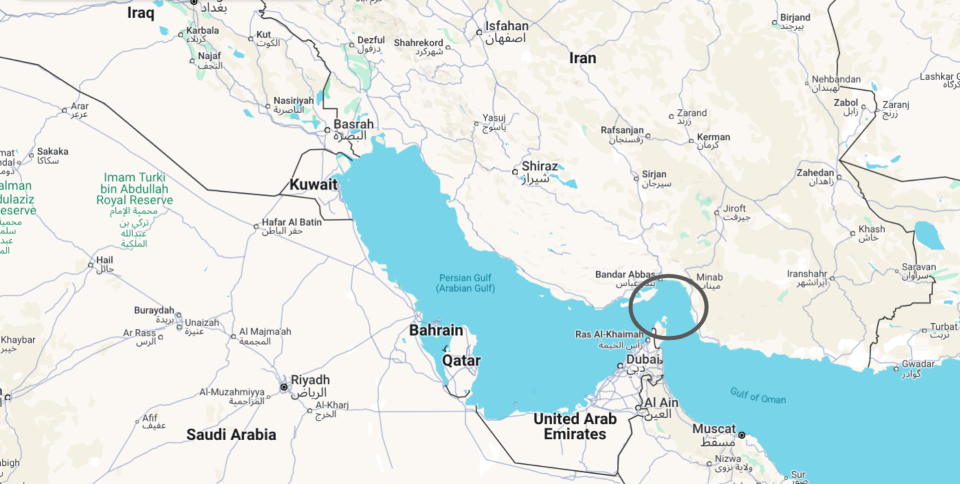
Despite being in the midst of an escalating conflict, Iran – the world’s eighth largest oil producer – is still producing and exporting petrochemicals; a key source of income for Ayatolla Khomeini’s regime. Should it wish, however, the Islamic Republic, could reach for a more drastic solution and block a narrow stretch of water in the Persian Gulf known as the Strait of Hormuz.
Not only do Iran’s energy exports all need to channel through that slice of the Arabian Sea, but also those from oil-rich Qatar, Kuwait, Iraq, Bahrain and some those from Saudi Arabia. In all, 17m barrels of oil are transited through the Strait every day, making it a key pinch point for global energy demand. Choking off that artery supply would have major ramifications for oil supply – likely setting off a chain of secondary effects in the wider economy.
But analysts are sceptical of Iran’s inclination to do so.
“The muted response of oil prices to the threat of further escalation by Iran, specifically disrupting movement through the Strait of Hormuz, suggests that markets do not expect Iran to commit what could be an act of self-harm,” James Hosie, the leading oil and gas equity analyst at Shore Capital, tells City AM.
“In addition to potentially obstructing the movement of its own crude exports… it risks prompting a response from the US, China, India, and other Gulf states who could look to protect their own interests.”
The response of global superpowers is – according to Saxo Markets strategist Neil Wilson – the second big question mark hanging over the conflict, which is now well into its second week.
“The Israel-Iran conflict is now being viewed by investors through the lens of whether the US gets involved or not,” he says.
President Donald Trump, for now, has opted only to assist in Israel’s defence. And having prevaricated over more proactive involvement for days, on Thursday announced a two-week period for negotiations before deciding the US involvement.
Wilson believes the fortnight of talks “diminished some of the geopolitical risk premia” affecting markets, but emphasised the situation remains “way too unpredictable”.
Stock shock?
It is this profound instability that has left some with the unerring sense that equities investors could be in for a nasty surprise, should the Trump administration deem the conflict too serious to ignore come the negotiation deadline in two weeks.
“Stocks [haven’t] moved all that much… given we’re talking about an extreme tail risk of WW3 erupting that has a more-than-zero probability,” Wilson says. “Base case has started to shift in the direction of direct US involvement, which opens up a Pandora’s box of mess, but markets seem to be clinging to expectation that it all remains contained like it has in the past.”
And after stocks nudged up slightly on the news of the negotiations, Kathleen Brooks, research director at XTB, now believes the big threat to markets is the spectre of America’s capricious President changing his mind.
“News that President Trump would delay any decision on joining Israel’s attacks against Iran has boosted the market mood at the end of this week,” she says. “The risk is that Trump changes his mind. Like reciprocal tariffs, Trump sets movable deadlines.”
Interest rates: Transitory debate again
Were events to spiral in the way that Niall Ferguson, the Kremlin and Wilson fear, however, eyes will turn to that other major economic lever: interest rates.
At the Bank of England’s decision to hold UK interest rates on at 4.25 per cent Thursday, its monetary policy committee vowed to “remain sensitive to heightened unpredictability in the economic and geopolitical environment, and will continue to update its assessment of risks to the economy.”
But whether energy shocks should solicit a tightening of monetary policy remains a point of contention among economists. Some, including Gent University’s Hielke Van Doorslaer, have argued that energy price shocks are largely transitory and so shouldn’t set off a round of monetary tightening.
Others are more wary of so-called secondary effects, where higher energy prices translate through to price rises elsewhere in the economy, which in turn put pressure on firms to raise staff’s wages.
Such a spiral would surely painfully knock off the scabs from consumers and businesses’ barely-healed wounds inflicted by the 2022/3 cost-of-living crisis.
For now, however, investors remain sanguine. Just as Ben Wallace told the UK’s newspaper of record little more than three years ago, the world could well be about to change. Markets, though, appear desperate for it not to.