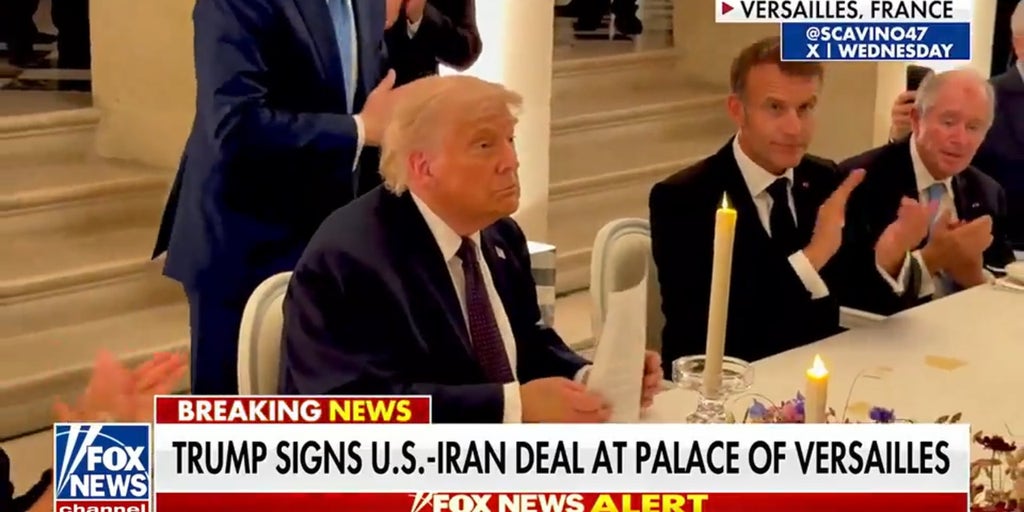
Days after Trump leaves Beijing, Putin arrives—gas price gap and Ukraine on the table
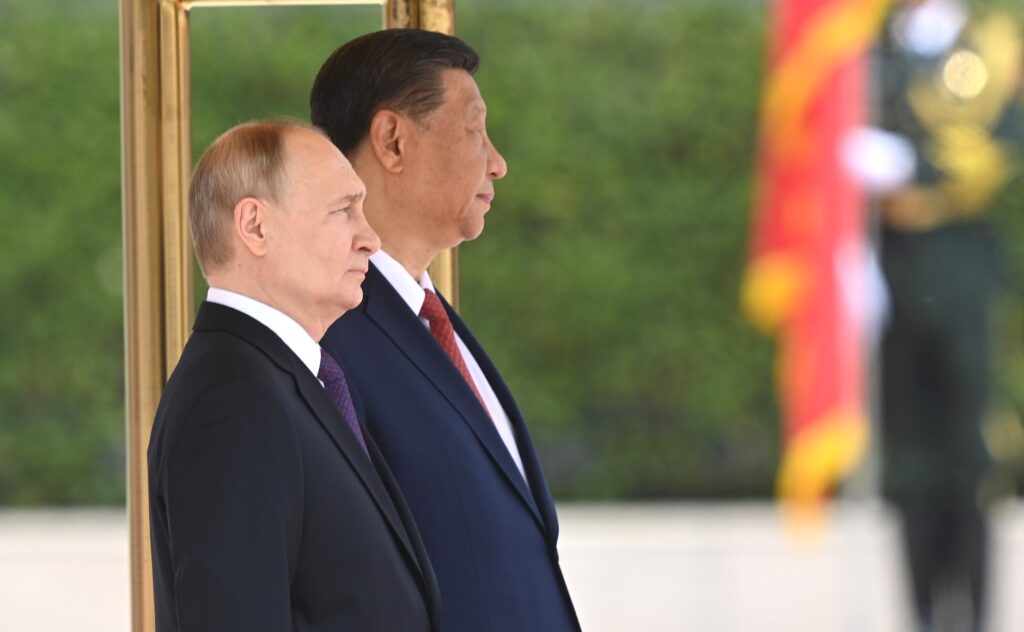

Russian President Vladimir Putin arrived in Beijing on 19 May for a two-day visit, according to the Kremlin. The trip comes four days after US President Donald Trump concluded his own visit to China on 15 May—the first by an American president in nearly a decade.
Putin is scheduled to meet Chinese President Xi Jinping and Premier Li Qiang for what the Kremlin calls discussion of "the most sensitive issues" in bilateral relations. The setting is asymmetric: Ukraine is on the table in a room Kyiv is not in, and analysts now describe Beijing as the "middle link" between Moscow and Washington on the war. The program includes a formal reception marking the 25th anniversary of the Russian-Chinese Treaty on Good-Neighborliness, Friendship and Cooperation, and an informal tea meeting between the two leaders—the session officials describe as reserved for the most complex political questions.
Putin's aide Yury Ushakov said relations between the two countries have "actively developed and reached an unprecedentedly high level," and announced that approximately 40 cooperation documents are expected to be signed during the visit. Among them: a joint "Declaration on the Formation of a Multipolar World and International Relations of a New Type," and a new "Joint Statement on Further Strengthening the Comprehensive Partnership."
The Russian president's delegation is, according to Russian state media, record-sized: it includes the heads of Gazprom, Rosneft, Novatek, Sberbank, and VTB, five deputy prime ministers, eight key ministers, and several regional governors—a composition that signals Kremlin hopes for large-scale deals, reports Radio Free Europe/Radio Liberty.
The gas deal
The central unresolved question of the visit is whether Russia and China will finally sign a final contract for the Power of Siberia 2 gas pipeline—a project Putin has been raising with Xi since 2015. A memorandum was signed two years ago, but the core sticking point remains price.
China is insisting on terms close to Russia's domestic gas prices—roughly $50 per thousand cubic meters—a figure Russian negotiators are expected to resist, according to RFE/RL. China currently buys Russian gas at $258 per thousand cubic meters, which is already 40 percent below what Gazprom charges most other customers.
China has never publicly confirmed Putin's statements about the project. In March, it emerged that Beijing had included "preparatory work for the central route of the Russia-China gas pipeline" in its current five-year plan through 2030—but without naming the Power of Siberia 2 directly.
The Xi-between-Putin-and-Trump dynamic
Kremlin spokesman Dmitry Peskov told journalists that Putin had followed Trump's visit and negotiations with Xi closely, and that the Beijing trip would give Moscow "a good opportunity to exchange views on the contacts the Chinese had with the Americans."
Trump and Xi discussed both the US-Israel war with Iran and Russia's war against Ukraine during their summit. Before leaving Beijing, Trump suggested a Russian strike that partly destroyed a nine-story residential building in Kyiv—killing 24 people—could damage peace efforts. "Until last night, it was looking good, but they [the Ukrainians] took a big hit last night. So it's gonna happen [the end of the war]. But it's a shame," Trump said, per Reuters.
Many analysts, according to RFE/RL, regard China as the "middle link" in communications between Moscow and Washington, and are watching whether Xi is prepared to act as intermediary on Ukraine and the Middle East. A detailed discussion of military and geopolitical questions between Xi and Putin is expected during the informal tea session.
The Ukraine question
China has not condemned Russia's invasion of Ukraine since 24 February 2022, and has not voted for relevant UN General Assembly resolutions—though it has repeatedly accused the US, NATO, and the West of "provoking the conflict." At the same time, Beijing has never formally recognized Russia's annexation of Crimea or the four Ukrainian regions annexed later, and has made clear to the Kremlin that use of nuclear weapons would be considered "categorically unacceptable."
China officially maintains neutrality and promotes its mediator role. In the lead-up to Putin's visit, Chinese officials avoided any mention of Ukraine, preferring language about "issues of common interest."
Western governments have repeatedly alleged that China supports Russia's military-industrial complex despite its declared neutrality. Estonia's Foreign Intelligence Service reported that China helps Russia produce military drones by supplying critical Western components, with Russia receiving approximately 80 percent of such components from China, according to its assessment.
The Iran dimension
The war between the US, Israel, and Iran—which closed the Strait of Hormuz to commercial shipping and threatened global energy supplies—is expected to feature in the Putin-Xi talks, as it did during the Trump-Xi summit.
The two countries' interests diverge sharply. For Moscow, the war ties down the Trump administration's resources and attention, reduces US support for Ukraine, and has driven up oil prices that help fill the Russian war budget. Russia has also been exchanging intelligence and drone technology with Iran, including the Shahed drones used in both conflicts.
For Beijing, which is the world's largest importer of Iranian oil, the war and the Hormuz closure directly threaten economic security. China has been calling for de-escalation and seeks to position itself as a responsible global actor. Unlike Russia, Beijing fears the collapse of the Iranian regime and the resulting strengthening of US influence in the region. With Putin arriving just days after Trump, Xi may be looking to demonstrate to Washington that he can exert influence over both Iran and Russia—in exchange for concessions on Taiwan or trade tariffs, according to RFE/RL.
The broader question, which this week's meetings may begin to answer, is how far Moscow and Beijing are prepared to go in supporting Iran—and whether their bilateral partnership might formally expand into a trilateral military-political alliance with Tehran.
The asymmetry
Putin's pre-visit address put bilateral trade above $200 billion, with payments "almost entirely conducted in rubles and yuan." Russia accounts for about 4 percent of China's total foreign trade. China takes more than a third of Russian imports and over a quarter of Russian exports, according to RFE/RL.
Russia's economy, now in its fifth year of war, is critically dependent on China. Beijing has provided Moscow with political cover under sanctions and replaced Western consumer goods on Russian shelves with Chinese ones after Western firms withdrew.
Some commentators, paraphrasing a Chinese proverb cited by RFE/RL, describe the Moscow-Beijing relationship as "a marriage where the partners may share a bed but certainly dream different dreams."