DAVID MARCUS: Americans learn to view time like soccer fans
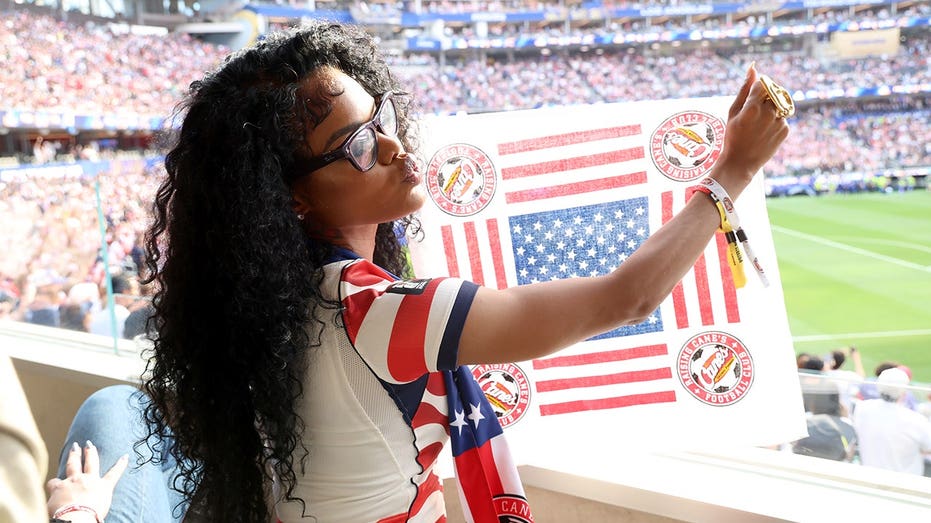
It is often said of the American Jazz pianist Thelonius Monk that what made him great was not the notes that he played, but the notes that he didn’t play. It turns out that American sports are similar, and until recently, this has been an obstacle to soccer’s success in the U.S..
America’s two greatest homegrown sports are baseball and football. In each, after a pitch or a play, there is a break during which the fan considers what just happened and what it means for what is about to happen.
The majority of the time invested in viewing these sports isn’t really spent watching the action at all. It takes place not on the field, but between the ears of the viewers, as they contemplate the relative benefits of going for it on fourth down or trying to steal second base.
Once the result of a pitch or play is recorded, another break, more time to think.
UNITED STATES SHATTERS WORLD CUP VIEWERSHIP RECORD IN FIRST MATCH VS PARAGUAY IN LOS ANGELES
Even basketball, the pace of which is more similar to soccer, falls into this familiar American sports pattern as the last minute of important games often take an eternity with fouls to give and timeouts.
In these instances on the hardcourt, Americans are once again left with no action, just thoughts.
The mental experience of watching a soccer match is completely different, and frankly, very unfamiliar to the American mindset. In the rest of the world’s football, the action almost never stops: It sweeps and swells, ebbs and flows, but it basically just keeps going, relentlessly.
DAVID MARCUS: WHY EUROPEAN SOCCER FANS ARE GOING KEROUAC ON THE AMERICAN ROAD
One way to think about the core difference here is through the experience of reading. One can actively read a book while simultaneously thinking about what they are reading, but that is very different from putting down the book, looking up and thinking about it. The former is dreamlike and liminal, the latter far more concrete.
Foreign soccer fans often think that the constant breaks in American sports are just an excuse for more commercials, and that's not entirely off base. Americans like commercials. In fact, the Super Bowl, our biggest sports event, basically has a whole separate best commercial contest.
But the reasons for the breaks run much deeper than capitalism and speak to a much broader difference in how Americans and others look at the world around us.
The philosophers Henri Bergson and Gilles Deleuze thought of time as two distinct concepts, the Chronos and the Aion. The former is sequential, one moment building on another, and measurable with a past and future. The latter, the Aion, is an eternal moment in which all happens, or seems to, at once.
The American lives by the Chronos, cause and effect building, with everything measurable. This is why baseball involves more statistics than an AP math course. Only in recent years have complex stats entered the world of soccer.
Europeans live in the Aion. Their culture is thousands of years old, timeless and stretching to both past and future at once. This becomes manifest on the soccer field by the fact that the fans actually have no idea how much time is left. Only the referee knows.
Americans have been getting better at experiencing the timeless flow of soccer matches, at letting the subtle changes wash over them slowly, rather than spending three hours engaged in constant mental calculations. Honestly, it's relaxing.
This is not to say that soccer is boring. On an emotional level, it can provide every bit of the anguish and joy of any American sport. But it isn’t mentally taxing.
In the end what Americans may love most about the constant breaks in our sports is the illusion of control that they give us. No matter what actually occurs on the field, in those moments you are the coach or the manager, and it feels very real.
It turns out that back in 1960s, Europeans loved Thelonius Monk. They flocked to his staccato, one finger at a time, jazz piano that was unlike anything they had ever heard before. In its own way, soccer is returning the favor, offering Americans a new way to experience time and beauty.
I don’t expect that Americans will ever give up our love of sports stoppage time. It's in our DNA. But after all, it is summer, so why not spend some time lost in the dream of World Cup soccer glory?