Bernie Sanders Unveils Plan for Public Ownership of AI
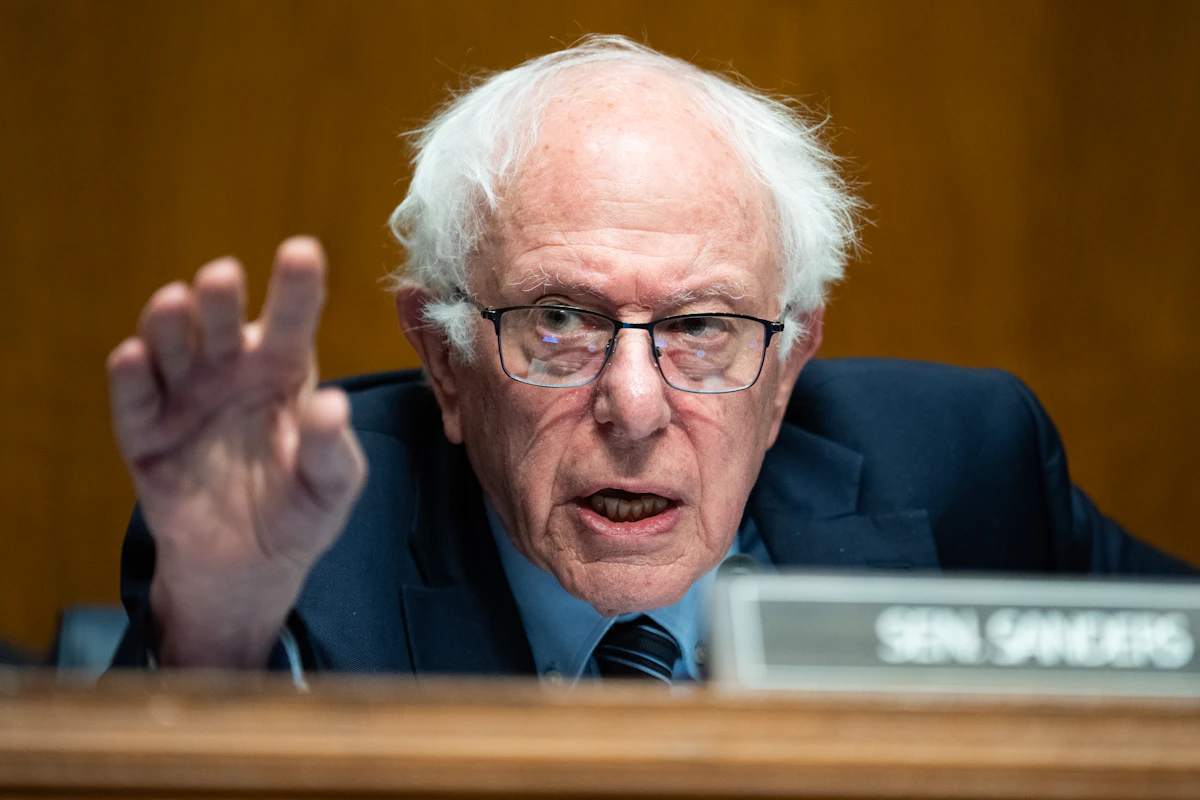
Senator Bernie Sanders thinks the American people should have a stake in AI companies.
The Vermont democratic socialist introduced a bill Thursday where leading AI firms making at least $200 million in annual revenue would pay a one-time tax of 50 percent of stock to create a sovereign wealth fund for taxpayers, which would be worth about $7 trillion. That fund would have a 5 percent annual dividend for direct payments to Americans, which Sanders estimates would be more than $1,000.
“AI was not created out of thin air,” Sanders said in a statement. “It was not a brilliant idea that just popped into Mark Zuckerberg’s head or Elon Musk’s imagination. The foundation of AI is based on the collective knowledge of humanity and the creative work of tens of millions of people.”
“The principle is simple: When a public resource generates wealth, the public should share in that wealth,” Sanders added. Under the terms of the bill, companies would have to split their AI and non-AI businesses.
Sanders is proposing that the fund would be managed by a newly created, bipartisan Independent Commission for Democratic AI, made up of seven members nominated by the president and confirmed by the Senate. The commission could also have the power to use its voting shares in the companies to block AI decisions that are bad for the country.
“Left unchecked, Artificial Intelligence and robotics threatens the jobs, privacy rights and mental health of every man, woman and child in America,” Sanders’s statement said. “As a society, we can no longer sit back and allow a handful of Big Tech oligarchs to determine the future of this revolutionary technology with no democratic input.”
The bill is not without its pitfalls. The American taxpayer would be tied to the AI companies’ success, which comes at the cost of building unpopular data centers, displacing American jobs, and consuming vast amounts of electricity, including burning a lot of fossil fuel. In effect, the American public would own a profitable, but toxic, asset.
While the bill faces a tall order to pass, it’s a good start on the question of how to reign in and regulate AI. The ideal scenario, however, would have to go a lot further.