Beazley: Profit slumps on catastrophe losses
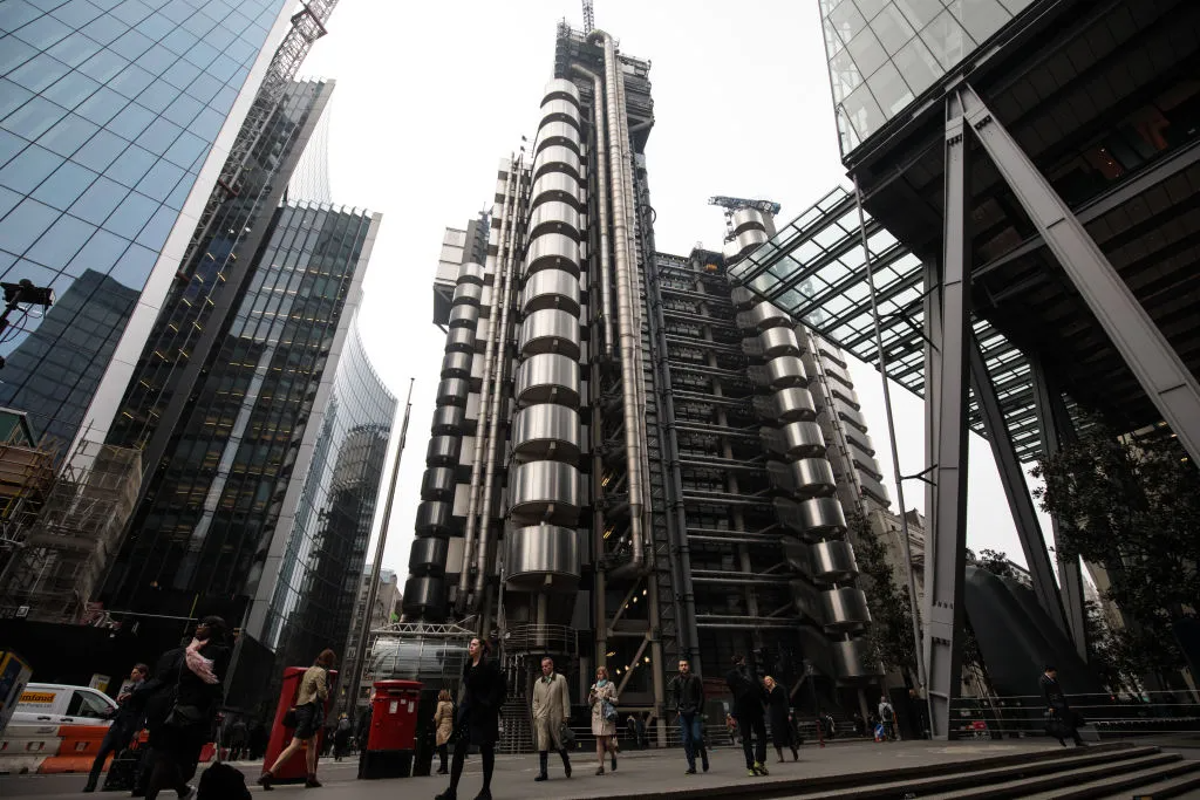
Lloyd’s of London insurance group Beazley has reported a sharp drop in profit for the first half of 2025 due to higher losses from major catastrophes.
Beazley reported a profit before tax of $502.5m (£371.9m) for the six months ending 30 June 2025, down from the $728.9m reported in the first half of 2024.
The specialist insurer announced a two per cent increase in insurance written premiums, which rose to $3.2bn. In the first half of last year, growth was 6.9 per cent.
The company’s undiscounted combined ratio, a key measure of underwriting profitability, stood at 84.9 per cent, compared to 80.7 per cent in the prior-year period. Beazley delivered an annualised return on equity of 18.2 per cent.
Beazley reported earnings per share for the period of 52.5p and net asset per share of 560p, up 11 per cent year on year.
The company noted it had seen a significant softening in rates over the first half, notably in cyber and property, where rates fell 6.8 per cent and seven per cent respectively. Across the portfolio, rates fell 3.9 per cent.
Despite softer rates in cyber, Beazley believes there’s still plenty of room for growth in the market.
Beazley’s chief underwriting officer, Paul Bantick, told City AM: “If you look internationally—Europe, Asia-Pacific, UK—it’s really the larger clients that are predominantly the buyers right now. We’re only just starting to see the middle market engage, and the SME sector will follow over time.
“So, there is a long way to go in terms of increased demand. Furthermore, the high-profile events and ransomware attacks you see on the front pages will only fuel that demand. The opportunity is still as big and exciting as everyone thought; it’s just hard to predict how quickly it will come,” he added.
Despite the softer rate environment, Beazley noted: “The claims environment is active in respect to both frequency and severity, and uncertainty is elevated.”
“We have seen climate related natural catastrophes such as the wildfires in California, alongside heightened cyber threats including a wave of ransomware attacks which particularly impacted retailers in the UK and Europe in the first half of 2025,” it added.
The group said it had achieved a property risks undiscounted combined ratio of 76.1 per cent in the first half of the year, down from 80.8 per cent in the first half of 2024.
Beazley’s outlook
On the investment side of the business, the portfolio returned 2.7 per cent in the first half, thanks to higher fixed income yields, allocations to investment-grade and high-yield credit and collateralised loan obligations.
The company reiterated its combined ratio target for the year of the mid-80s and downgraded its topline growth outlook. It has repurchased $235m of the $500m share buyback allocation announced at the beginning of March.
Adrian Cox, CEO of Beazley, said: “We are very proud of our overall performance. Growth of two per cent reflects our disciplined approach and is fully aligned with our strategy of prioritising rate adequacy and long-term profitability over short-term income.
“This commitment to delivering strong profit through the market cycle is demonstrated by our 84.9 per cent undiscounted combined ratio.
“Our depth of experience in operating within a cyclical environment means we know when to take risk, and when to pull back.
“This phase is no exception. As ever we are focused on accessing the right opportunities, backed by the strength of our people, platforms and product set, all of which underpin our ability to adapt with confidence during periods of elevated uncertainty.”
Speaking to City AM, Cox said: “I think what’s more interesting about this particular cycle is that we’re seeing things move more quickly. Because data is so much better now, insurers take less time to figure out when things are profitable or unprofitable, so cycles are moving faster.
“This means the hard market doesn’t last as long, but neither does the soft market. The property market has only been softening for 12 months and is already showing signs of constraining itself, which would have taken much longer to recognise years ago.”